












Budo Beat 68: Golden, Not Gilded – NZKF 50th Anniversary
The “Budo Beat” Blog features a collection of short reflections, musings, and anecdotes on a wide range of budo topics by Professor Alex Bennett, a seasoned budo scholar and practitioner. Dive into digestible and diverse discussions on all things budo—from the philosophy and history to the practice and culture that shape the martial Way.
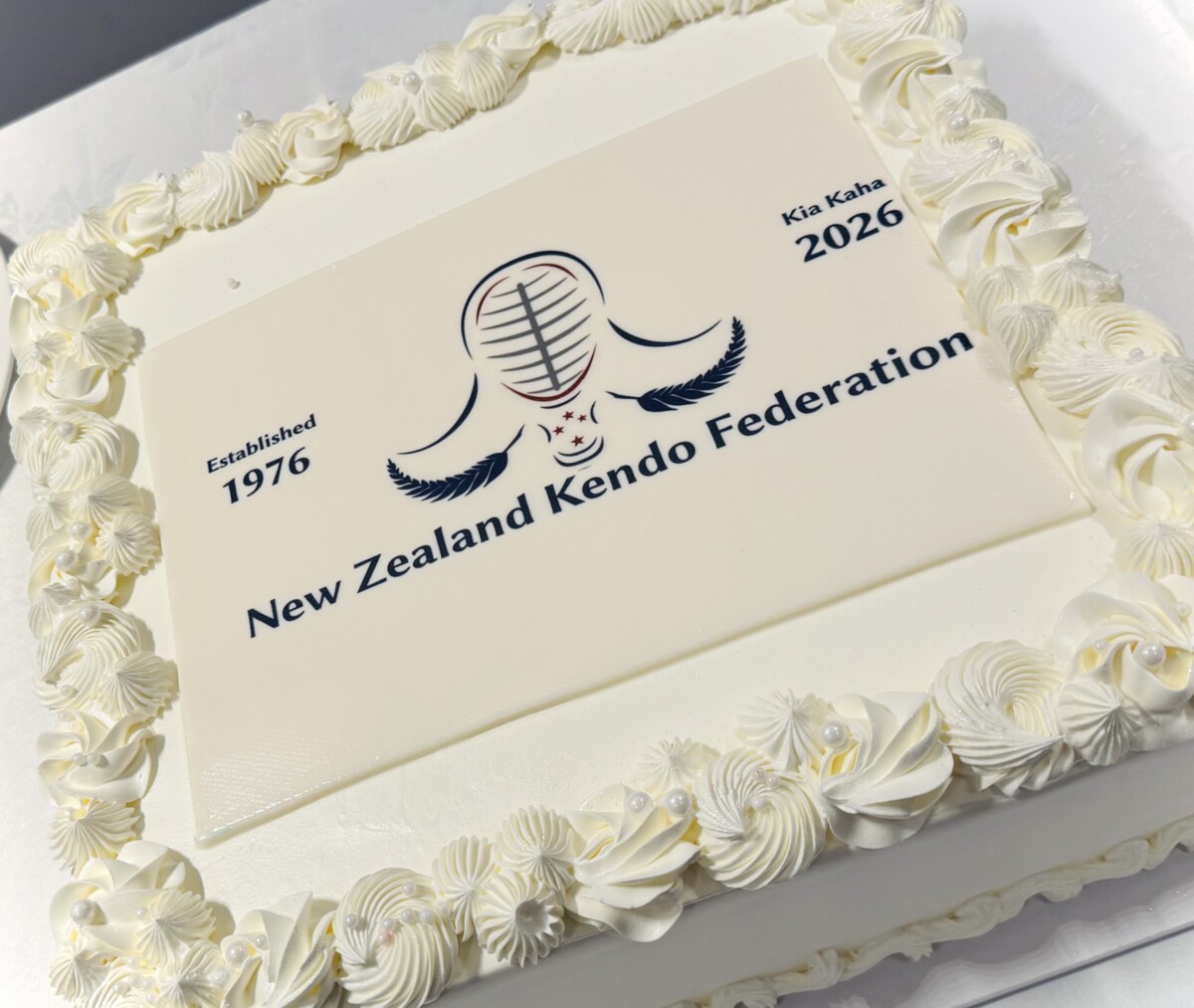
Anniversaries are curious things. They invite us to look backwards to reminisce about familiar faces, some unfamiliar ones, and memorable moments, before congratulating ourselves on how far we’ve come. The recent 50th anniversary celebrations of the New Zealand Kendo Federation (July, 2026) certainly provided all of that. There were old friends reunited, the odd story that had grown more colourful with each retelling, and photographs that reminded us that hairlines, waistlines, and grades have all changed considerably over the decades.
Indeed, there was plenty to celebrate. Fifty years is no small feat for any volunteer martial arts organisation, and rather more remarkable in a country whose nearest kendo neighbour sits several thousand kilometres of ocean away. Those of us old enough to remember can recall when a visiting Japanese teacher was treated with something like the reverence usually reserved for a solar eclipse. Equipment, meanwhile, was priced as though shipped in from the moon, and often felt like it had been: shared kit, patched kit, shit kit, kit knocked together by hand in someone’s garage.
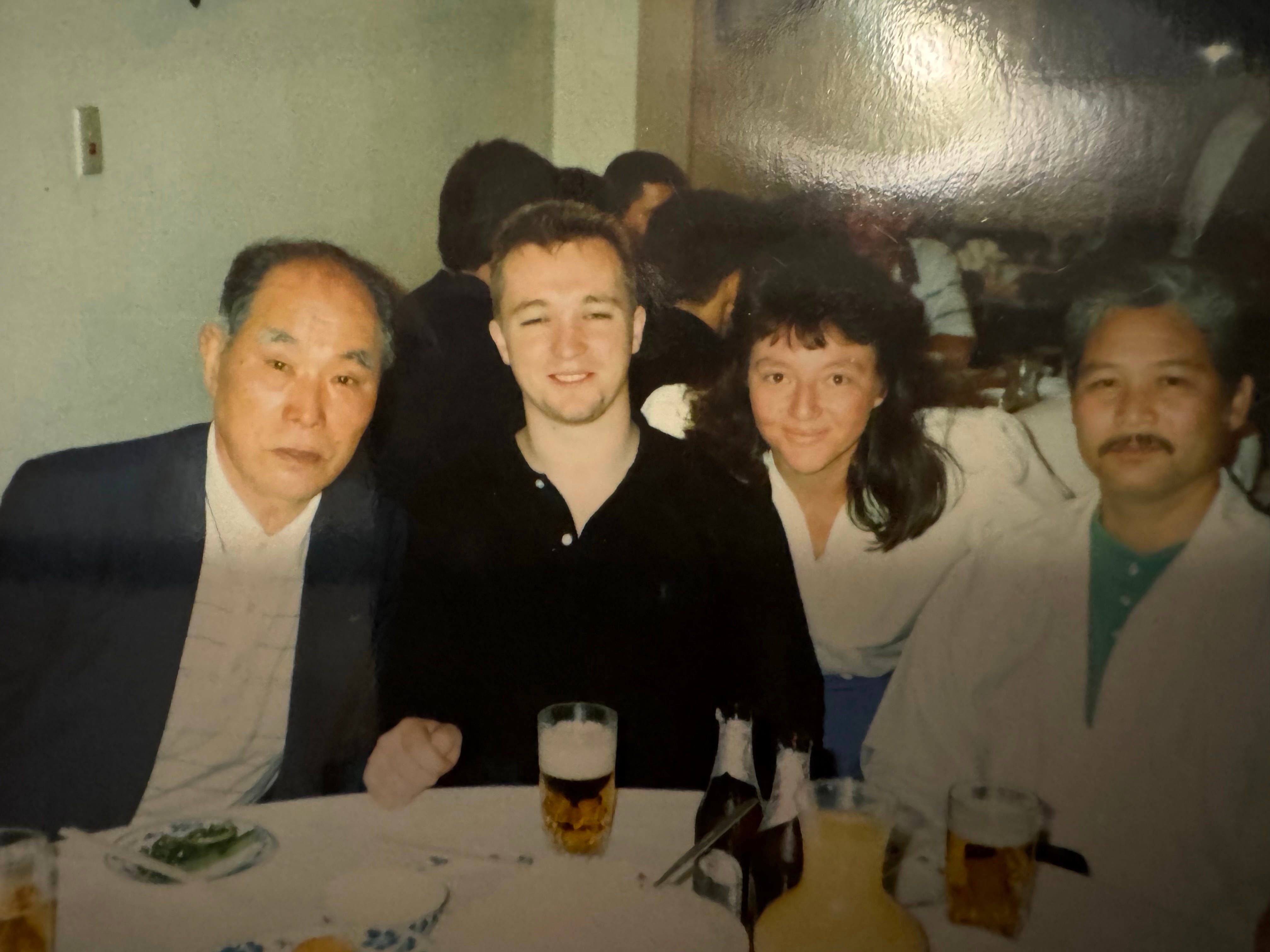
Information travelled at the pace of a slow boat, since there was no YouTube, no Zoom, no instant messaging to hurry it along. There was no internet at all, come to that, and precious few books. The one that mattered was Gordon Warner and Sasamori Junzo’s old classic, propped up by a handful of pamphlets the AJKF had stapled together. If you wanted to improve, you turned up, watched closely, and listened to whoever happened to know a fraction more than you did. It was, in the truest sense, the blind leading the blind, and grateful for the company.
Somehow, through all of that, the federation endured. It would be tempting to tell the story as one of tidy, upward progress: humble beginnings, steady growth, the organisation we see today. That is the version anniversaries prefer. It also happens to be false.
Like every organisation built by volunteers who actually care, the federation has always been a complex beast. There have been strong personalities, and disagreements over policy, gradings, competitions, finances, and governance: in short, over anything that came with a form attached. Clubs have pulled in different directions, and Japanese and non-Japanese members have not always seen kendo through quite the same eyes. New Zealand’s population has grown considerably more multicultural since the early 2000s, and the federation along with it, which is wonderful, though it does mean more languages and cultures in the room, and more room for honest misunderstanding.
People’s reasons for taking it up in the first place are considerably more varied than they once were, too. Some come to it as a budo first and a competitive sport a distant second; others would happily reverse the order. And every generation, without fail, has been certain it alone understands the best way forward.
None of this is unusual, and if anything it is evidence that people care enough to argue. Show me a federation or club with no disagreements and I will show you one nobody thinks worth arguing about, which is a different kind of trouble altogether. Budo is supposed to cultivate harmony; in practice it seems just as often to cultivate axe-grinding dressed up as character-building, a claim I make having served on the boards and committees of numerous clubs and federations, and lived to tell the tale.
It should not surprise anyone who has spent countless evenings on the floor trying to bat the stuffing out of training partners. Budo is, after all, about the fight, and most of us rather like that part of it. The trouble starts when the fighting carries on past the bow, when it curdles into something closer to politics: a colder, more attritional business, and considerably harder to referee. Left unchecked it can be corrosive, and I have watched capable people conclude, not unreasonably, that they had better things to do with their evenings than put up with it. It should never come to that. Sometimes it does. What budo offers, at its best, is perhaps not harmony so much as resilience: a rough education in heijōshin, the steady mind that can either absorb the blow or recognise the moment to simply step off the floor.
Real as all that is, it isn’t yet the remarkable bit of the story. The remarkable part is that many people keep coming back anyway. Partly this is because the budo itself is worth it, and the admin is simply the toll paid for the privilege of training. Partly it is because most of them inherited the job, tacitly, from someone who once did the same for them, and a debt of that kind doesn’t announce itself so much as sit there waiting. Partly it is because they know exactly how thin the pool of “someone else” really is, and what happens the moment they let go of their end. And partly, if we are honest, it is simple habit and a certain stubbornness, the kind that gets ageing knees to the dojo door most weeks whatever they privately think of the idea.
These volunteers sit through meetings after long days at work. They organise tournaments that everyone enjoys and almost nobody thanks them for. They find beds for overseas guests, chase up membership fees, book halls, haul equipment, write newsletters nobody reads as closely as they should, and quietly solve problems along the way.
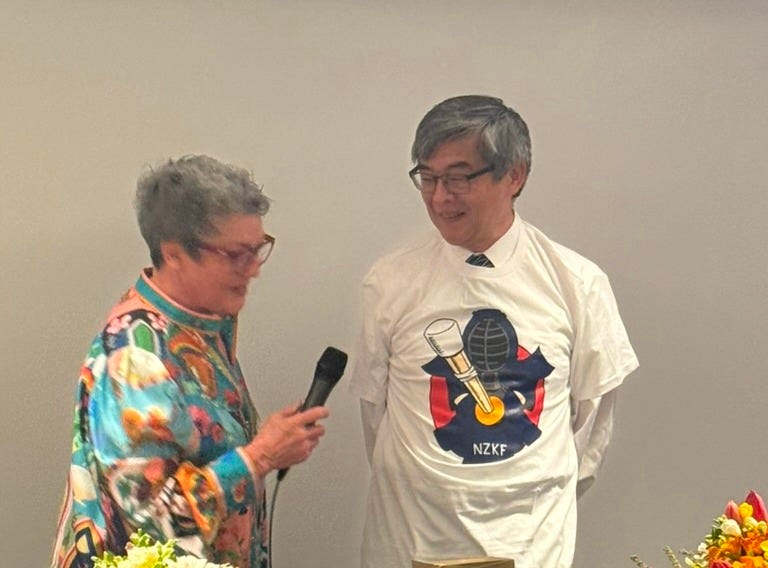
None of it makes the anniversary speech. Nor should it. Volunteer organisations survive because ordinary people perform extraordinary acts of persistence without expecting applause. Well, most people don’t expect accolades, but some certainly do. But for the most part, every successful seminar, national championship, grading examination, and overseas tour rests upon hundreds of hours of unseen effort.
The people who built the New Zealand Kendo Federation understood this. Some of them are no longer with us. Others, after decades of service, have stepped back and allowed younger members to assume responsibilities they themselves once carried.
Looking around during the anniversary celebrations, I found myself reflecting on just how much the federation has changed. When I first became involved in New Zealand kendo in the late 80s, many of those pioneers seemed larger than life. They were the organisers, the drivers, the committee members, the referees, the teachers, the fundraisers, and, somehow, they still found time to train.

I’m committed to keeping my work freely accessible to all budo enthusiasts, wherever they are. If you’ve enjoyed what you’ve found here and would like to support my ongoing efforts and projects, “buying me a coffee” (beer actually), or my books, would make a world of difference.
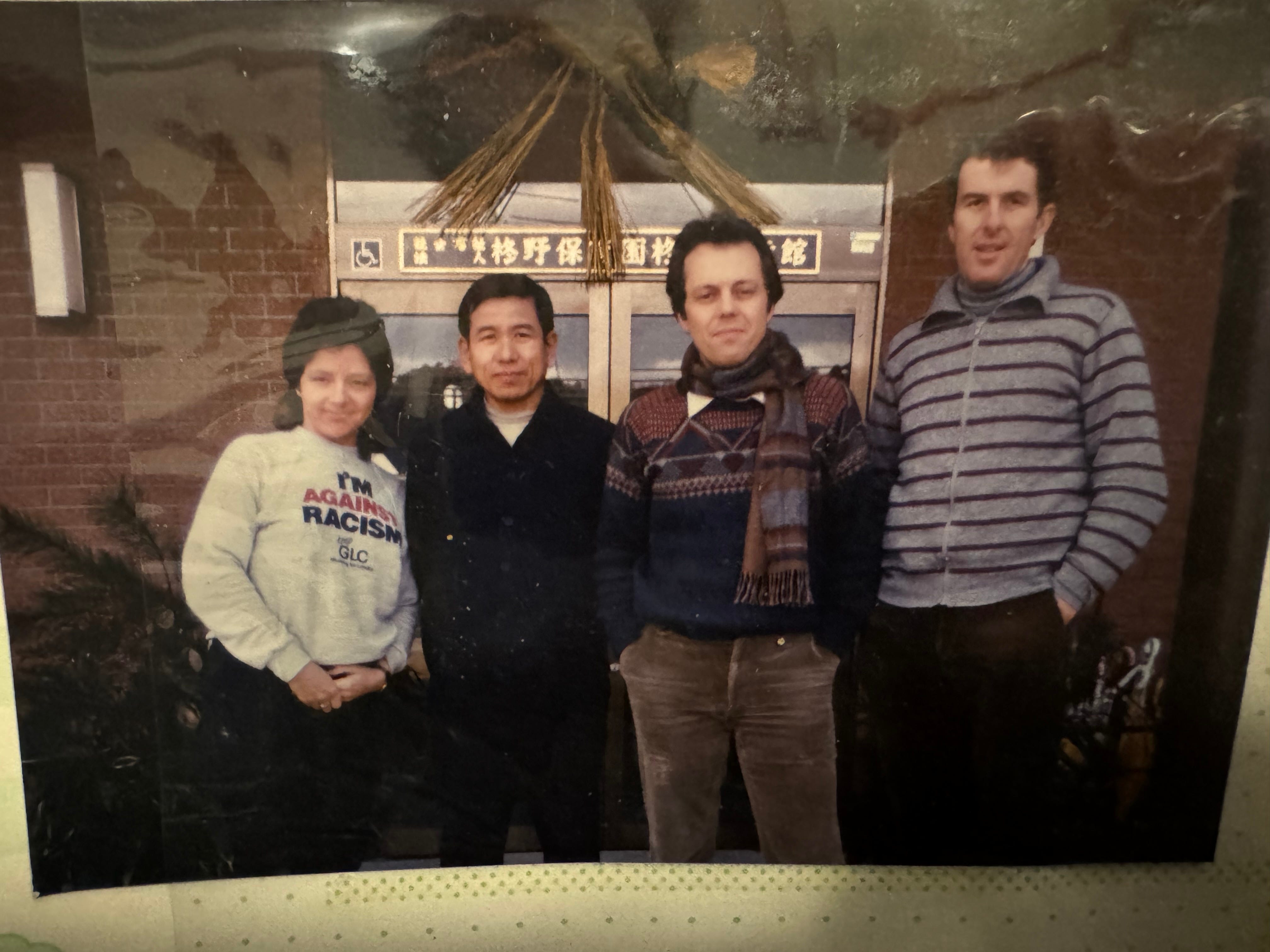
Today they have become the senior generation. Some have retired from active practice. Others continue despite bodies that no longer cooperate as enthusiastically as they once did. A few now exist only in our memories and in fading photographs.
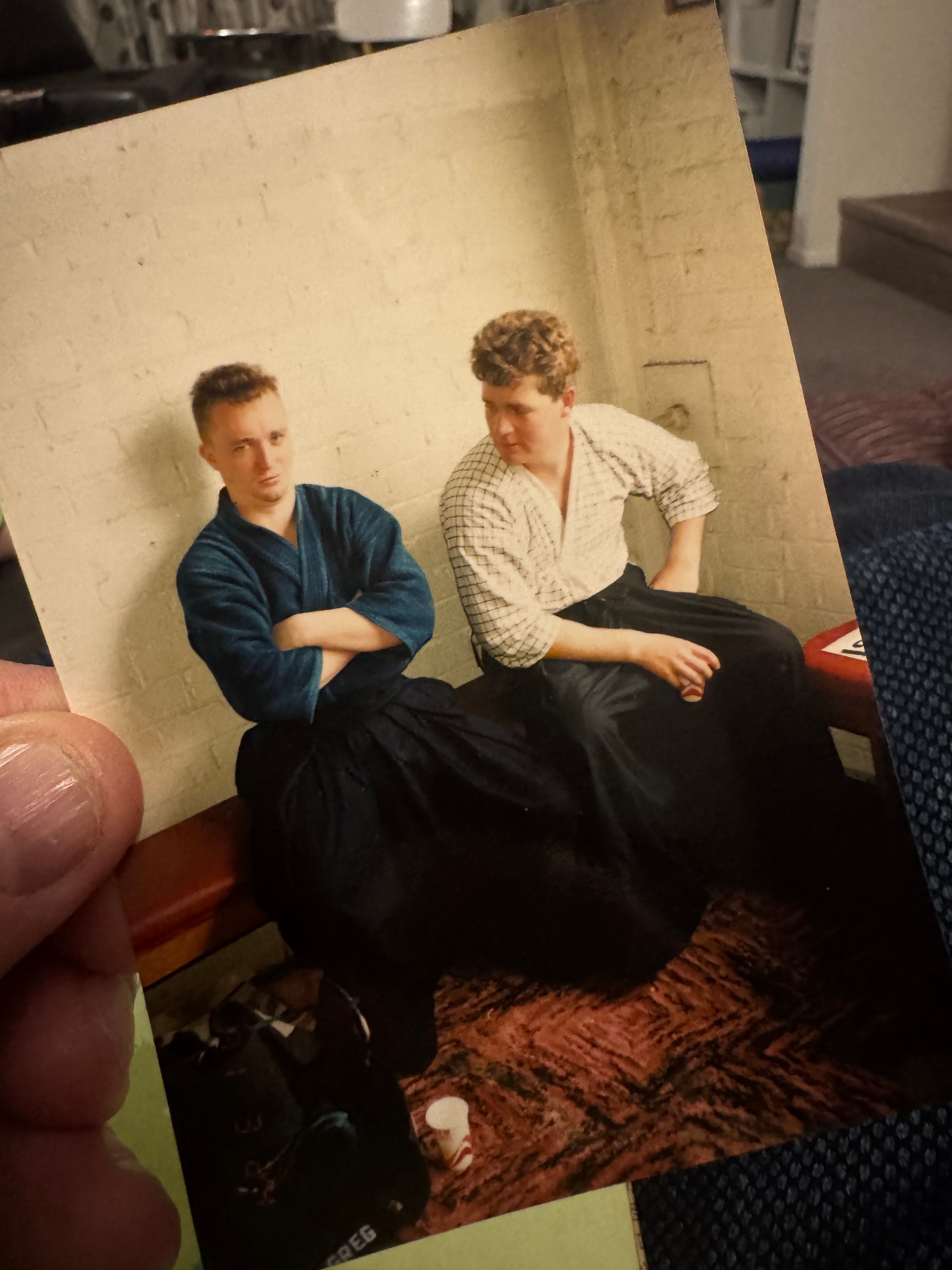
That realisation while looking over old photographs at NZKF Chairperson Sue Lytollis’s abode gave me pause. Not because I doubt the future of New Zealand kendo. On the contrary, the standard of kendo has never been higher. New Zealand practitioners are better connected internationally than ever before. Opportunities to travel, compete, and learn have expanded beyond anything the founders could have imagined.
My concern lies elsewhere. I worry that success can encourage forgetfulness. When an organisation becomes established, it’s easy to assume that everything simply happens by itself. National championships appear on the calendar. Gradings are organised. Overseas instructors arrive. Referees stand on the court. The books balance. Some poor bugger gets pressganged into updating the website. Someone sends the emails. Someone unlocks the hall.
Someone… That anonymous “someone” is the lifeblood of every volunteer organisation, doing quietly and for nothing what FIFA pays a large fortune to do badly, in public, and occasionally under indictment. So, really the danger facing mature organisations like ours is rarely conflict, or the ordinary hiccups that come with fifty years of running the thing. The greater danger is indifference.
When members begin to think of the federation or club as something that provides services rather than something to which they contribute, the foundations slowly weaken. Not dramatically, and certainly not overnight. Just gradually enough that nobody notices until the burden falls upon too few strained shoulders. And then those axe-grinders come out again to bitch and moan about how the organisation is not up to task. Which is fair enough, provided they are willing to back the complaints with actual hands-on help and cooperation; do that, and the axe can just as easily turn into a buried hatchet, and stuff gets done.
Budo offers an interesting perspective on how organisations are actually built. In kendo, as we all know so well, improvement is rarely dramatic. It comes incrementally from showing up repeatedly, correcting small mistakes, and practising fundamentals that are neither particularly glamorous nor exciting. Organisation building follows exactly the same principle. There are no secret techniques or shortcuts. Just people who continue turning up and chipping away at things together with whoever else is there.
Turning up to train, to referee, to serve on the committee, to clean the venue after everyone else has gone home. Turning up to welcome the nervous beginners who wonder what they’ve got themselves into. Turning up to instruct them, too, on evenings when you would far rather have been left alone to work on your own kendo. Those simple acts, repeated thousands of times in various clubs over half a century, built the federation we celebrated this year.
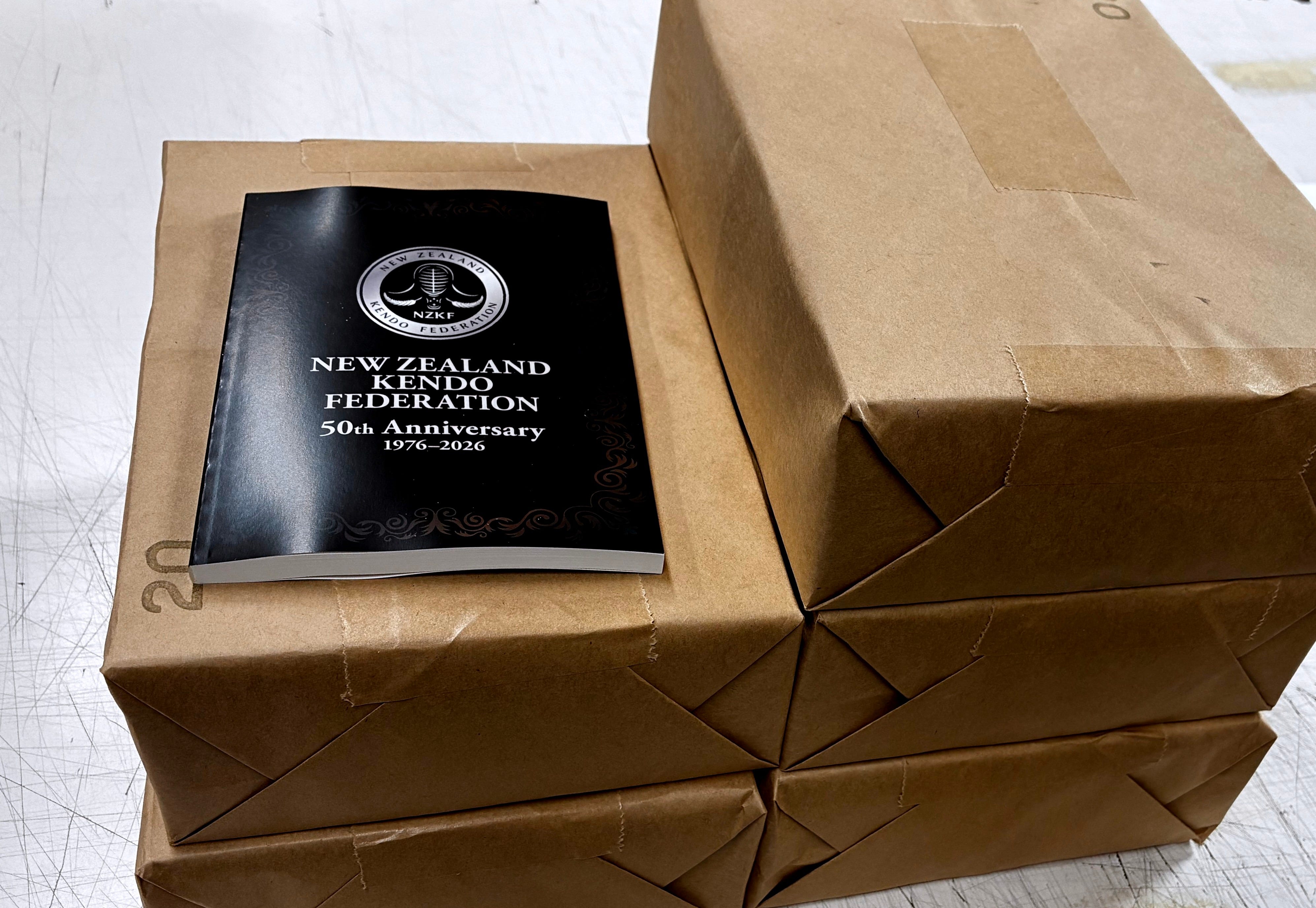
Perhaps that’s why anniversaries are important. Not because they allow us to pat ourselves on the back, but because they remind us that we have inherited something rather precious, and that none of us built the federation alone.
Each generation received it from those who came before, improved it as best they could, and then entrusted it to the next. That is true of budo itself. We inherit techniques refined over centuries. We are entrusted with the etiquette, traditions, and values shaped by countless teachers. We do not own them. We are merely temporary custodians.
At the anniversary itself, when I was asked to say a few words, I found myself returning to a word every kendo practitioner uses constantly without ever really stopping to think about it: keiko, the Japanese word for practice or training. Written out in its two characters, keiko literally means something closer to “to consider the past.” Fewer people know that this pairing was itself lifted from an older, four-character phrase, keiko shōkon (稽古照今), which means roughly: consider the old, so as to illuminate the present. In other words, the very word budo practitioners use for turning up to train carries within it the idea that studying what came before is how you come to understand where you now stand, and see the way ahead.
The same is true of an organisation. The founders of the NZKF could not possibly have pictured what New Zealand kendo would look like half a century on: none of them, I imagine, foresaw the sheer depth of information available on this internet thingummy, let alone Zoom trainings and even gradings in a worldwide pandemic.
Come to think of it, I cannot picture what it will look like fifty years from now either. International holo-dojo, perhaps, with sensei beamed in live from Kyoto to correct your kamae. An actual dojo on the moon, even, with exorbitant prices for equipment shipped from Earth. A cyborg category at the World Kendo Championships, for reasons I would rather not speculate on. Whatever it turns out to be, I doubt it will resemble anything any of us could currently guess at.
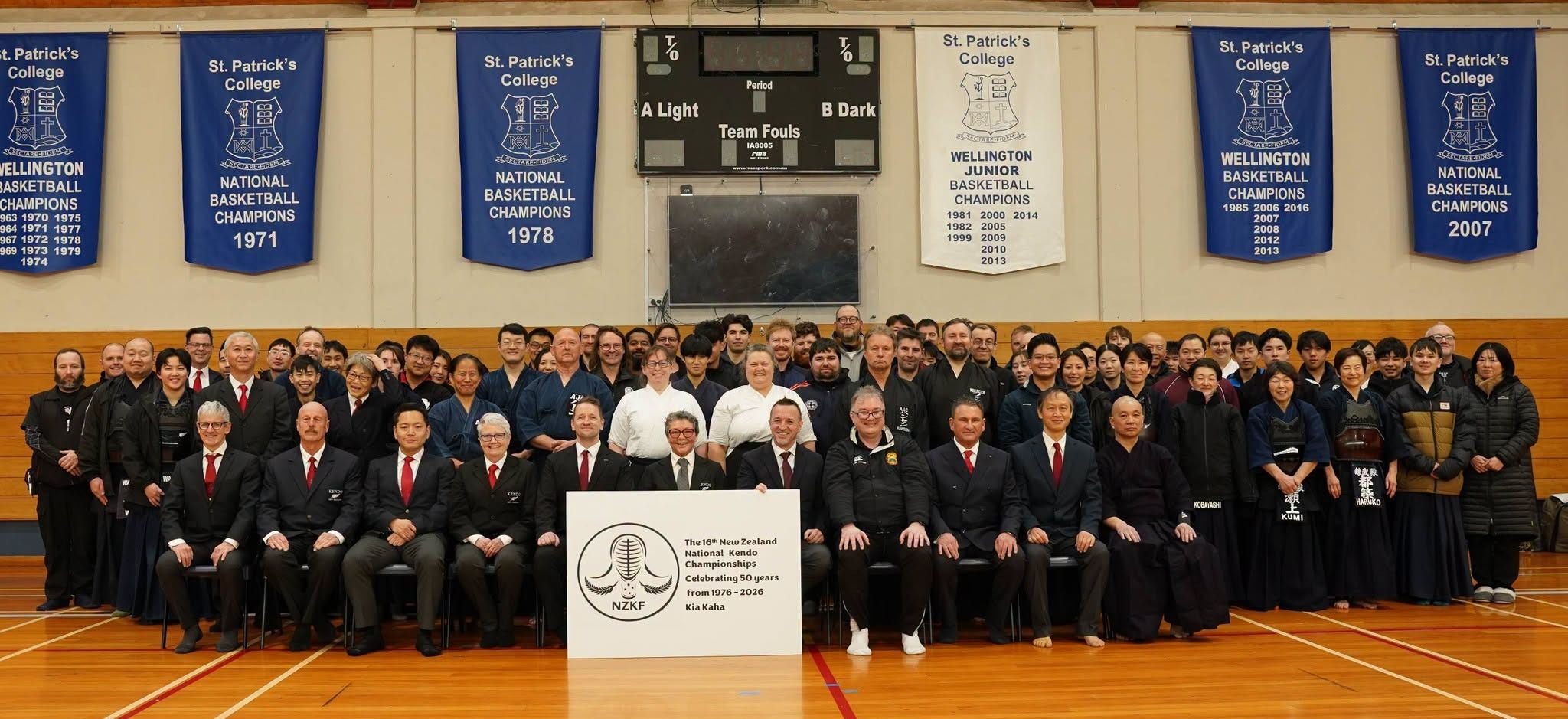
But I suspect the founders, like whoever inherits the federation in 2076, would recognise, instantly, the qualities that actually kept the thing going: commitment, friendship, a pigheaded perseverance, and a willingness, more often than not, to put kendo ahead of themselves. Those qualities are the organisation’s real inheritance, and fifty years on, they are still what holds the thing together.
Which brings me, in the end, to the point of the thing. As we marked this milestone, I found I cared rather less about what we had achieved than about what we now owe. The New Zealand Kendo Federation has survived fifty years for one reason above all others: enough people, often through gritted teeth, agreed that kendo and related arts in the federation mattered more than being right about it.
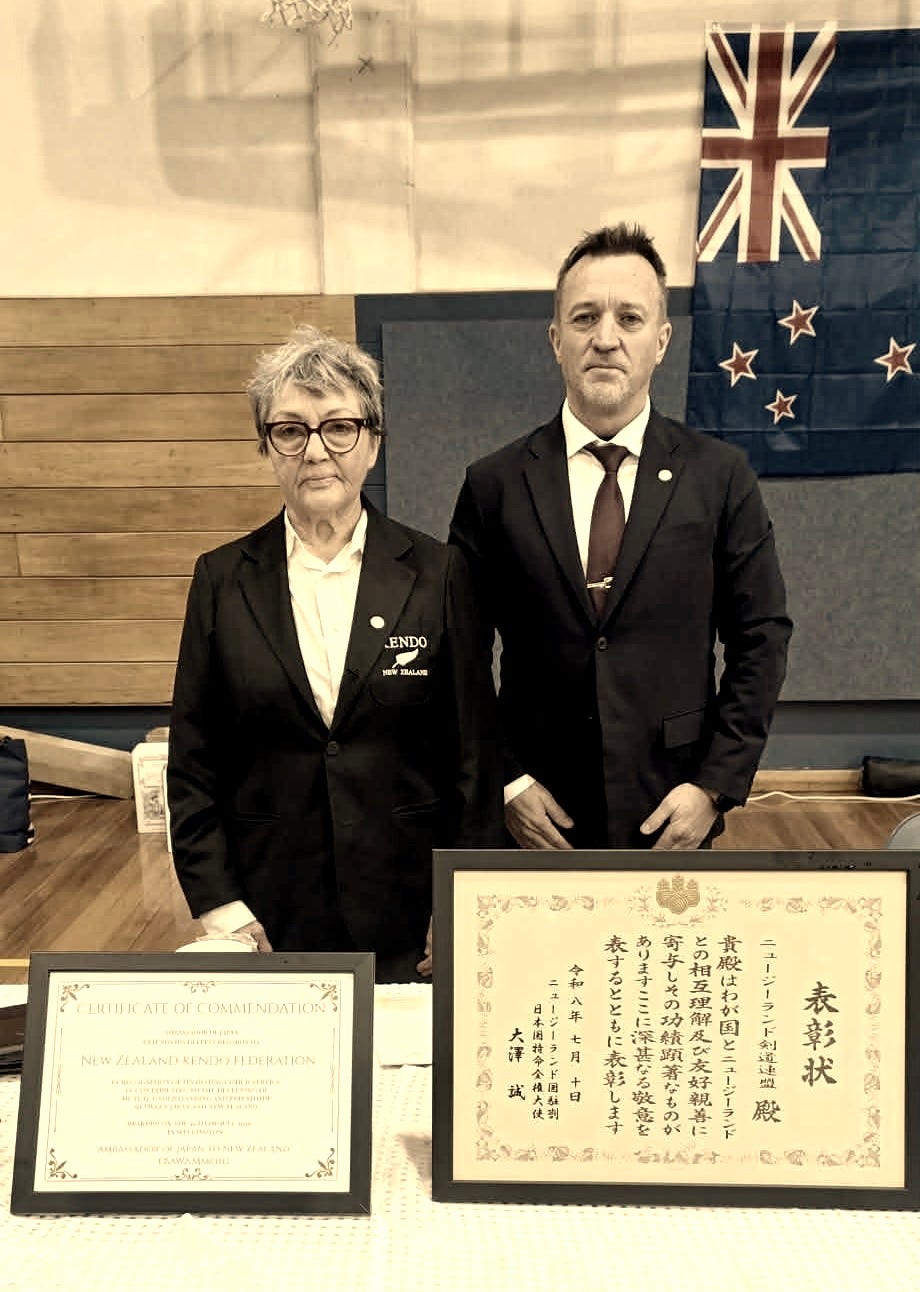
My hope is that we never lose sight of that. If, fifty years from now, another generation gathers to celebrate the federation’s centenary, I hope they will remember our lot not for our grades, medals, titles, or the lack thereof, but because we accepted the same responsibility that was handed to us. To leave the federation just a little stronger than we found it.



No comments yet.