






Budo Beat 69: Stuck in the Quagmire – 8th Dan Exam Post-mortem
The “Budo Beat” Blog features a collection of short reflections, musings, and anecdotes on a wide range of budo topics by Professor Alex Bennett, a seasoned budo scholar and practitioner. Dive into digestible and diverse discussions on all things budo—from the philosophy and history to the practice and culture that shape the martial Way.
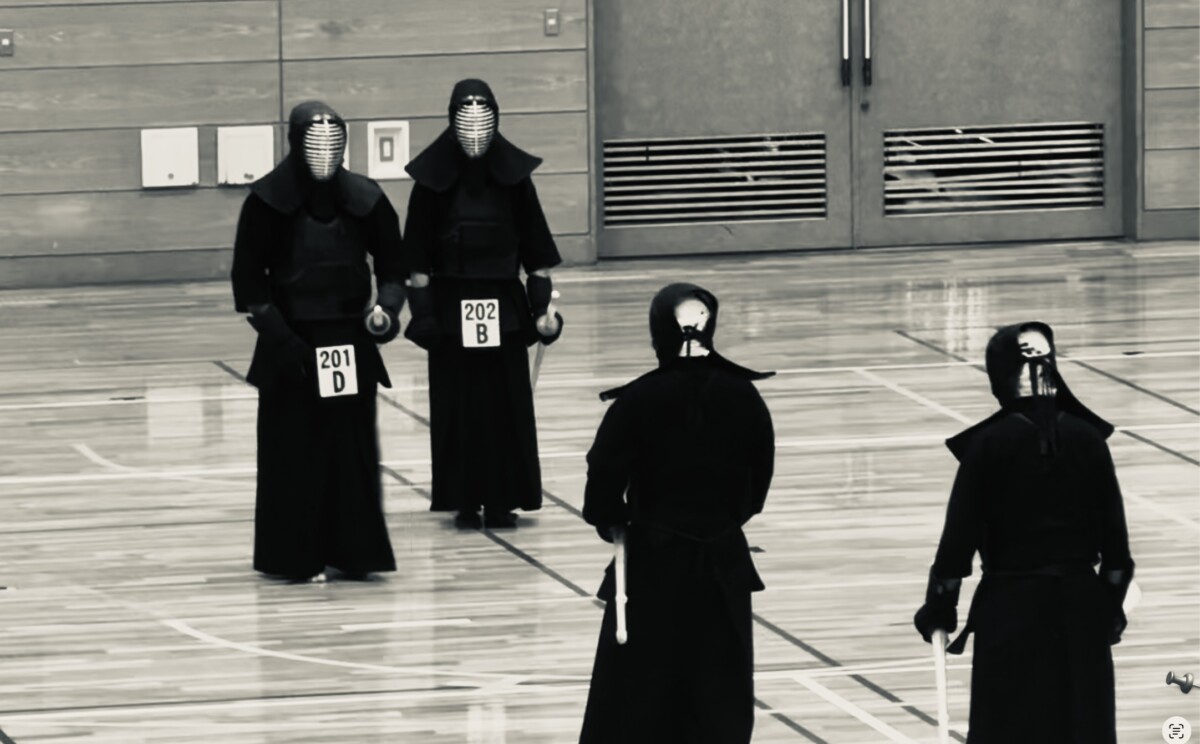
I recently took the kendo 8th Dan examination in Nagoya, again. A week ago, actually. And again, I did not pass. So, for the many mates who PMd me to see how it went this time, this is it.
Basically, it was shite. As always, there is no great injustice to report. No story about bad luck, nor any convenient claim that my opponents didn’t give me the right sort of kendo to show my best. I stepped onto the floor, did what I did, and it was not enough. That is the brutal simplicity of the 8th Dan grading. Whatever explanations failed candidates try to construct afterwards, the result is sitting there in black and white, and you just have to deal with it. Still, failure is useful only if you are prepared to examine it before vanity gets there first and starts rearranging the evidence. So here I am, staring at the wreckage with as much honesty as I can muster. Where, exactly, am I going wrong?
I was fortunate enough to receive some candid feedback from S-sensei, one of the examiners from the previous day who had stayed on to watch from the stands. He said “Your kigurai was definitely there, and you looked strong. Your first fight was very good. In the second, though, it looked as if you’d decided your own kendo needed improving on the spot. You lost your rhythm, and your opponent munted you with a strike.” More pointedly, he said “Your aiki looked contrived.” All budo jargon, but I’ll explain shortly.
That last observation in particular stayed with me on the drive back to Kyoto and beyond. I have spent the last week deconstructing his observations, and I need to get this down while it’s still fresh in my mind. If I’m going to knock this bugger on the head, so to speak, I need to work out all the chinks in my armour.
Kigurai is difficult to translate neatly and was the subject of a previous blog post. Dignity, bearing, presence, confidence and spiritual authority all circle around the idea, but none quite captures it. In practical terms, it is the quality of someone who does not need to advertise that they belong in the encounter. You stand there and, somehow, the space changes. If examiners could see that in me, then at least the foundations are not missing! The problem is what I do next to get myself onto the right side of a pass rate of less than one per cent.
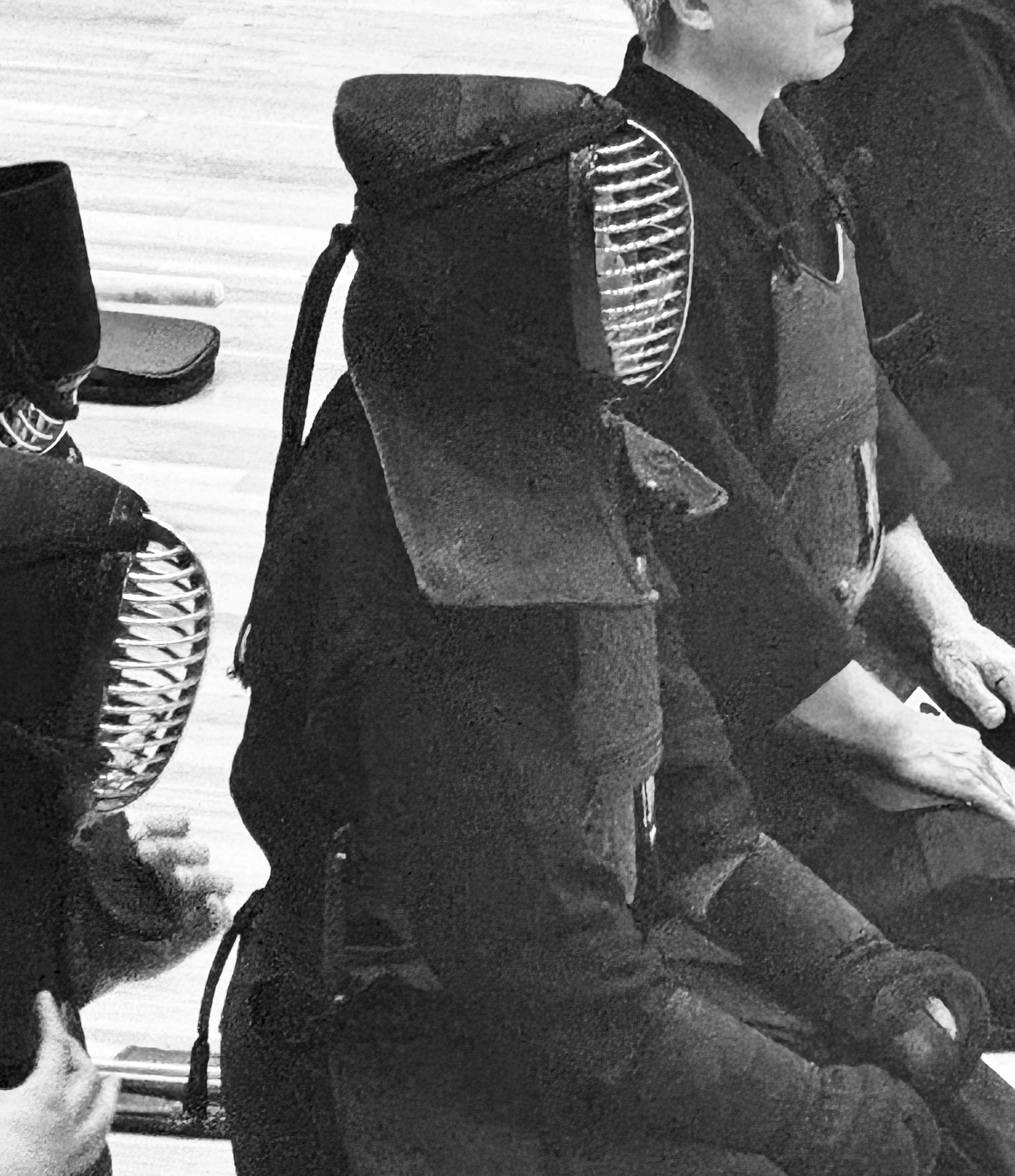
The first match apparently showed the kendo I am capable of. I was composed, connected and able to let the encounter develop. Then, perhaps because the first one felt good, I went into the second trying to make something more happen. I knew that I needed to take the initiative (sen). And, I knew the examiners needed to see a decisive opportunity and a strike with sufficient force, posture and lashings of zanshin. In short, I knew far too much, and it took me summarily out of the “zone”.
Knowledge is useful in training, but during an examination it can become a noisy back-seat driver with a map, a stopwatch and no intention of shutting up. Take sen. Don’t wait. Apply pressure. No, wait. Keep that posture straight. Relax shoulders. Don’t chase. Chase. Don’t get hit. WTF. Blah, blah, blah. By then, the mind resembles a committee meeting held during a house fire. At some point, the inner commentary becomes so loud that there is no room left to encounter the person standing in front of you. At least, this is what happened this time. I smelled blood after the first fight, and then my intrusive but well-meaning brain took over, I got greedy, and lost sight of my opponent.
At least, I guess that’s what happened in my second match. I was no longer taking sen. I was trying to look like I was in charge and taking the initiative. There’s a considerable difference. I became artificial.
Real sen emerges from the relationship between two people. It requires sensitivity to the opponent’s intent, rhythm, breathing, tension and uncertainty. It is not just moving first. As one old sensei once explained it to me, “It’s arriving first at the moment in which the encounter becomes decided.” Sometimes that results in an immediate strike. Sometimes it means holding the pressure for another fraction of a second. What matters is that the action grows naturally out of the mutual engagement.
When I tried too hard to seize it, I was imposing a plan onto something that had not yet happened. My opponent was no longer a person to be read. He had become an obstacle in the way of the performance I was attempting to give the examiners. That is probably why the aiki looked “contrived”.
In kendo, aiki does not mean cosy harmony. It is the meeting of intent, the point at which both sides are fully engaged in the same dangerous conversation. Even when one person dominates, the exchange remains real because each is responding to the other. Contrived aiki is different. It is the outward form of connection without the genuine inner contact. The distance may look right. There may be plenty of pressure and an impressive facial expression of indifference, but one person is essentially acting out their own script.
The 8th Dan examination for kendo does not award points for a well-developed intellectual understanding of what ought to happen. The body must know, and then the mind pretty much has to get out of the way.
This does not mean becoming “mindless”. Nor does it mean abandoning technical or strategic preparation. The old injunction of mushin is sometimes explained as having no thoughts at all, which is surely impossible unless one is unconscious or dead. The point is not the absence of mental activity, I think, but the absence of attachment. A thought comes, but we do not grab it. An opportunity appears, but we do not lunge at it in desperation. We perceive and act without the extra layer of self-conscious interference.

I’m committed to keeping my work freely accessible to all budo enthusiasts, wherever they are. If you’ve enjoyed what you’ve found here and would like to support my ongoing efforts and projects, “buying me a coffee” (beer actually), or my books, would make a world of difference.
My difficulty this time may be that I’m not attached only to passing (most candidates are, of course), but to the idea of how a successful 8th Dan candidate is supposed to look. Commanding kigurai. Strong seme. Control of the centre. Taking sen. A clean, unmistakable strike. These are all absolutely correct. Yet if I assemble them deliberately, one by one, the result is no more alive than a body constructed from anatomical parts and laid out on a table. Well, not quite as bad as that, but you get the idea.
Good kendo flows because its elements are not separate. Posture is pressure. Pressure is opportunity. Opportunity is action. Action becomes zanshin. There is no visible join between them. The moment I think to check whether each part is present, I introduce hesitation or excess. I press when I should listen. I strike when I should continue pressing. I rush to prove that I’ve taken the initiative, and in doing so surrender it. Then I get whacked.
Being struck is not automatically fatal in an 8th Dan examination. The grading is not a shiai, and the examiners are not simply counting points. But the way one is hit can reveal everything. In my case, it seems to have exposed that I had lost control of the encounter. The strike was the visible consequence of a fracture that had already occurred inside my mind. My flow had gone because my attention had shifted from my opponent to myself.
Was that attack decisive? Am I doing enough? Do I look passive? Am I showing what the examiners want? Those questions, although incredibly fleeting, are poison in the moment of engagement.
The obvious answer is to say, “Stop bloody thinking, you twit.” But anyone who has been told not to think about something knows what happens next. Trying not to think is just another form of thinking too much. Nor can I solve the problem by telling myself to relax. Forced relaxation is simply tension wearing casual clothes.
What I need, I suspect, is greater trust. Trust that the kendo I have already built is enough and does not need inflating. Trust that I can take sen through genuine connection, rather than trying to manufacture it because the clock is running. And trust that a strike born from the encounter will carry more weight than one produced to satisfy an examination checklist!
This is not a call to myself to do nothing. Waiting passively and calling it trust would be another [in]convenient deception. I still have to enter, apply pressure, disturb my opponent and take responsibility for the encounter. The difference is in the quality of that responsibility. I must lead without trying to drag the exchange towards a predetermined result.
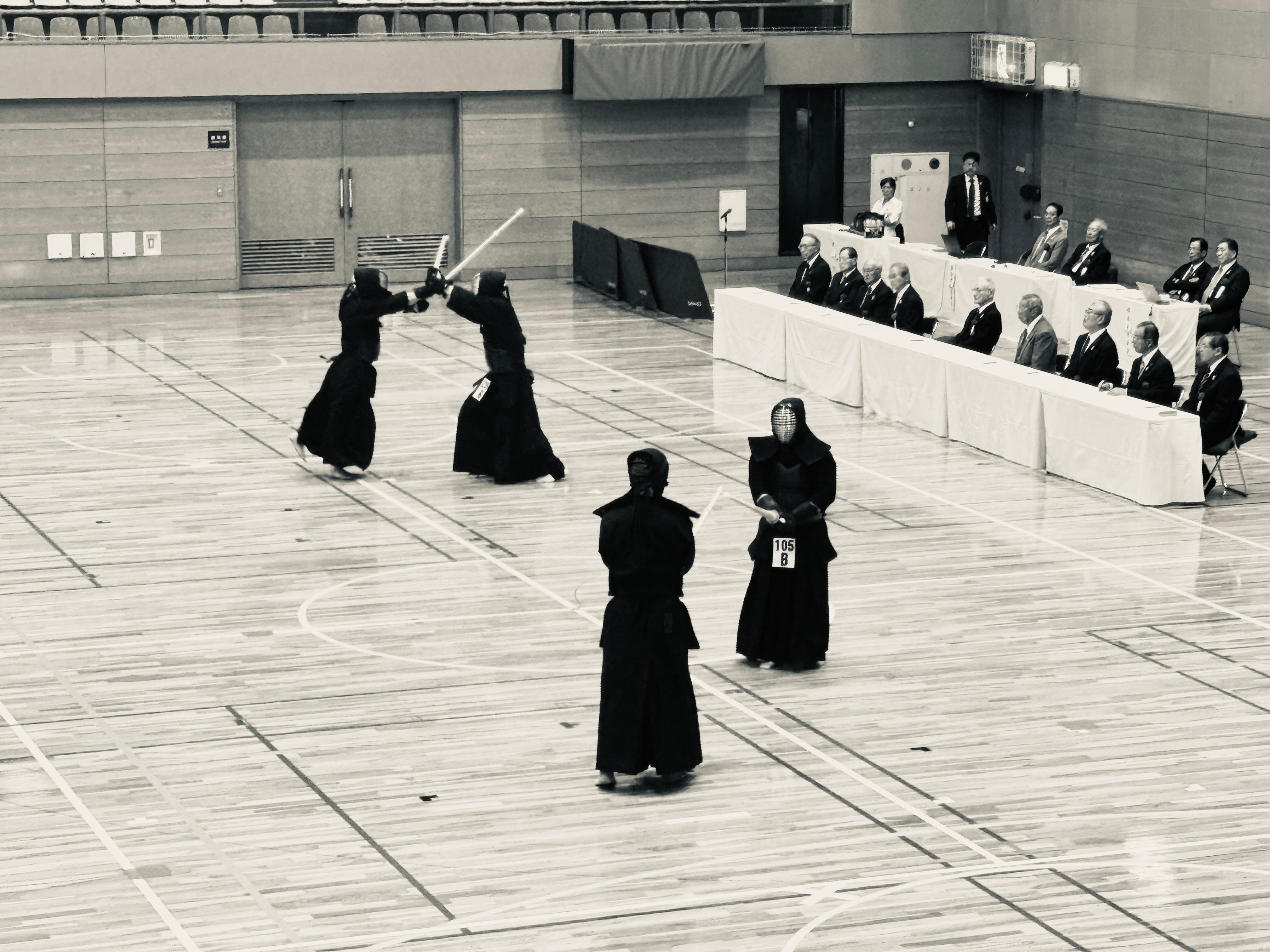
That may be the wall separating me from 8th Dan. It’s not a missing technique or a lack of presence. It is the urge to demonstrate what I already possess. The harder I try to show the examiners my kendo, the more I obscure it. In that sense, I think I have taken a step back from where I was last time.
There is a familiar cruelty in this. To pass, I must care enormously. Preparing for the examination demands years of disciplined effort, regular keiko, physical maintenance, travel, expense and repeated public failure. Yet on the day, I must step onto the floor without clutching at the result. I have to want it wholeheartedly without letting that desire dictate my movements.
Easy to write. Bloody difficult to do. Still, the feedback from Nagoya was encouraging in its own way. If the first tachiai was good, then the required kendo is not some mysterious quality entirely beyond my reach. It is already in there, somewhere. The task is to make it stable enough that it survives from start to finish, through the awareness of being judged and the temptation to force the issue.
My takeaway from this examination is that the next stage of my training is less about adding than removing. That means less rehearsal, less interference, and less determination to force the encounter towards a conclusion. I simply need to stay with the person in front of me, remain inside the uncertainty, embrace it, and trust the body to act when the moment is truly there. Of course, knowing this in theory is one thing. Making it a genuinely natural part of my kendo is quite another. If understanding were enough, I’d have passed already. I’ll always strive to improve my kendo, but I also need to stop getting in the way of the kendo I already have.
Right then. That’s quite enough rummaging around inside my own head. Time to put the men back on and get back to work.




No comments yet.