










Budo Beat 67: Same Mountain, Different Paths – Iadera and Creativity
The “Budo Beat” Blog features a collection of short reflections, musings, and anecdotes on a wide range of budo topics by Professor Alex Bennett, a seasoned budo scholar and practitioner. Dive into digestible and diverse discussions on all things budo—from the philosophy and history to the practice and culture that shape the martial Way.
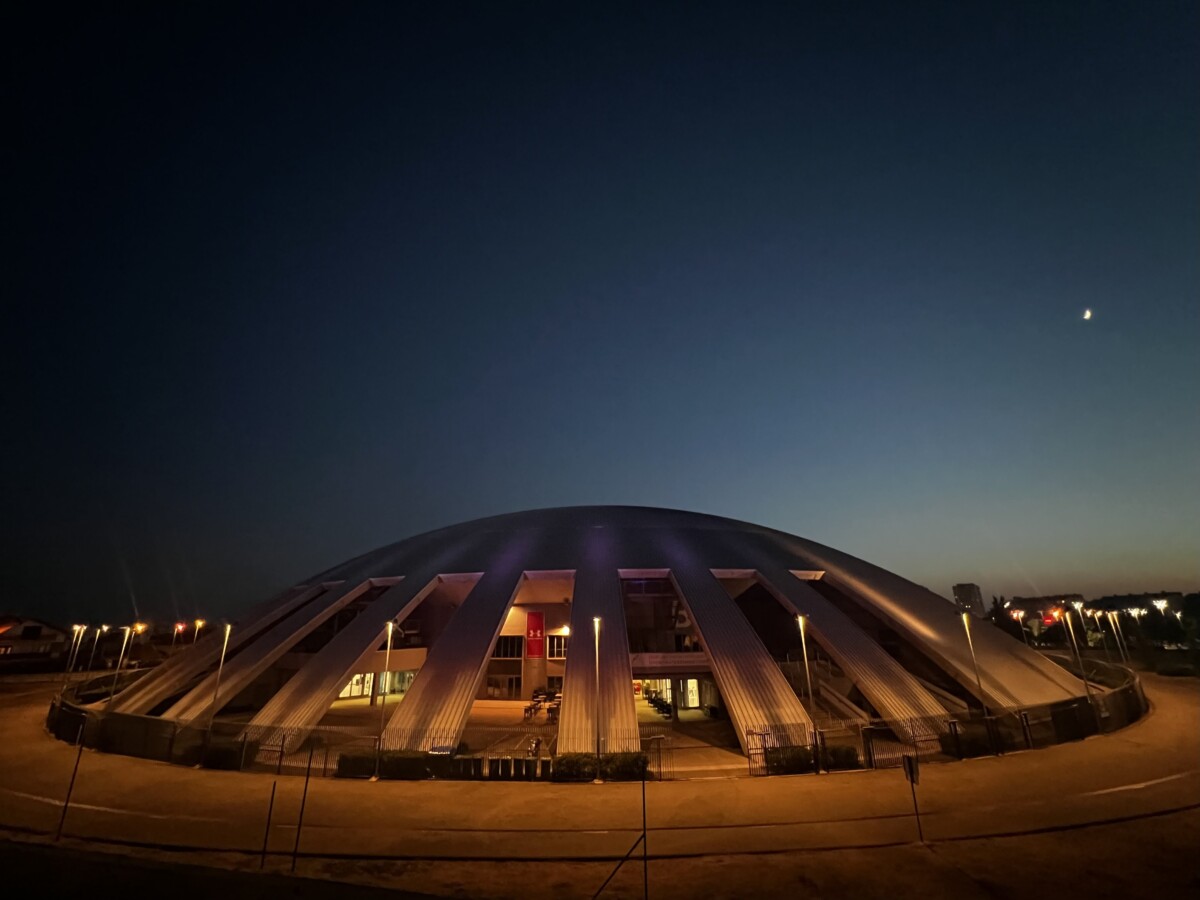
Every July, though sometimes a bit earlier or later, I travel to Zadar, Croatia.

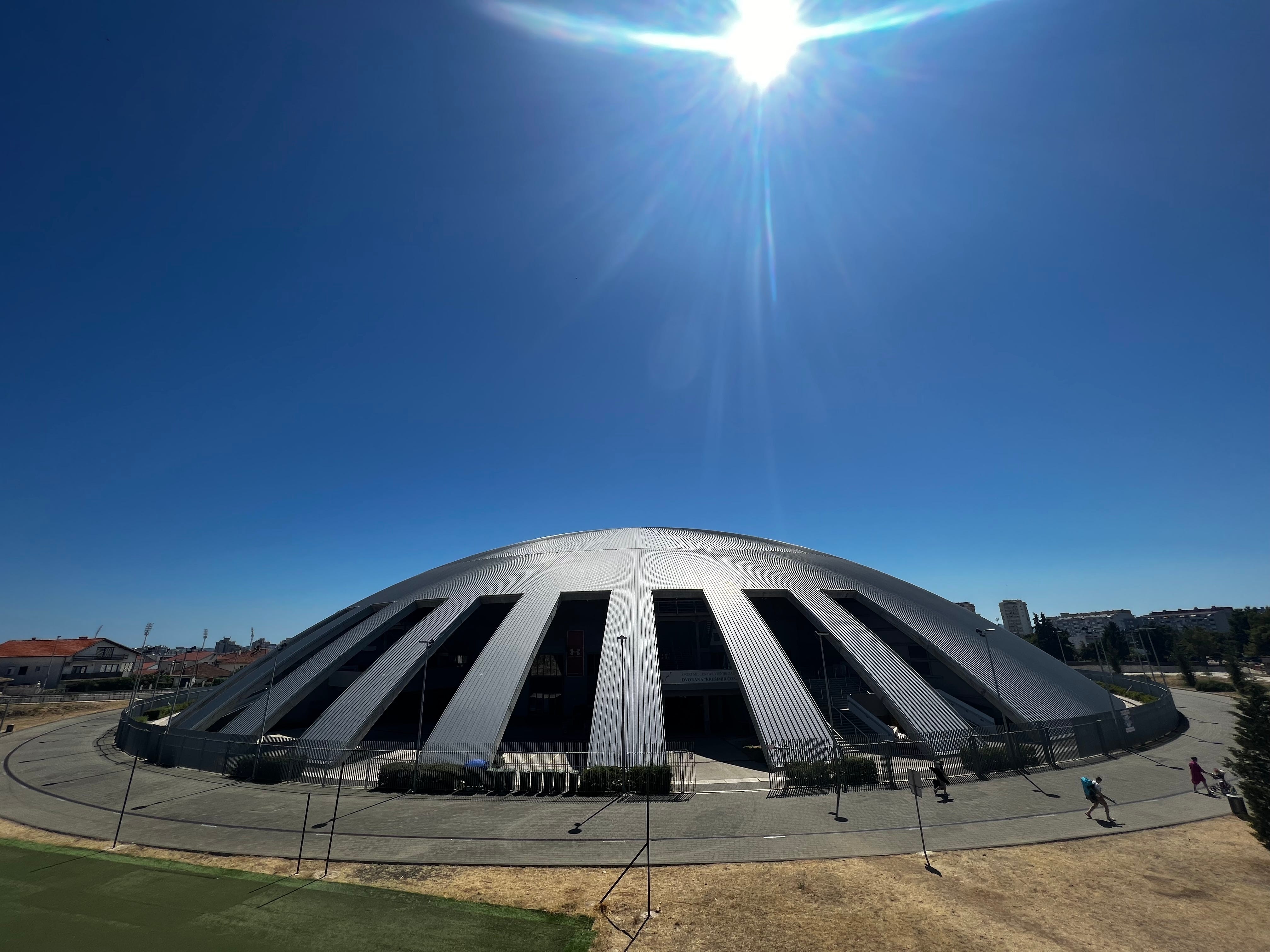
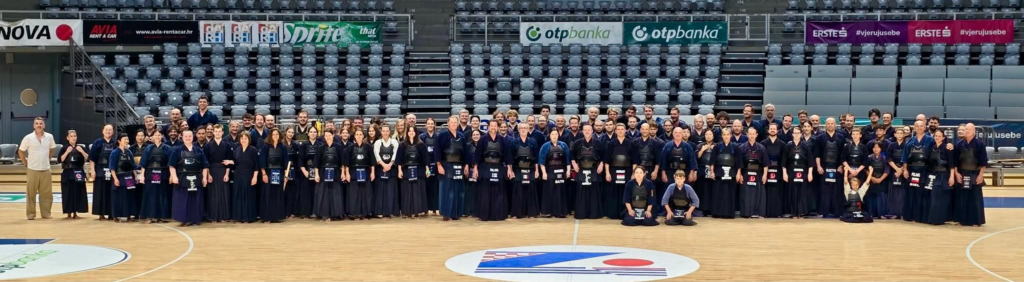
To the Romans, it was Iadera, and over the past decade that ancient name has come to represent one of Europe’s most distinctive kendo gatherings. This year marked the tenth Iadera Gasshuku, drawing around 120 kendoka for several days of keiko and instruction. Oh, and lashiings of fun.
None of this happens by itself. Marko Lukić and his crew put an extraordinary amount of work into making the Iadera Seminar possible. Participants see the finished timetable and the relaxed atmosphere. They do not see the months of organisation and problem-solving behind it all. The fact that the event feels so natural and welcoming is evidence of how much work has already been done before the rest of us arrive.
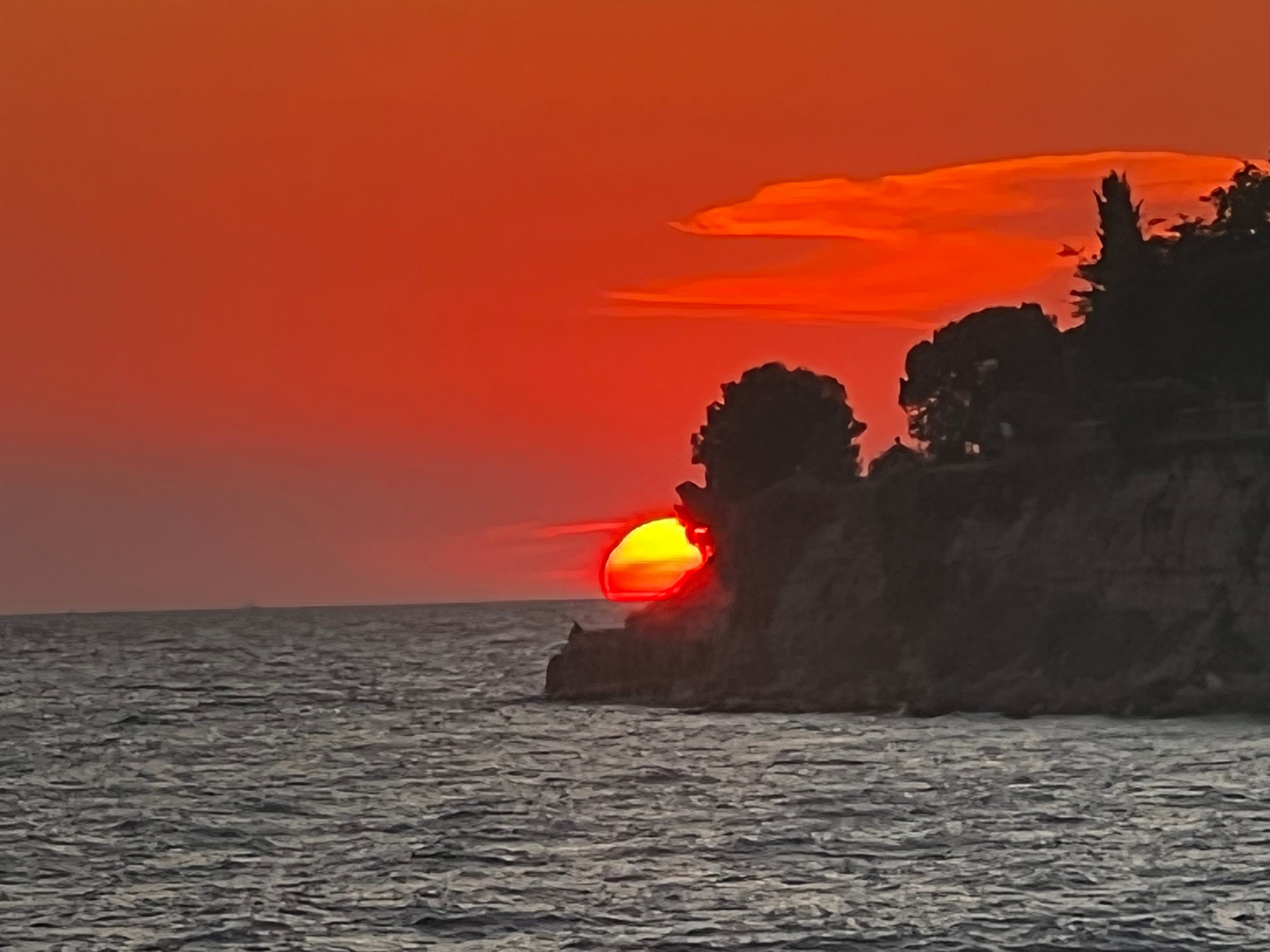
There is something slightly improbable about holding a kendo gasshuku beside the Adriatic Sea. Kendo is not normally associated with turquoise water, stone streets, Mediterranean food, and people wandering around in shorts looking suspiciously relaxed. Its natural habitat, at least in Japan, tends to be a municipal gymnasium with the architectural charm of a concrete bunker.
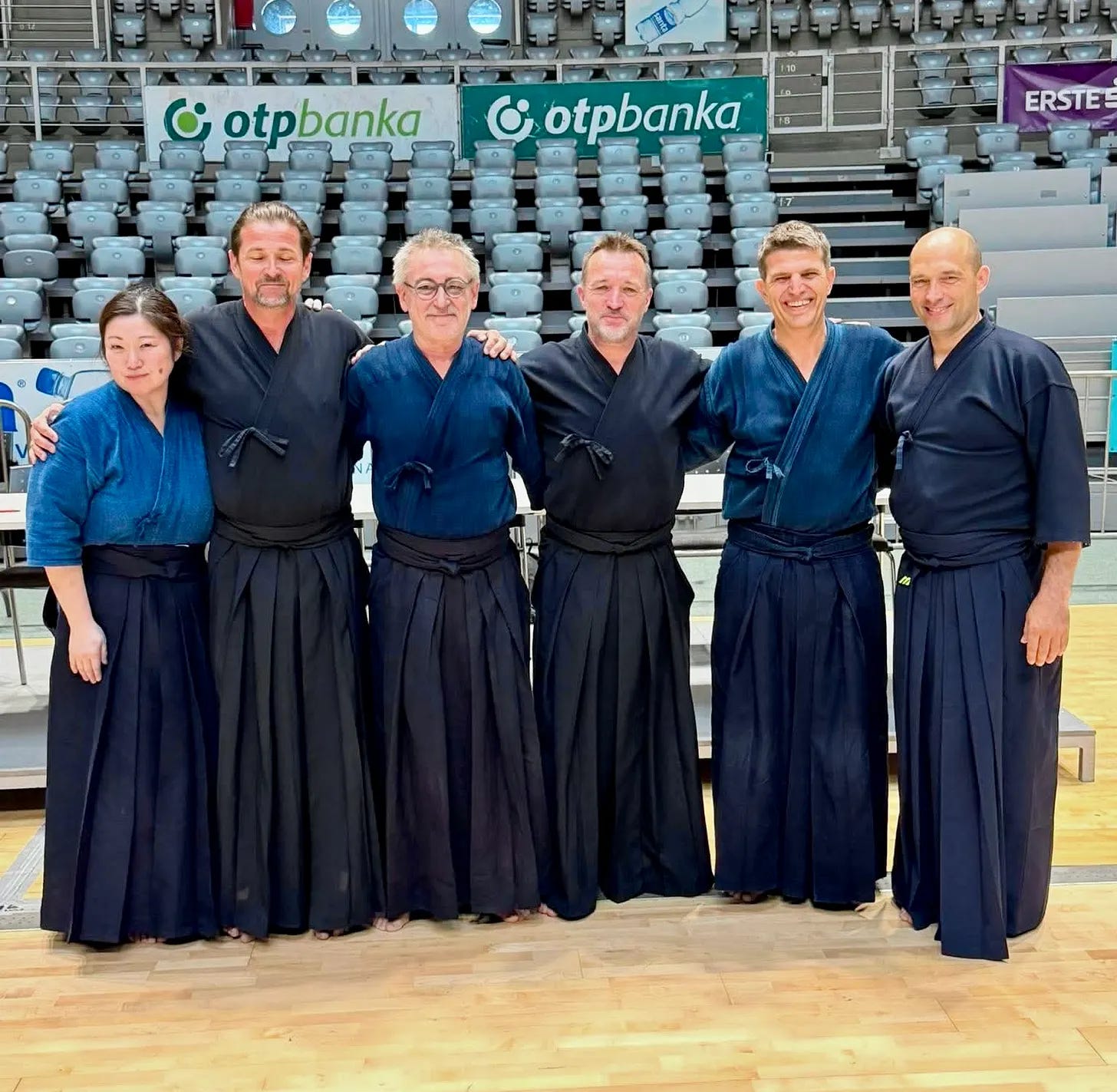
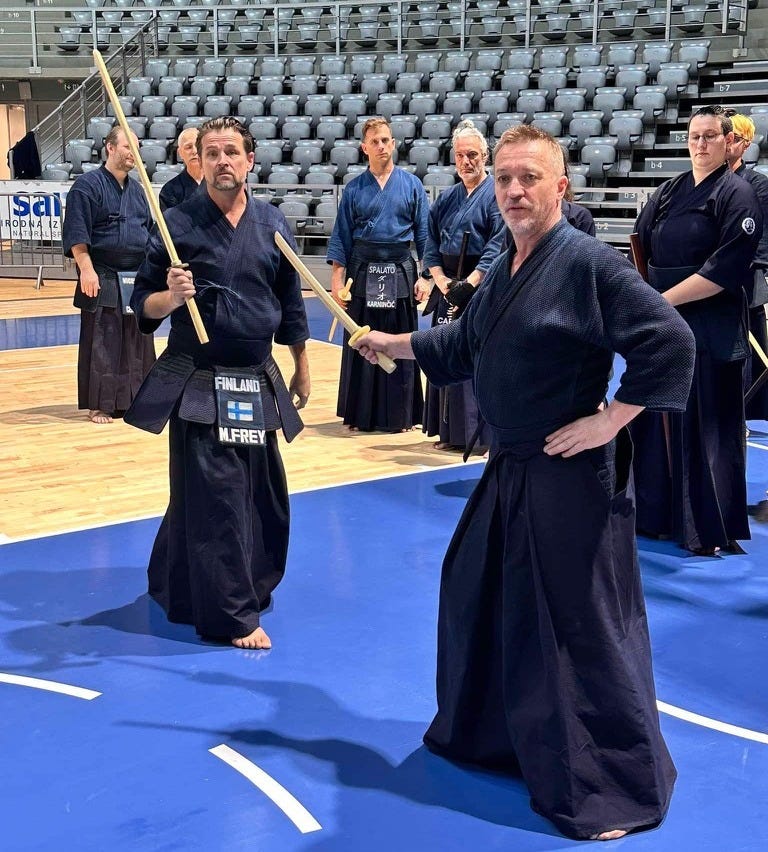
Kumi Sato, based in Sweden, joined us as this year’s guest instructor, alongside the regular teaching team of Markus Frey, Lorenzo Zago, Tibor Bárány, Christian Filippi, and me. I should also make mention of the other 6th and 7th Dan teachers who serve as assistants. That range of backgrounds and experience also gives rise to what has always struck me most about Iadera: ye olde teaching paradox.
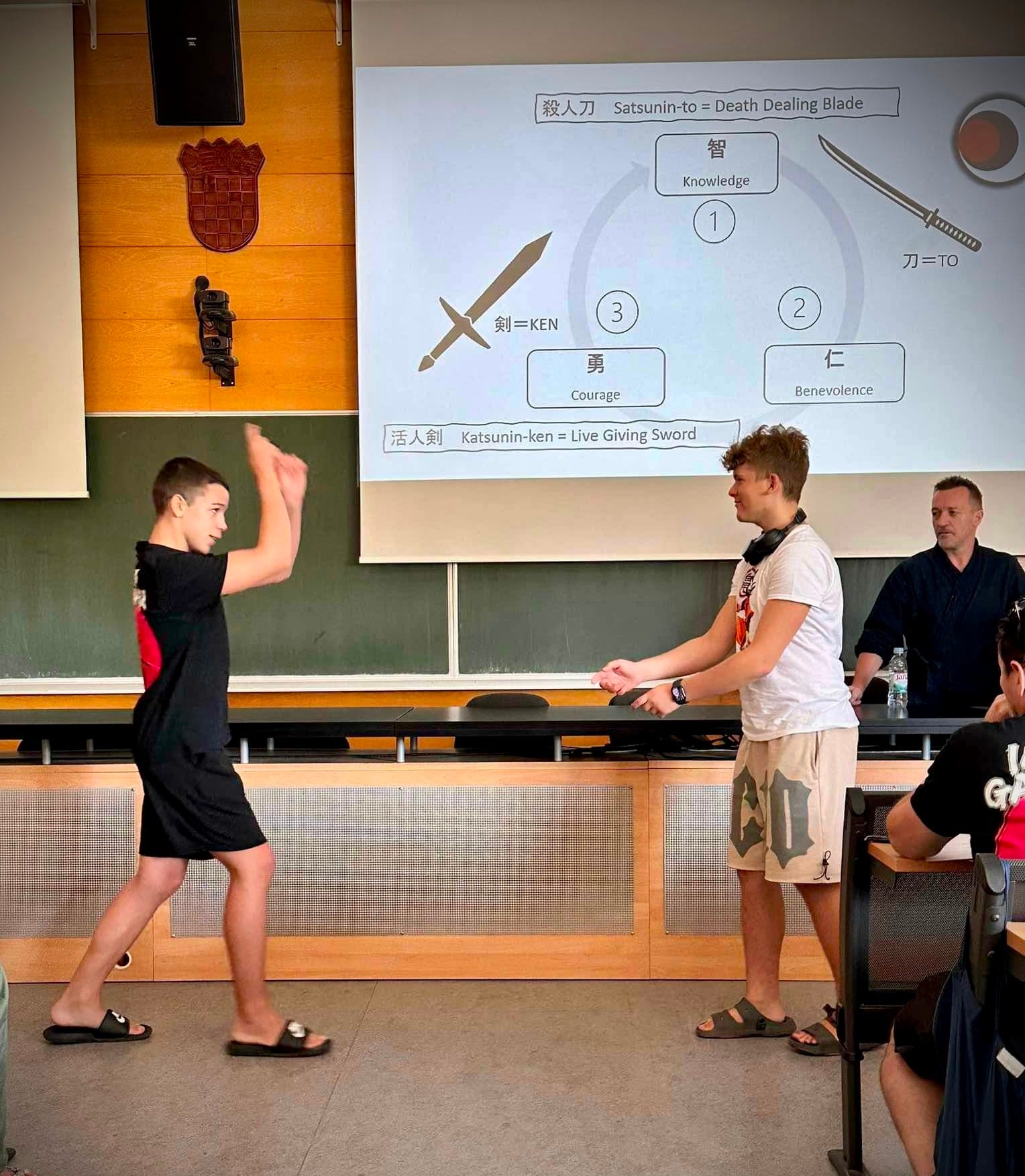
We divide participants into groups according to grade, and the instructors rotate through each group to lead a session. There are no scripts or coordinated lesson plans beforehand. Each teacher approaches the session from a different direction, shaped by personal experience, language, interests, and the needs of the students in front of them. Yet by the end, you realise that each instructor has taught kendo differently, with a distinct style and emphasis, and that somehow it all fits together seamlessly.
That is the part that keeps pleasantly catching me off guard. Uncoordinated teaching, by any reasonable expectation, ought to produce drift, contradiction, five different versions of the same lesson pulling in five different directions. Instead, coherence is exactly what survives, and it survives without anyone having planned for it.
Let me be clear at this juncture. The kendo taught at Iadera is not some exotic European reinterpretation involving interpretive dance, local wine, and a shinai held backwards! The content is recognisable and orthodox. Kamae is kamae. Seme is seme. The principles of distance, timing, posture, and striking remain the same.
What differs is the way the material is communicated, and this is where creativity becomes so important. Although I am writing here about kendo, the paradox is hardly unique to it. Teachers throughout budo face the same fundamental problem: how to adapt the method of transmission without distorting the art being transmitted.
At budo seminars in Japan, particularly large official seminars, instruction tends to follow a shared line, delivered with the same unshakeable uniformity as a Shinkansen platform announcement, and about as open to argument. The terminology and assumptions are familiar. Teachers know what they are expected to say, and students know how they are expected to listen.
This has obvious strengths. Any budo tradition can survive only if instructors share a common framework rather than teaching whatever they happen to feel like on a given day. Shared principles and institutional continuity are essential. Nevertheless, familiarity can hide uncertainty.
In Japan, it’s possible to say, “Strike with ki-ken-tai-itchi”, and assume that everyone has a pretty good idea of what is meant. A sensei might say, “Move from your tanden”, “Hold that tame”, “Don’t strike with the hands”, or “Go in with your whole body”. These expressions belong to a shared kendo language. They are repeated so often that they begin to sound self-explanatory. But they are not.

Outside Japan, teachers of budo cannot rely on the same cultural assumptions. Even when Japanese terminology is retained, students may not possess the linguistic, physical, or educational background needed to interpret it properly. A direct translation can be technically accurate while remaining practically useless.
“Let spirit (ki) gather in the lower abdomen (tanden) and enter while sustaining a sense of fullness (tame)…”
Yeah, an excellent translation that makes no sense at all. What is the student actually supposed to do?
Teaching overseas forces creativity because the familiar phrase is no longer enough. The teacher has to make the concept meaningful and can’t take intuitive understanding for granted.
That may involve a funny analogy, a drill, or a demonstration. It may mean abandoning an explanation that worked with another group because the faces in front of you suggest that nobody has the foggiest idea what you are bleating on about. Whatever it takes, the point has to land.
At Iadera, the different instructors often address similar fundamental questions through completely different methods. The passion and the imaginative methods employed really are a sight to behold. One might isolate a movement and slowly rebuild it. Another might use paired exercises to create a particular sensation. Another might explain the tactical situation in detail or rely on humour, repetition, competition, and exaggeration to get the point across.
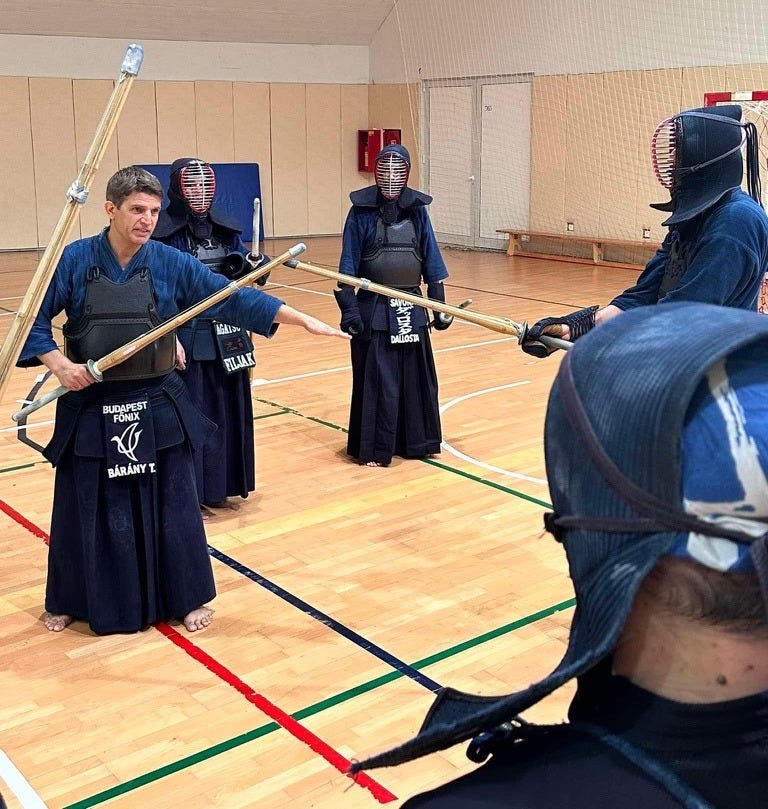
The destination is broadly the same. The routes are often completely different, because the students are different too. Most of them are not native English speakers, which means that before anyone has so much as raised a shinai, the room has already had to negotiate a working language, and negotiation is rarely swift when the currency being traded is someone else’s mother tongue. And language is only the first difference. Some understand through words, and others understand by watching. Some need to feel a movement before an explanation becomes meaningful. Others become worse the more they think about it. Tell them to move naturally and they freeze like my goddamned computer undergoing a system update.
Good teaching, then, is the art of recognising that every student presents a different door. Each comes with a particular body, temperament, experience, set of habits, and way of understanding what is being shown. The skill of the teacher lies not only in finding the door through which that student can enter, but also in selecting the right key to open it. It is not enough simply to reach for whatever key happened to work on the last person. In kendo, where the same instruction can liberate one student and completely bewilder another, this ability to observe, interpret, and adapt is one of the surest marks of a genuinely accomplished teacher.
In Japan, the “traditional” solution has sometimes been to leave the student in front of the door until enlightenment, injury, retirement, or death dawns upon them! Eventually, the door may open. This method has produced extraordinary budoka, so it would be foolish to dismiss it outright. There is genuine value in patience, imitation, and learning through the body. Yet this approach depends on conditions and cultural norms that do not always exist overseas.
A Japanese student may train several times a week from school age, surrounded by a dense network of budo culture. A European practitioner may drive three hours for one decent keiko, or begin in middle age and practise twice a week. Under these circumstances, simply reproducing the Japanese teaching model is not necessarily effective. The conditions are different, so the method must respond to those conditions.
That does not mean simplifying an art until nothing difficult remains, or explaining every detail so exhaustively that students become incapable of learning through experience. Some things can only be understood after years of practice. A clever analogy does not remove the need for sweat, and difficulty should come from the depth of the art, not from the limitations of the teaching.
The greatest irony is that teaching turns the teacher back into a student, usually without a refund. When an explanation collapses mid-sentence, as mine often do, you are obliged to reconsider your own understanding, and self-examination of this kind is rarely as flattering as one would like. When a student asks a question you have never seriously entertained, you discover that the idea you thought was clear had merely never been tested. Clarity and familiarity, it turns out, are not the same thing, however often they are mistaken for each other.
Teaching exposes the gaps between what we can do, what we think we understand, and what we can genuinely communicate. This is one of the great values of international seminars. They create a laboratory of budo pedagogy. Because instructors cannot rely entirely on convention, they are forced to examine what that convention actually means.
What is seme? What changes physically when we apply it? How does the opponent perceive it? How can a novice understand it without reducing it to merely stepping forward aggressively? What do we mean when we say a strike comes from the whole body? These are not signs of inferior kendo but of serious engagement.
The students’ energy at Iadera strengthens this process. Questions flow easily, and there is little reluctance to ask for clarification or pursue an idea after the session has ended. That enthusiasm makes the instructor dig deeper. It reminds you that teaching is not the delivery of a fixed package from an authority to a passive recipient. It is a conversation, even when most of that conversation happens without words.
Teaching in an international setting can therefore reveal weaknesses that familiarity has hidden. When an idea must be translated, the translator has to make choices. When an exercise must be adapted, the instructor has to identify its actual purpose. When students ask why, the teacher cannot always escape with, “’Cos that’s just how it’s done”. Well, the teacher can escape that way. Many do. But the students may not follow.
The international spread of budo has produced teachers who interpret not merely language but experience. They try to carry principles across borders without distorting them or wrapping them in so much Japanese mystique that nobody is allowed to touch them. That is why Iadera is so special.

I’m committed to keeping my work freely accessible to all budo enthusiasts, wherever they are. If you’ve enjoyed what you’ve found here and would like to support my ongoing efforts and projects, “buying me a coffee” (beer actually), or my books, would make a world of difference.
Still, there is always a danger that creative teaching becomes gimmicky. An unusual drill may be entertaining while teaching very little. A striking analogy may lodge firmly in the student’s mind while distorting the very principle it was intended to clarify. Innovation becomes self-indulgent when the instructor is more interested in displaying originality than in transmitting the art.
Creativity must remain accountable to principle. The important question is not, “Is this exercise unique and fun?” It is, “Does this help the student understand and perform the art more correctly?” At Iadera, creative instruction works in precisely this way. It does not seek to overthrow established teaching. It seeks to illuminate it.
This is the distinction between changing an art and changing how that art is taught. The first should be approached with extreme caution. The second is inevitable because teaching methods must evolve alongside new understanding, shifting contexts, and the changing needs of learners.
Even in Japan, teaching methods have never been fixed; they have drifted through time with such unhurried subtlety that the changes are almost invisible unless you already know where to look. Much of what now appears timeless was reorganised in response to particular historical circumstances. That’s because tradition does not survive by refusing to move. It survives by knowing what must not be lost while adapting everything else.

For budo outside Japan to continue maturing, experienced practitioners must develop the confidence to teach responsibly in their own voices. That does not mean abandoning established Japanese foundations. It means understanding them deeply enough to communicate them honestly. Respect for experienced Japanese teachers is essential. Pretending to be one is not!
The best international instructors are neither copying Japan nor rebelling against it. They are engaged in translation. They take the same mountain and search for paths suited to the terrain before them. Some paths are steep, while others wind slowly around. Some vanish into the shrubbery, leaving everyone to wonder whether the instructor actually knows where he or she is going or has simply elevated getting lost into a teaching method. That too is part of the process I guess, but the important thing is to keep the summit in sight.
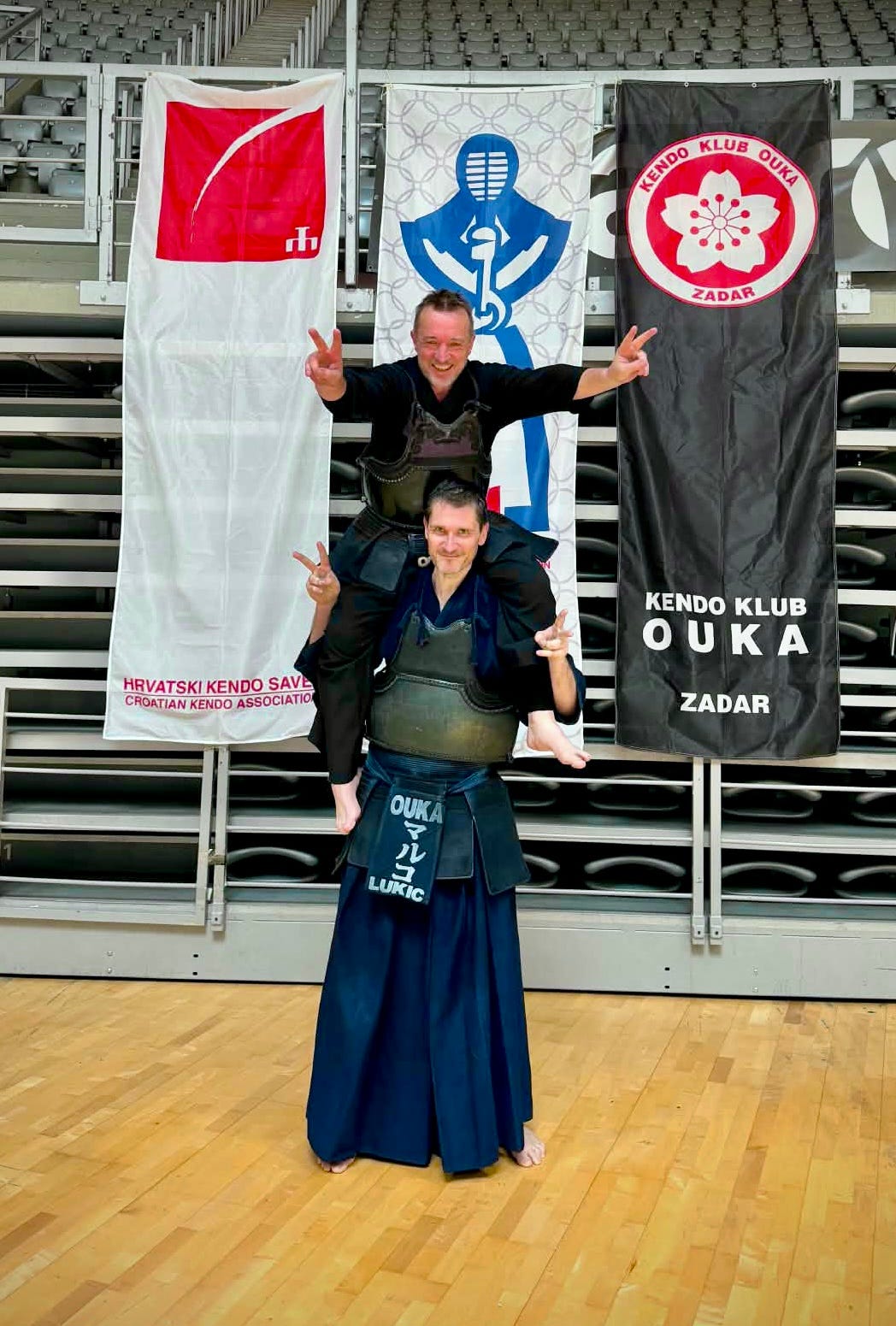
Every year, I leave Iadera physically exhausted but intellectually refreshed, carrying home some pretty cool teaching ideas and a renewed sense of how much there still is to work on. Gatherings like Iadera show that fidelity and creativity are not enemies. This is especially important in budo, which is rooted in Japanese history, language, and cultural assumptions, but is now taught to people whose experiences and ways of understanding may be entirely different. Simply reproducing Japanese teaching methods does not necessarily transmit the art faithfully. Sometimes the method must change so that the principle can survive. When guided by a genuine understanding of what must be preserved, creativity becomes one of the means by which fidelity is made possible. The mountain remains the same, but no two students approach it by precisely the same route. The teacher’s task is not to climb it for them, but to help them see the terrain clearly enough to find their own way upwards.






No comments yet.