













Budo Beat 64: Skin in the Game – People, People, People
The “Budo Beat” Blog features a collection of short reflections, musings, and anecdotes on a wide range of budo topics by Professor Alex Bennett, a seasoned budo scholar and practitioner. Dive into digestible and diverse discussions on all things budo—from the philosophy and history to the practice and culture that shape the martial Way.
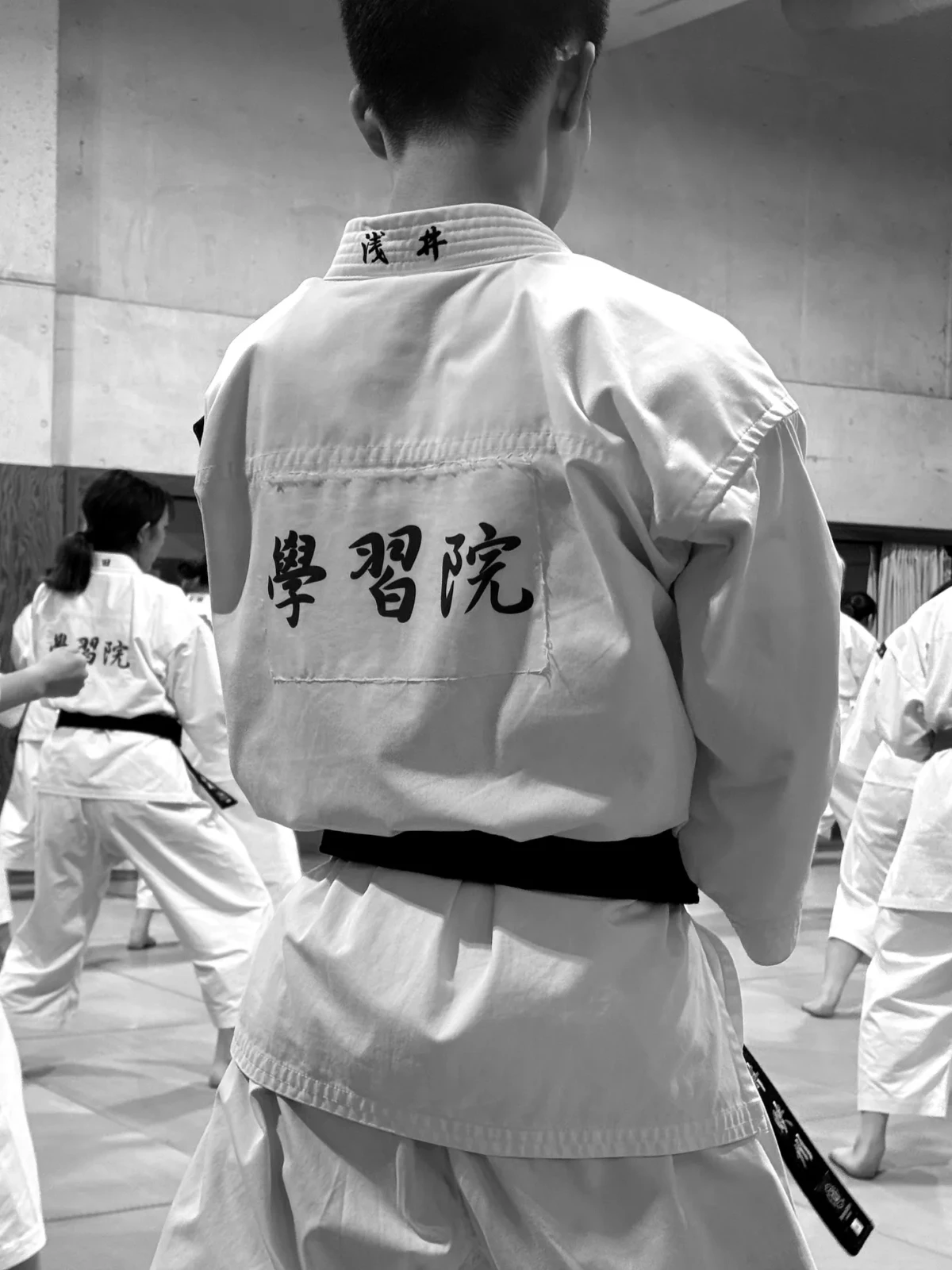
The other day I found myself at Gakushūin University in Tokyo filming an interview with Akiyoshi-sensei of the university’s Shorinji Kempo club for a new Nippon Budokan video series. Shorinji Kempo is something I have experienced a number of times at the annual International Budo Seminar, but not even enough to scratch the surface. What I expected was a fairly standard university budo club visit, but what I encountered left me thinking about something that has as much to do with Shorinji Kempo as it does with modern life.
The first thing that struck me was the number of women in the club. They made up the clear majority of the 40 or so members present. In my university days, budo clubs (except for naginata) were overwhelmingly male. How times have changed! The second thing I noticed was that many of them were beginners. Apparently, the intake of first-year students in April/May this year numbered around 20. It was a sudden influx, enough to stretch the club’s resources to the point where there weren’t enough white belts to go around, and many had to use higher-ranked green belts instead. An enviable problem, and one that most budo clubs would gladly have.
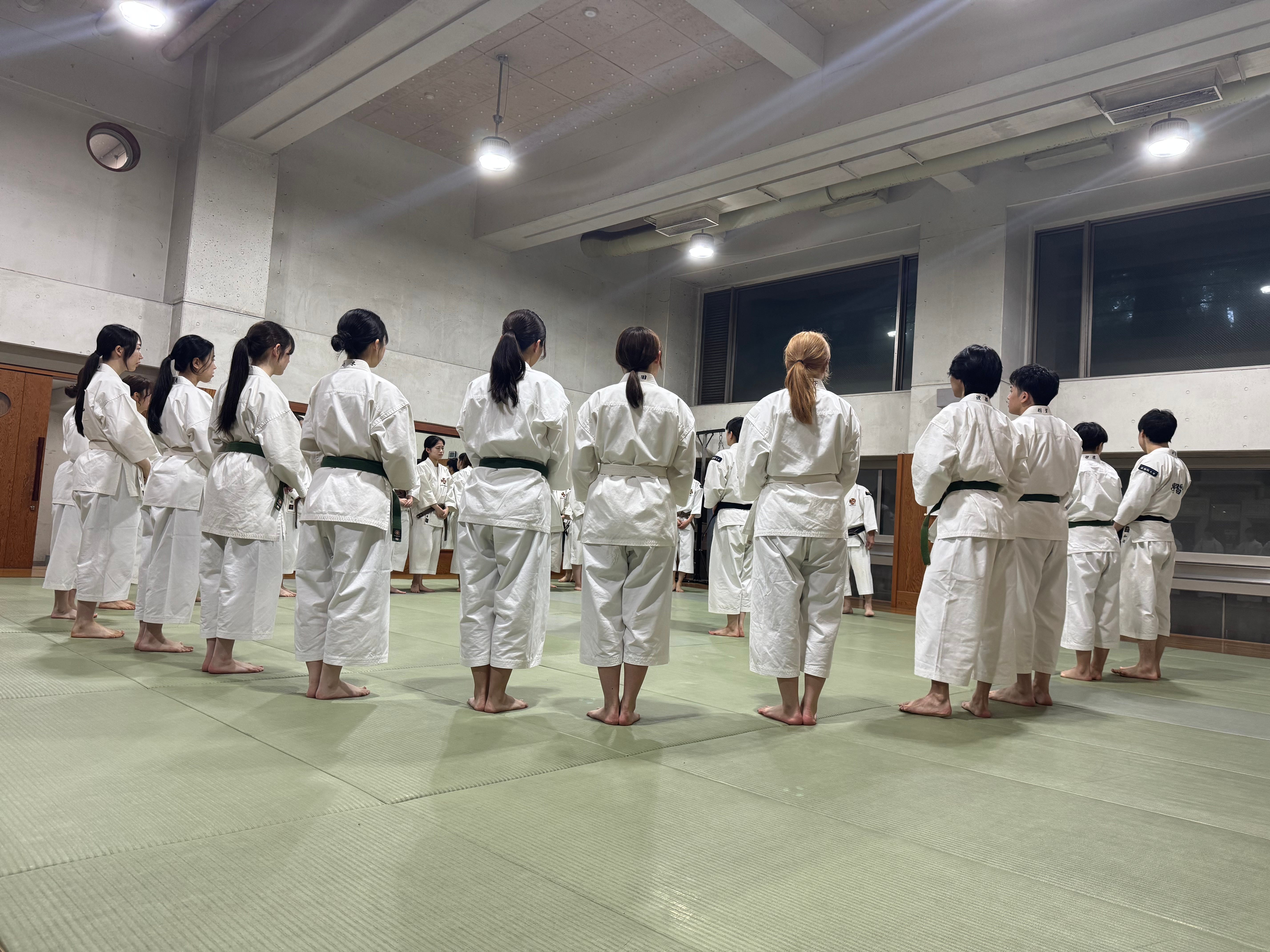
More than anything, however, what caught my attention was the atmosphere. The students looked as though they genuinely wanted to be there. There was plenty of laughter, plenty of conversation, and none of the strained seriousness that sometimes descends on university budo clubs when everyone starts trying a little too hard to look serious.
Watching the training, I wondered if part of the appeal lay in something much simpler than martial arts. Most of these students belong to what we might call the “Corona generation”. Their years at junior and senior high school were shaped by masks, social distancing, online classes, cancelled events, and the strange experience of being surrounded by people while simultaneously being told not to get too close to them. Yet here they were in the ‘post-Covid’ era enthusiastically participating in an activity built around direct physical interaction. It was almost like they were trying to catch up for lost time.
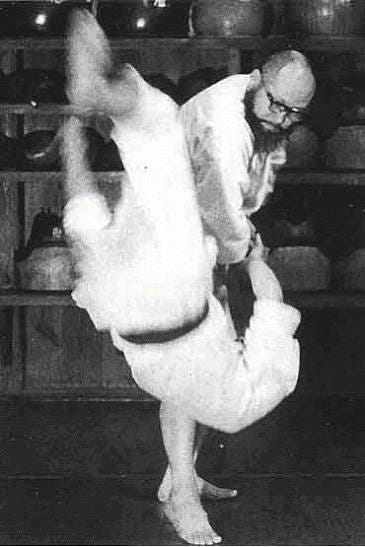
Of course, all budo make use of paired training, so that in itself is nothing unusual. What stood out here was that students were constantly working with one another, even during their breaks. They grab, release, strike, counter, throw, and support each other through techniques. There is a degree of physical interaction that has largely disappeared from many parts of everyday life. Watching the students train, it was impossible not to notice how much they seemed to enjoy this aspect of it. Like, really enjoy it. Not the techniques themselves necessarily, but the physical interaction.
The Japanese word skinship came to mind. Well, it does exist in English, technically speaking, but seems to have found its natural home in Japan, where it has been absorbed into the curious category of wasei eigo. One of those terms that feels faintly contrived at first encounter, yet proves surprisingly useful once you realise there is no neat equivalent. It refers, loosely, to the kind of bonds that emerge through physical contact and shared experience. It was something the students in front of me appeared to be cultivating in abundance.
After training, I sat down with Akiyoshi Shihan. What made it interesting was that he wasn’t talking about Sō Dōshin—the founder of Shorinji Kempo—as some distant figure from books or official histories. He had known him and trained under him; in fact, he was his first teacher. Conversations like that just feel different. The stories aren’t polished, and the ideas come across less like doctrine and more like memory.
One thing that came up repeatedly was the word ningen. “Human beings”. Again and again the discussion returned to people. Not competition or fighting ability. Not even to technical perfection. It was all about “people”.
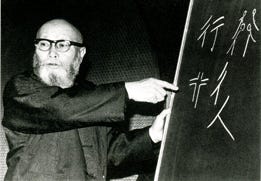
Having read quite a bit on Shorinji Kempo over the years for research and various work projects with the Nippon Budokan, I have often been impressed by how consistent this emphasis has remained over the decades. Sō Dōshin himself was quite explicit about where this came from. In his book Shōrinji Kenpō Kyōhan (1972) he reflects on his wartime experiences and the harsh realities of international politics, concluding that systems—law, military, ideology—ultimately depend on the people who operate them. As he put it, “People, people, people; everything depends on the quality of the individual.” From this, he arrived at a simple but demanding conclusion: if peace is to be realised, it can only be achieved by cultivating individuals with compassion, courage, and a strong sense of justice. His central concern, then, was not simply the transmission of techniques but the cultivation of individuals capable of standing on their own feet while contributing positively to society. Concepts such as jiko kakuritsu (self-establishment) and jita kyōraku (living together with mutual benefit) appear throughout the movement’s philosophy.
Whether one agrees entirely with the philosophy or not is beside the point. What interested me was the question of how such goals are actually pursued. Budo people often talk about “character development”. It’s one of those phrases/ideals we repeat so often in budo that nobody seems to stop and ask what it actually means anymore. Character development is treated as a kind of magical by-product of training. Turn up often enough, bow correctly, sweat a bit, and somehow character emerges.
The reality is probably less mysterious. Character develops through encounters with other people. The older I get, the more I think this is one of the most important functions of budo. Every practice forces you to deal with another person directly. You have to pay attention. You have to adjust. You have to communicate. You have to cooperate. And whether you like it or not, you start to see very clearly how your behaviour affects the person standing in front of you. There are very few places left where this happens in quite the same way.

I’m committed to keeping my work freely accessible to all budo enthusiasts, wherever they are. If you’ve enjoyed what you’ve found here and would like to support my ongoing efforts and projects, “buying me a coffee” (beer actually), or my books, would make a world of difference.
Modern life increasingly allows us to interact without really encountering one another. We can work from home, shop from home, study from home, and spend entire evenings communicating through devices while never actually sharing physical space with another person. To borrow the cliché, we are connected to more people than at any point in human history, yet many seem lonelier than ever.
Budo remains stubbornly resistant to this trend. A shinai, a pair of gloves, a judogi, or a Shorinji Kempo green-belt are not much use on their own. Sooner or later, somebody else has to stand in front of you.
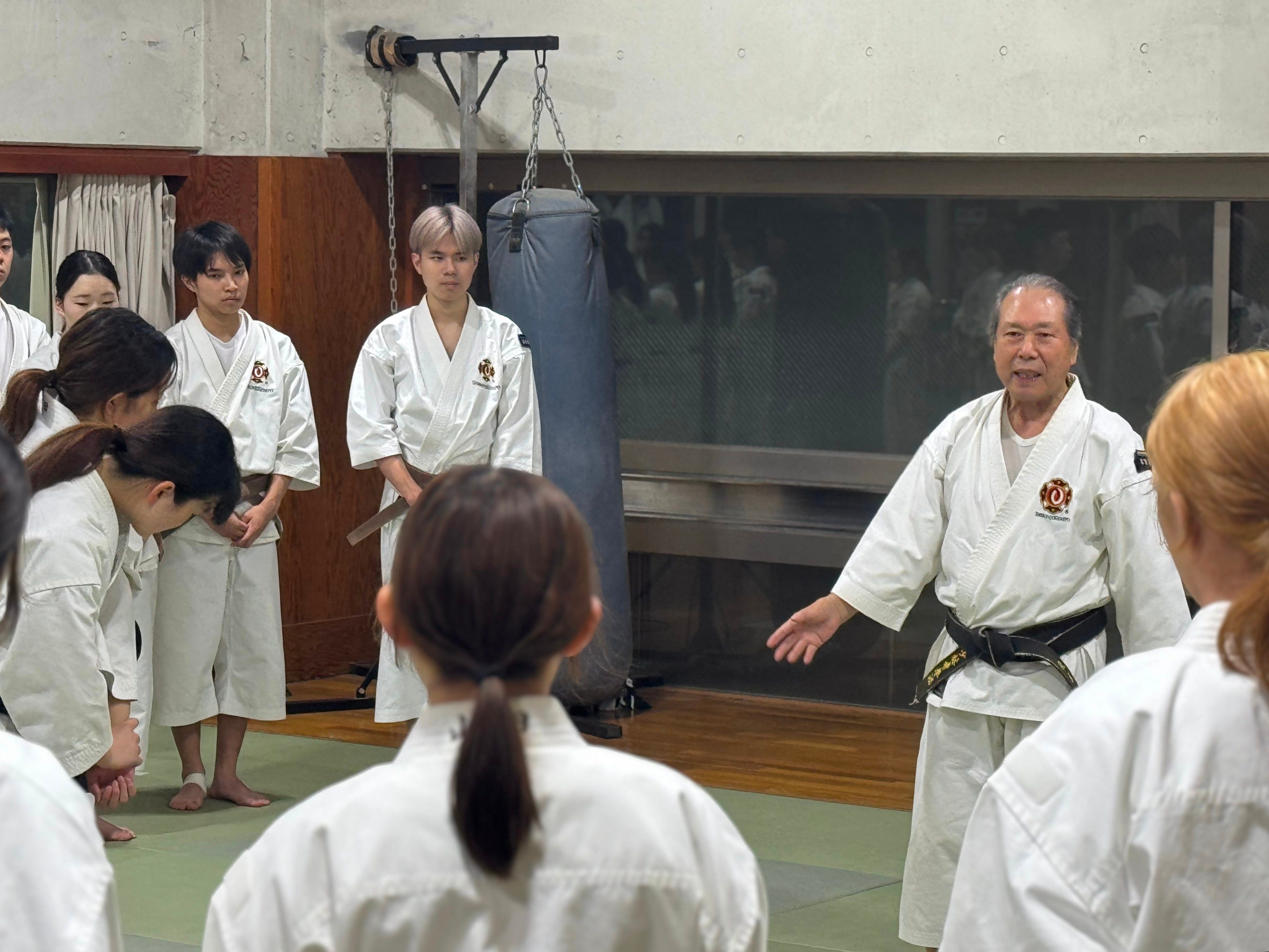
Perhaps that is why the atmosphere at Gakushūin impressed me. The students were clearly enjoying the techniques, but there was something else going on as well. It was a place where you were expected to engage. Look someone in the eye, grab hold of them, get thrown, laugh about it, and go again. No filters and no edits, just people dealing with people. Dojos have always been like that, of course, but in 2026 it feels almost unusual enough to have to point out.
As I travelled home to Kyoto, I thought about Akiyoshi Shihan’s repeated use of the word ningen. It sounded almost old-fashioned. Well, he is 85-years-old. Yet perhaps that is precisely why it resonated. In a world increasingly mediated by screens, algorithms, and distance, maybe one of the most valuable things a dojo can still teach is not how to fight. Maybe it is simply how to face another person.







No comments yet.