













Budo Beat 66: L’Amour de l’Armure – In Appreciation of Bōgu
The “Budo Beat” Blog features a collection of short reflections, musings, and anecdotes on a wide range of budo topics by Professor Alex Bennett, a seasoned budo scholar and practitioner. Dive into digestible and diverse discussions on all things budo—from the philosophy and history to the practice and culture that shape the martial Way.
The other day I attended a seminar on the evolution of Japanese armour from the Heian period (794–1185) through to the Bakumatsu era (c. 1853–1868). The lecturer was Nishioka Fumio, a contemporary katchūshi whose work centres on the restoration and historically faithful reproduction of Japanese armour and related fittings. He is associated with Nishioka Kōbō in Yokohama, and is known not only for technical skill as an artisan but also for the seriousness with which he reads the historical evidence left inside the armour itself. Among the works connected with his name is the reproduction of the famous akaitō-odoshi no yoroi associated with Musashi Mitake Shrine. (See it here)
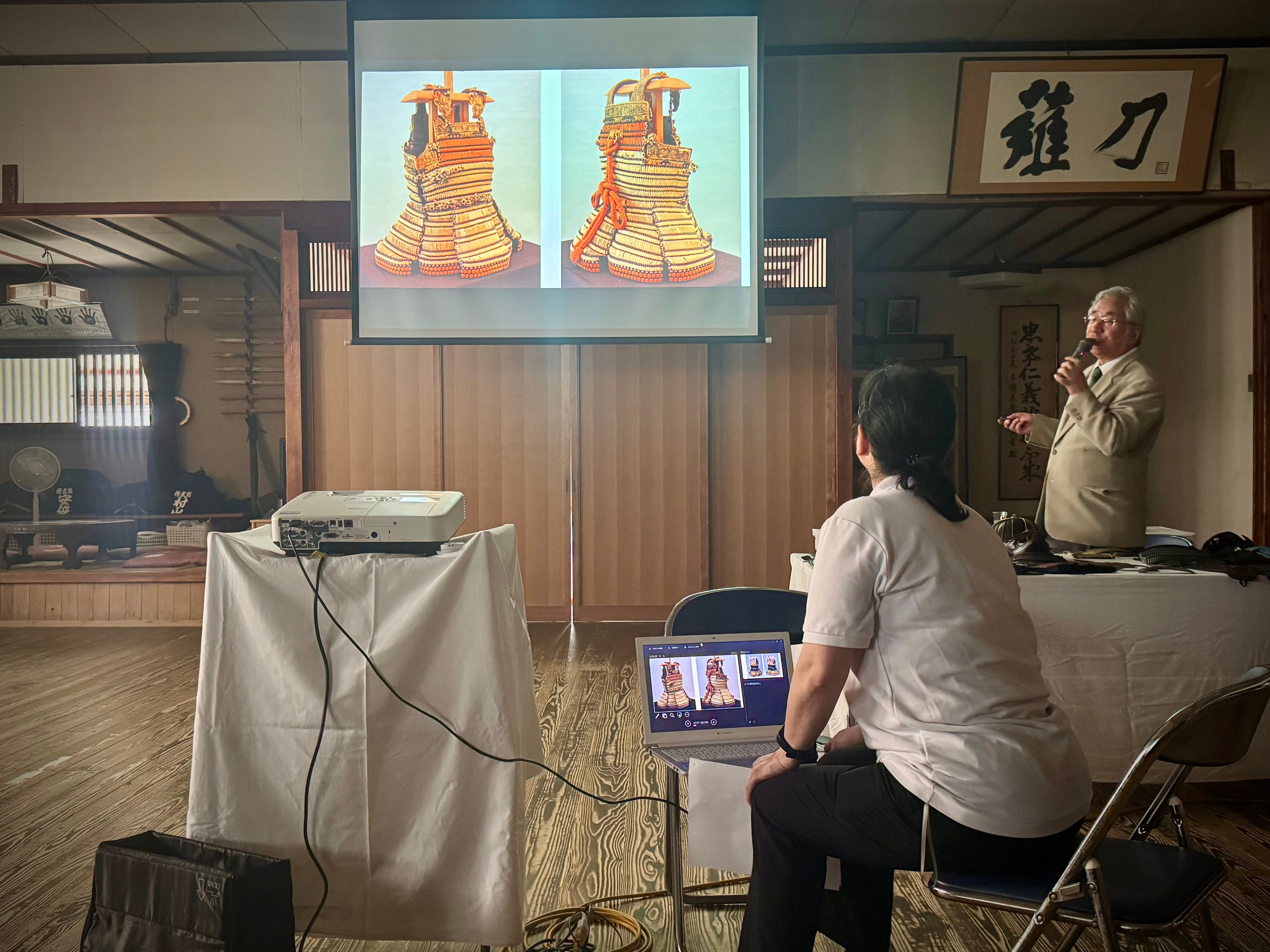
He struck me as one of those rare craftsmen in whom the work of the hands and scholarship are difficult to separate. It certainly was not a lecture about samurai romance and bullshido. What Nishioka-sensei gave us instead was far more interesting: armour as an object of use, as a response to practical need, as technology, and as a thing of beauty. In other words, armour as something made by human hands for human bodies under the demands of war, status, fashion, and death.
The title of the seminar approached armour as protective equipment… “No shit Sherlock”, I hear you say. That sounds almost too obvious to mention, but it’s a useful corrective. We are so used to seeing armour behind glass in museums, or paraded through festivals and tourist brochures, that it becomes easy to forget what it was actually for.
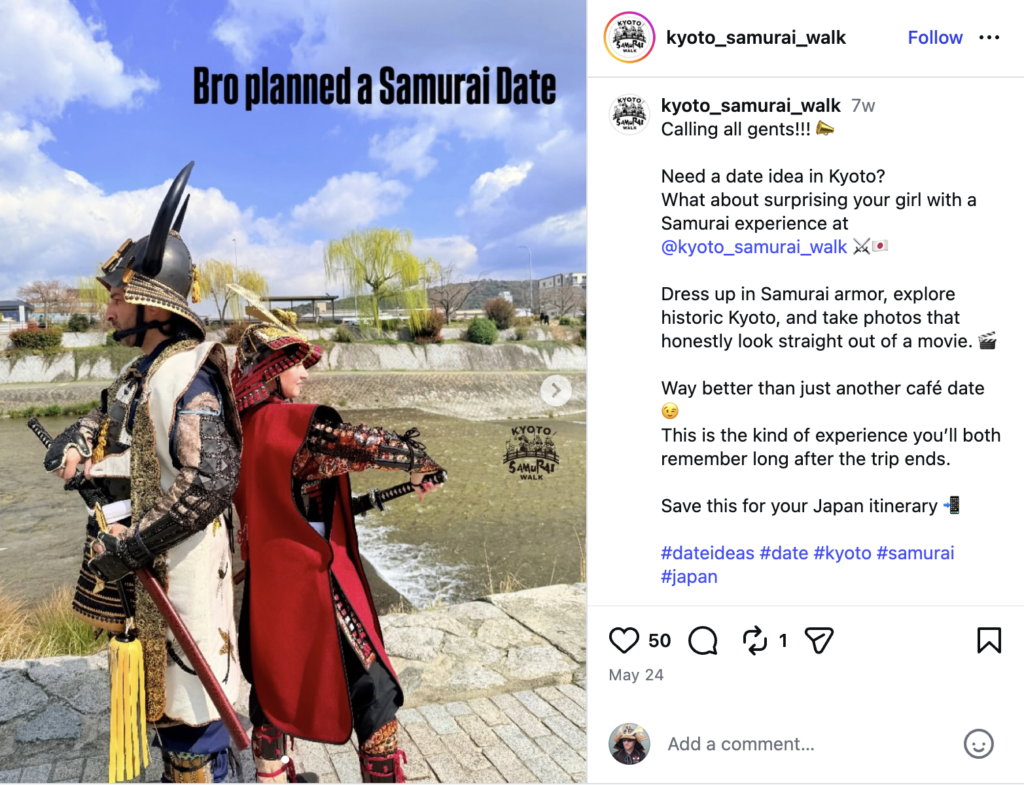
For sure, armour was certainly meant to impress, although not on dates! No warrior ever dressed for battle with the modest ambition of blending into the scenery! Its first job, however, was to keep the wearer alive. That doesn’t mean it was merely functional. As Nishioka-sensei pointed out,
“Japanese armour has long occupied the space where battlefield necessity meets display, status, and aesthetic ambition. But its beauty makes proper sense only when we remember the danger for which it was made.”
The broad movement from the Heian period through to the Bakumatsu era is, in one sense, a history of changing violence. The great ō-yoroi of the late Heian (794–1185) and Kamakura (1185–1333) periods belongs to a world in which mounted archery occupied a central place. Its large box-like form, broad ō-sode shoulder guards, and elaborate lacing made sense for a warrior fighting primarily with bow and arrow from horseback. The armour protected, but it also proclaimed. Its silhouette, colours, and lacing patterns were not incidental decoration. They formed part of a visual language of rank, identity, and dignity.
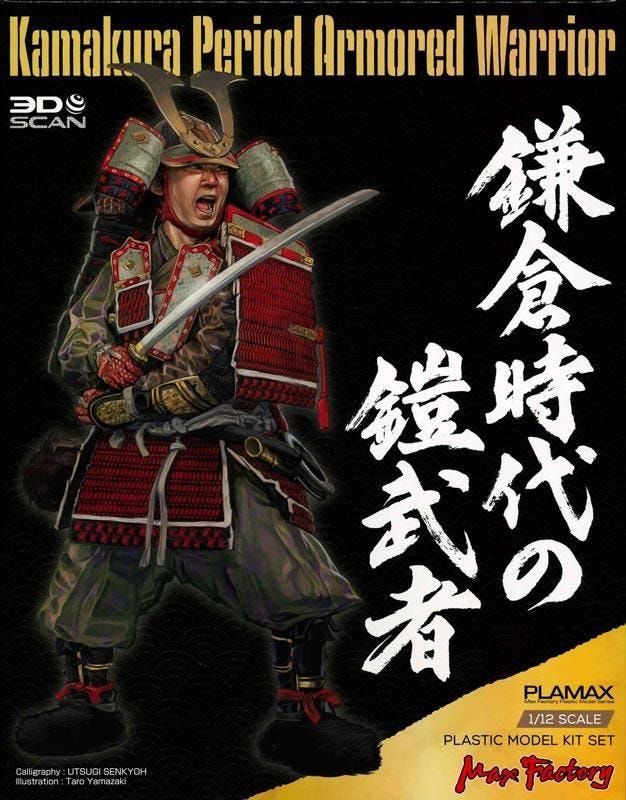
As warfare changed, armour changed with it. The world of the mounted warrior gradually gave way to more complex battlefield formations, increased fighting on foot, and wider use of spears, polearms, and, eventually, firearms. Armour had to move differently because bodies were being used differently. Nishioka-sensei explained,
“Older forms, magnificent though they were, could not remain unchanged once the nature of combat altered. Protection had to be redistributed. Weight had to be managed differently. Mobility became a new sort of problem.”
That is one of the great fascinations of Japanese armour. It is never just one thing. It records shifts in military practice, materials, craft knowledge, social order, and taste. Listening to Nishioka-sensei, one had the strong impression that a suit of armour is almost a fossil of movement. It tells us what dangers its wearer expected, how he expected to move, what weapons he was wary of, how he wished to be seen, and what resources his household could command.
The arrival and spread of firearms in the sixteenth century forced another major rethinking. During the Sengoku period, artisans did not have the luxury of making armour simply according to inherited forms. The battlefield was too unforgiving for that. The tōsei gusoku, or “modern armour”, reflected the military realities of the age. Larger iron plates, simpler constructions, hinged cuirasses, and more efficient methods of production all point to a world in which armies were larger, fighting was more sustained, and protection had to answer new problems. Armour adapted because it had to.
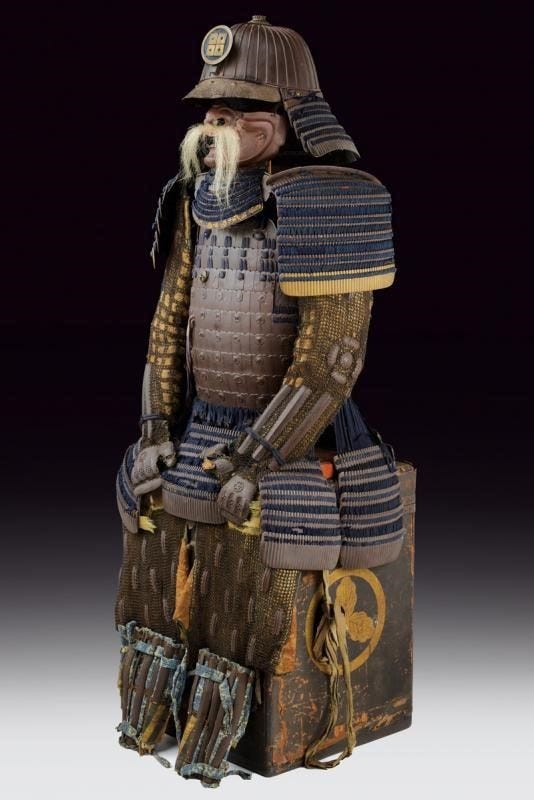
There is a lesson in that for budo people. We like to speak of tradition as though it means keeping everything exactly as it was. But real traditions survive because they can respond to new circumstances without losing their centre. Japanese armour offers a particularly striking example in this sense. Its forms changed again and again, yet the underlying concern remained constant: how to protect the body while allowing the warrior to move, fight, and present himself according to the expectations of his age.
By the Edo period (1603–1868), the practical conditions of warfare had changed yet again. There was none… Armour did not disappear, but its meaning shifted. As Nishioka-sensei explained,
“In a long period of relative peace, it became more ceremonial, more symbolic, and in some cases more theatrical. Daimyo processions, domain identity, status display, and historical memory all helped shape the armour of the period.”
Some suits looked back deliberately to earlier styles, borrowing authority from a heroic past. Others displayed extraordinary decorative imagination.
“The armour still carried the memory of battle, but it also carried genealogy, prestige, nostalgia, and political theatre.”
Then came the Bakumatsu era (c. 1853–1868), when the old order trembled and foreign military technology forced Japan to confront a world that could not be answered by pretty armour and swords. Armour in that period kind of occupies a poignant place. It stands at the edge of obsolescence. One sees the accumulated ingenuity of centuries meeting the hard fact of modern warfare. Yet even here, the story is not simply one of failure or backwardness. It’s the final chapter of a long craft tradition that had always tried to reconcile protection, movement, materials, and meaning.
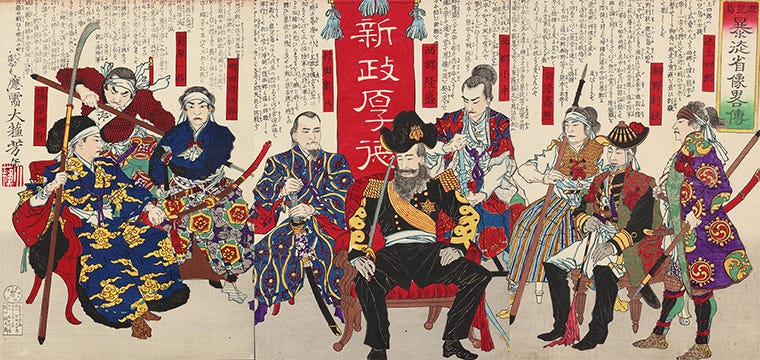
After the Meiji Restoration ended the traditional market for samurai armour, yoroi makers adapted by turning their specialist skills to decorative metalwork, lacquerware, leather goods, military and police equipment, horse tack, dolls, ceremonial armour, and the repair or reproduction of older pieces. Because armour production had always depended on teams of metalworkers, lacquerers, leatherworkers, dyers, and cord makers, their craftsmanship did not disappear so much as migrate into new industries, including the elaborate export art for which Meiji Japan became famous. Some craftsmen and related workshops also applied these skills to making kendo bogu, particularly lacquered do, leather components, stitching, and metal fittings.
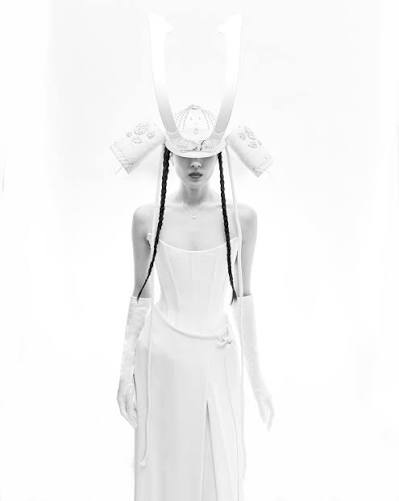
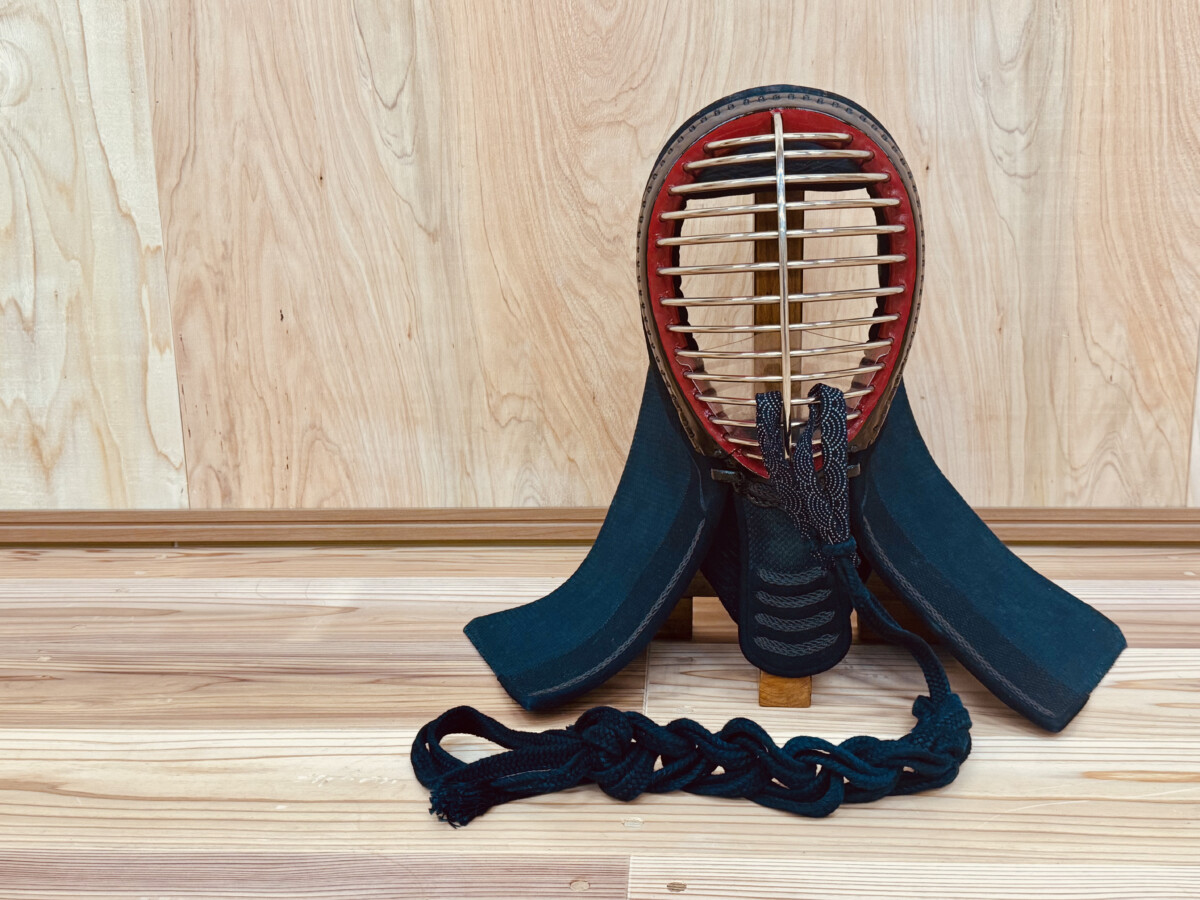
Listening to Nishioka-sensei, I found myself thinking about modern bōgu. That may sound like a patently obvious connection, but it’s one we rarely pause to consider. Every kendo, naginata, or jukendo practitioner wears bōgu, yet very few of us think of ourselves as wearing armour in the traditional sense. We put on men, kote, dō, and tare with the distracted familiarity of people tying their shoes. We complain if the men is too tight, if the kote smell and feel like a wet dog (or worse), or if the himo cords refuse to cooperate when we are already late for keiko. But we seldom stop to think about the depth of history contained in the equipment we slap on every session.
Modern bōgu is not battlefield armour, of course, and it would be bloody silly to pretend otherwise. Its purpose is different. It is protective equipment for training in a modern martial art, not for surviving real arrows, spears, swords, or musket fire. And yet it belongs unmistakably to the same broad cultural family. The men protects the head and throat. The kote protect the hands and forearms. The dō protects the torso. The tare protects the lower body and gives visual weight to the whole ensemble. The relationship between body, weapon, danger, and craft remains.
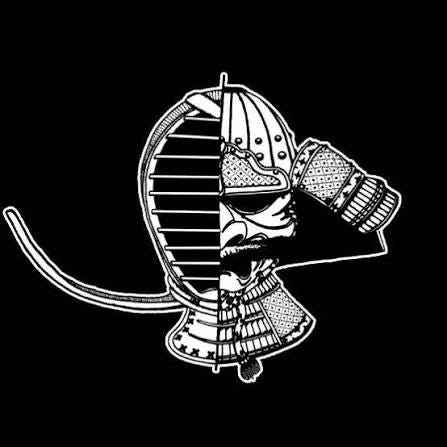
Indeed, one of the great achievements of modern kendo was to make a form of intense martial encounter possible without killing or maiming the participants. That achievement depends on equipment. Without bōgu, kendo as we know it could not exist. Historians often speak of the shinai as the decisive innovation, and it was, but the development of protective equipment in the early 1700s was just as important. The armour made the practice possible. It allowed practitioners to strike with intent, receive impact, test distance, cultivate courage, and engage in something far closer to combative exchange than mere kata forms could ever allow.
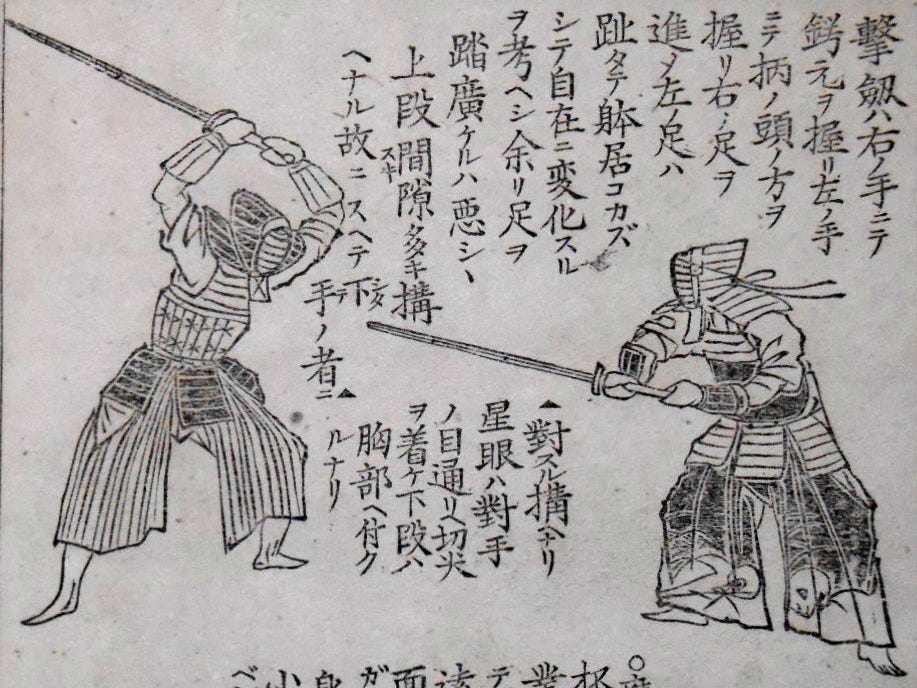
This is where the lecture began to resonate with my own practice. Armour is never neutral. The more I reflect on it, bōgu shapes both movement and psychology, defining what is possible. Anyone who has trained beginners knows how dramatically a person changes when they first put it on. The body becomes awkward, vision and hearing are restricted, it grows hot and uncomfortable, and the hands feel clumsy. Suddenly, the shinai coming toward the head is no longer an abstraction. The armour protects us, but it can also help us gradually confront and manage fear, giving the body a clearer sense of what pressure feels like.
That, I suspect, was true of historical armour as well. A warrior did not simply wear armour; rather, he learned to move through the world differently because of it. Weight, restriction, protection, and vulnerability all became part of embodied knowledge. In that sense, armour did not merely sit on the body but actively reshaped it, training it toward readiness for violence and, in doing so, subtly weaponising it.
Seen in this light, there is a useful parallel for modern kendo practitioners. Mass production has made bōgu more accessible than ever, and that is a good thing in many ways. A student can begin kendo today with equipment purchased online for as little as $500, shipped across the world, and delivered in a cardboard box. Clubs can order sets for beginners, and manufacturers can produce reliable armour at prices that would have been unimaginable in earlier times. Without that accessibility, kendo would never have spread as widely as it has.
But accessibility has a cost. When something becomes easy to obtain, it also becomes easy to take for granted. We forget that each part of bōgu descends from long traditions of protection, craft, adaptation, and use. We forget the hands that stitched, shaped, lacquered, tied, measured, and adjusted. We also forget that the equipment we casually chuck into the boot of a car, or leave damp in the corner of the dojo, belongs to a much longer story.

I’m committed to keeping my work freely accessible to all budo enthusiasts, wherever they are. If you’ve enjoyed what you’ve found here and would like to support my ongoing efforts and projects, “buying me a coffee” (beer actually), or my books, would make a world of difference.
This is not an argument for fetishising expensive handmade bōgu, nor for sneering at machine-stitched equipment. Mass-produced bōgu has allowed countless people to enter kendo, and for that we should be grateful. The issue is not price but attention. Because it is cheap and easily replaceable, people tend to treat it with less care than in the old days.
It also reminded me that aesthetics in budo are rarely mere decoration. The beauty of armour, old or new, is bound up with function, identity, and spirit. A well-made dō is pleasing not because somebody has randomly added ornament, but because its form makes sense. The curve, shine, colour, weight, and proportion all contribute to how the wearer appears and moves. Even in modern kendo, the visual impression of properly worn bōgu is not trivial. A kendoka who dresses carefully, ties the cords properly, maintains the equipment, and carries themselves with dignity already communicates something before any strike is made. Perhaps that is one of the hidden continuities between classical armour and modern bōgu.
Armour has always protected the body, but it has also shaped presence. The Heian warrior on horseback, the Sengoku foot soldier, the Edo retainer in ceremonial armour, and the modern kendoka standing in kamae all inhabit different worlds. Yet in each case, armour alters the relationship between the individual and those who see them. It creates a particular seriousness. It says that this is not ordinary clothing, and that what is about to happen is not ordinary behaviour.
After the lecture, I found myself thinking about my own bōgu rather differently. Like most kendo people, I have owned various sets over the years—some cheap and nasty, others finely crafted works of art. A few of my sets came to smell as though they had survived a biological incident, or perhaps caused one. Yet, regardless of their condition or pedigree, each of them allowed me to practise, to step onto the floor without hesitation, to train safely with others, and to continue improving something far more valuable than their appearance or price.
Nishioka-sensei’s lecture was ostensibly about the evolution of Japanese armour from the Heian period to the Bakumatsu era. For me, though, it became a reminder to look more carefully at what is already in front of us. The men hanging on the rack, or the kote drying after keiko. The dō tied around the waist of a nervous beginner. The tare, that last line of defence between you and a future of regrettable soprano notes, and the attached names (nafuda) that proclaim, with varying degrees of dignity, our place in the community. These are certainly not museum pieces, but they are not trivial either.
Perhaps that was my take away: not that armour has changed, but that our relationship to it deepens only when we pay attention. Improvement, rank, and insight still matter, but they are grounded in these ordinary, repeated encounters. To reiterate a previous blogpost, the story is not somewhere else. It is here, in the things we touch every day. If we learn to see them properly, the armour stops being just equipment and becomes a teacher in its own right, through the way it shapes our posture, reveals our habits, resists our carelessness, and quietly reflects back the quality of our practice. Yes, even l’odeur de l’armure possesses a peculiar magnificence, comprehensible only to the kendoka and quite sensibly avoided by everyone else. Pardon my French.



No comments yet.