












Budo Beat 62: Shinpan is Done with Flags, not Keyboards!
The “Budo Beat” Blog features a collection of short reflections, musings, and anecdotes on a wide range of budo topics by Professor Alex Bennett, a seasoned budo scholar and practitioner. Dive into digestible and diverse discussions on all things budo—from the philosophy and history to the practice and culture that shape the martial Way.
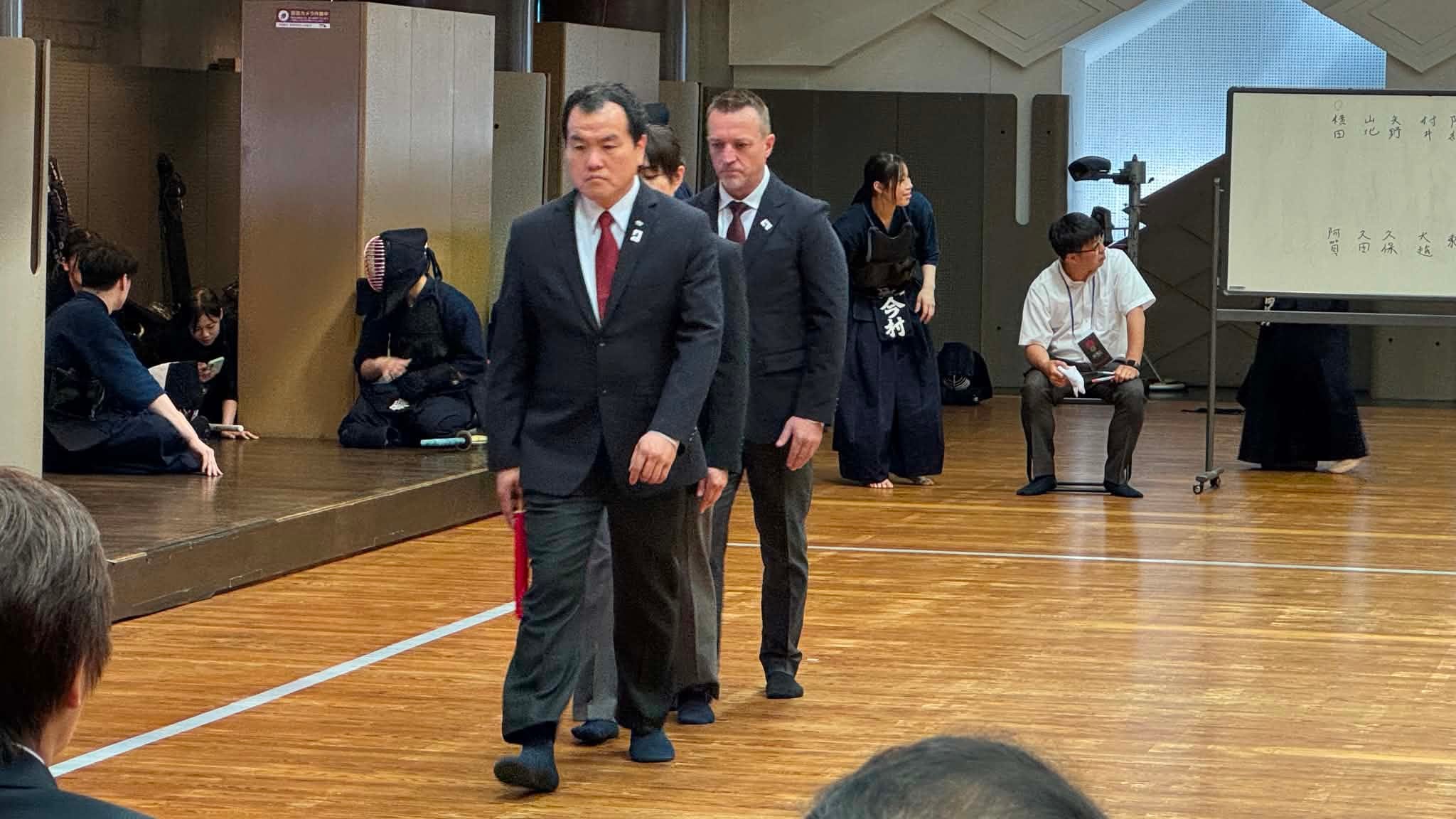
A few days ago, I found myself standing in the centre of a kendo court at the 1st Asia Oceania Kendo Championships with two flags in my hands and a knot in my stomach. Knot is probably too mild a word. Of course, I knew it would be demanding. Anyone who has followed international kendo long enough could make a fairly safe prediction about how the men’s team competition would unfold. Powerhouses Japan and Korea would most likely meet in the final. This matchup is always fast, physical, and very heated. And as predicted, they both made it to the final. As fate would have it, I was assigned to adjudicate that somewhat emotionally fraught match.
Competing is stressful. Coaching is, too. But none of that compares to standing in the middle of a championship final between two of the strongest kendo nations on earth, knowing full well that every decision matters, that the competitors have trained for years for these moments, and that the atmosphere pressing in from all sides is not merely excitement but expectation. It was, without exaggeration, one of the most nerve-wracking experiences I have ever had in kendo.
But that is the job. Then the tournament ends, and the familiar ritual begins.
Somebody uploads a video. The footage is slowed down. Frame-by-frame analysis commences, and the ‘experts’ emerge. How was that an ippon? Why was that NOT an ippon? The other one was clearly faster! The referees are biased! That decision sucks! On and on it goes…
After more than thirty years in international kendo, I’ve grown weary of this. Not because Shinpan are beyond criticism, but because the criticism so rarely grapples with what Shinpan are actually doing.
The first problem is simple. Watching kendo on a screen is not the same as being on the court. Video presents a two-dimensional record of a three-dimensional event, and it captures the conclusion while discarding most of the evidence. When you are standing inside a match, you are processing information that no camera can relay. You hear the quality of the strike, the sound of a cut with real intent behind it. You hear the kiai, its timing and authority. You see the preparation: the small shifts in posture, the moment seme begins to take hold, the hesitation in the opponent, the opening being shaped before the technique that fills it arrives.
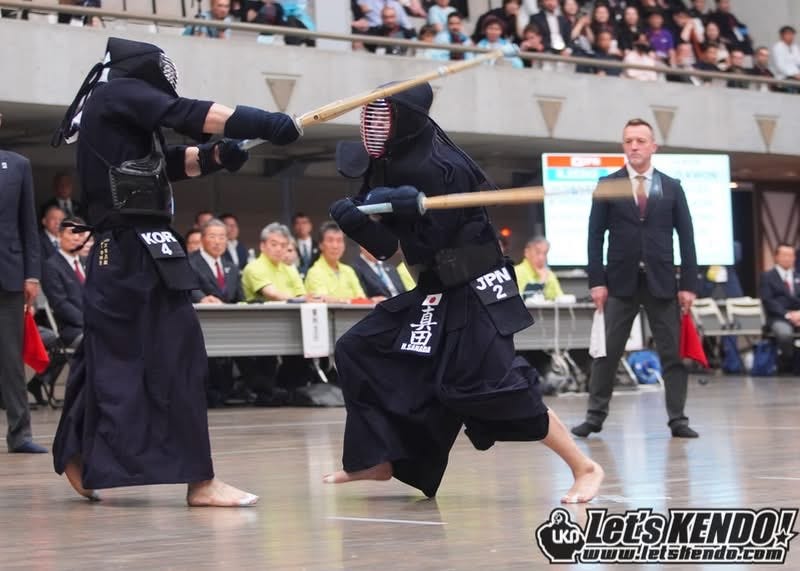
There are moments in high-level kendo when you can sense that something is about to happen before it does, when the momentum of the encounter has already turned and the strike is almost an afterthought. Anyone who has spent years refereeing at this level knows exactly what that means.
A video freezeframe captures the destination. A Shinpan experiences the journey. And kendo is judged largely on the journey.
This is perhaps the most misunderstood aspect of the art. Many spectators seem to believe ippon is determined by speed, who moved first, who landed first, as though kendo were a race with shinai. The fastest strike is not necessarily the best strike. The first strike is not necessarily the determining one. Sometimes the technique that appears slower is the one that demonstrates superior control, timing, and understanding of the exchange.
This is why experienced Shinpan occasionally make decisions that puzzle spectators. They are evaluating far more than the moment of contact.
Critics also enjoy a luxury that Shinpan do not have, which is time.
The Shinpan gets one chance. No pause. No replay. The critic gets twenty.
These are not the same thing. One is a split-second decision under pressure. The other is a self-indulgent autopsy.

I’m committed to keeping my work freely accessible to all budo enthusiasts, wherever they are. If you’ve enjoyed what you’ve found here and would like to support my ongoing efforts and projects, “buying me a coffee” (beer actually), or my books, would make a world of difference.
At this point, some will argue for the introduction of video Shinpan to “reconfirm” decisions. It’s true that some organisations in Japan and Korea have been experimenting with this. I am not against the idea outright. But as any fan knows, video checks from the bunker, in sports like rugby or soccer, are also full of complications, delays, and plenty of disagreement. Technology does not eliminate controversy; it often just relocates it. More importantly, the human factor in kendo, the ability to read intent, pressure, and the unfolding of an exchange in real time, is not something that can be easily reduced to replay. That element is not a flaw of the system. It is central to the art.
The accusation of bias deserves a direct response, because it surfaces after almost every major international tournament. The international Shinpan community is small. Most of us know one another. We attend seminars together and spend considerable unpaid time trying to improve our understanding of the art and our ability to judge it fairly in the spirit of kendo. Nobody enters the court hoping to favour one country over another.
Do mistakes occur? Of course. Sometimes the angle is not ideal. Sometimes two Shinpan read the same action differently. Sometimes a situation arises where either decision could be justified. That is the reality of human judgement. It is not the same thing as one-eyed bias.
I have seen decisions on video that, at first glance, looked wrong. And sometimes, they are. But more often than not, the full context tells a different story.
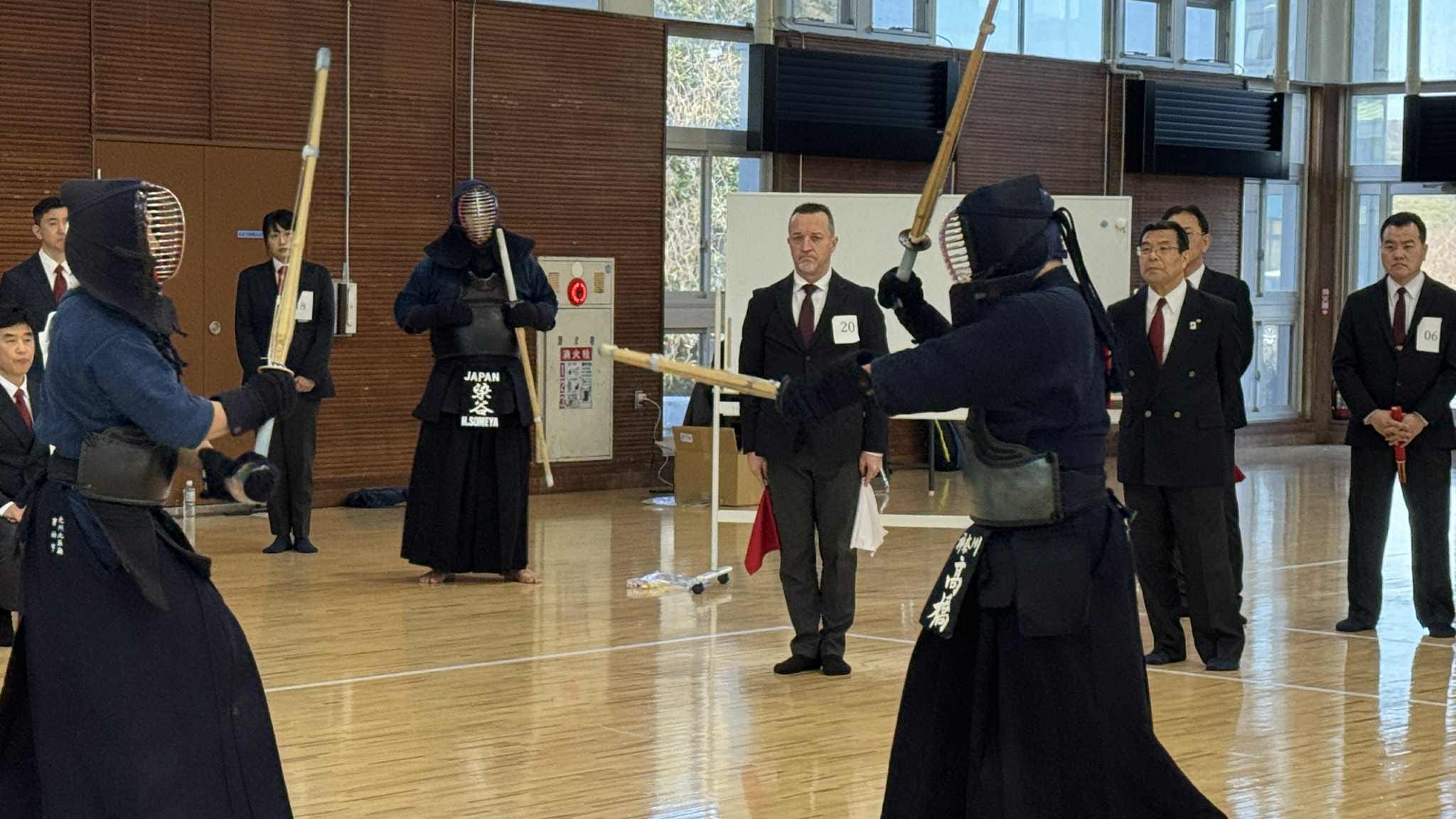
Senior officials review decisions after the match and feedback is given, often quite directly with no holds barred. Behind the scenes, there are already hard conversations taking place about what was right and what could be better. That is how standards are maintained and Shinpan continue to improve. And that is why Shinpan is such an important rite of passage in kendo.
This needs to be said clearly.
The online after-the-fact pile-on after any tournament has got to stop!
What passes for commentary too often slips into something far uglier: anonymous sniping, selective clips stripped of context, confident declarations from people who have never had to make those calls themselves. With YouTube and social media, these attempts to assassinate the character of Shinpan do not disappear. They stay online indefinitely, detached from the reality of the match, and they poison the atmosphere. That is just not good enough. It just ain’t kendo.
Others will say they are posting clips to study and improve their own kendo. Sometimes that is true. More often, it is a convenient guise to legitimise vitriol. Nationalism also rears its head in these moments, particularly when the outrage is driven by the simple fact that “our” team lost or was supposedly on the receiving end of bad calls. The judgement itself becomes secondary. What matters is that “our” side was wronged, and the shitty Shinpan need to be called out… The same people are remarkably quiet if a dubious call benefits the team or competitor they are supporting, themselves included.
Let’s call it what it is. It is online bullying. And it is cowardly.
Without Shinpan, there is no shiai. It really is that simple. If we continue down this path, where every decision is publicly torn apart by people with no accountability, who is going to want to do the job? Who is going to step forward knowing that, no matter what they do, they will be subjected to endless criticism from the safety of someone else’s screen?
Why would anyone put themselves through that?
This is not a call to silence discussion. Some of the best analysis comes from people who understand how difficult these decisions are and approach them with respect. Thoughtful, informed discussion is valuable, necessary even. There is a clear difference, however, between asking how a decision was reached and declaring that it was wrong and the Shinpan are shit.
And certainty is usually loudest in those who have never stood where the Shinpan stands.
In any case, as I left the court after the final match, I felt an enormous sense of relief. The competitors had given everything. The officials had given everything. Were all the decisions perfect? Almost certainly not. But perfection is an impossible objective. The real objective is to do your very best in the moment.
If you have a big enough mouth to give Shinpan grief, then put down your keyboard or smartphone, pick up some flags, and try it yourself. Stand in the middle and see how easy it is.



No comments yet.