












Budo Beat 63: Where the Snow Falls – On Standing at the Centre of Things
The “Budo Beat” Blog features a collection of short reflections, musings, and anecdotes on a wide range of budo topics by Professor Alex Bennett, a seasoned budo scholar and practitioner. Dive into digestible and diverse discussions on all things budo—from the philosophy and history to the practice and culture that shape the martial Way.
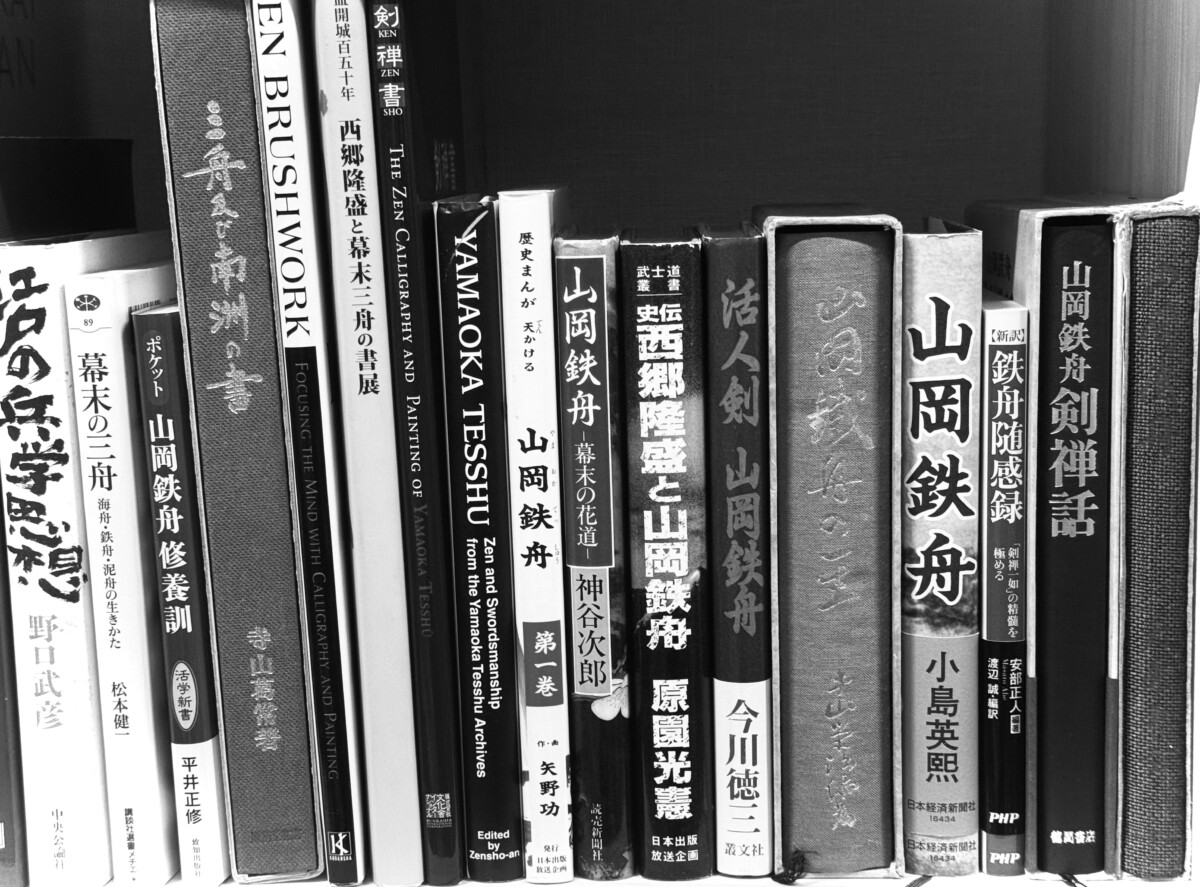
One of the unexpected pleasures of creating the Jigokuden dojo and library was rediscovering things I had completely forgotten I owned.
As I began the slow process of organising the shelves in the library, I realised that over the years I had accumulated a small mountain of books on Yamaoka Tesshū: biographies, collections of his writings, studies of his Zen practice, his calligraphy, his political life, and, of course, his exploits as a swordsman. Some I hadn’t opened in years. Others I had bought with every intention of reading immediately, only to tuck them into whatever space was available, where they remained hidden from me until now. Now they all sit together in one place.
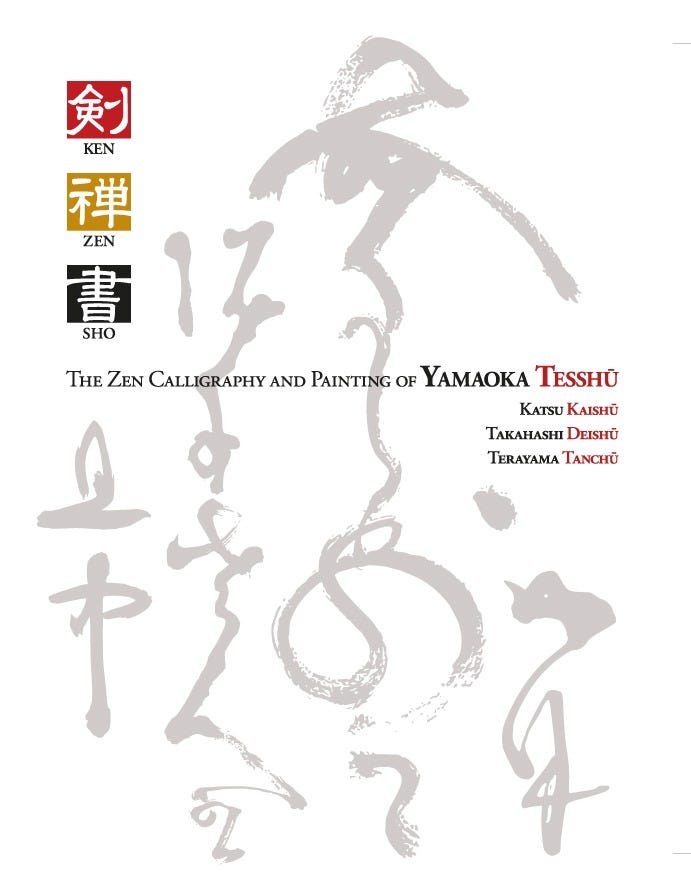
Flicking through them again, I found myself drifting. Tesshū has always had that effect on me, not lulling me into sleep so much as tipping me headlong into the void of philosophical rumination, where one thought breeds another with a needling kind of insistence and refuses to let go. Many admire him as one of the great swordsmen of the nineteenth century, or for his Zen, his role in the Meiji Restoration, or his calligraphy. What I’ve always liked most is his ability to compress something deep into a line or two and leave you to deal with it.
One passage I came across when I was thumbing through the pages of one book yesterday does exactly that:
Good snowflakes, one after another, do not fall elsewhere.[1]
What on earth was he getting at? And no, it doesn’t mean a person who is seen as overly sensitive, easily offended, or believing they are uniquely special!
Apparently there’s an anecdote behind the line. When a Zen monk asked, “So, where does it fall?”, his master struck him. The point was not that the question was foolish, but that it had already gone wrong by treating the matter as one of location, when the teaching denies that there is any meaningful “other place” at all. Hmmm…
Think about keiko. Wherever you stand, that’s where the action is. The exchange in front of you feels immediate and decisive. Around you, others are doing the same. There is no more real centre somewhere else in the dojo.
I think the same applies in calligraphy. My iaido teacher, the late Niwata Yoshiho Hanshi, used to teach me Shodo as well. Once he watched me struggle with where to begin a stroke while practising the most ‘simple’ of kanji 「一」 (ichi). He simply said, “Start where it lands. The brush doesn’t begin from an ideal point somewhere else. It begins exactly where it touches the paper.”
Before posting this, I asked my mate Jonathan Levine-Ogura what he thought.
One non-budo metaphor that came to mind was a skier waiting for prefect powder conditions. I used to ski and snowboard a lot so this is where I’m coming from. Experienced ones know that there are better days than others, but you might as well take on the mountain below you, not the one you wish it could’ve been.
It’s easy to slip into a different habit in ordinary life. Instead of meeting what is in front of us, we half-imagine a better vantage point somewhere else: a different dojo, a better teacher, a later stage of our own development where things will finally make sense. In keiko, though, that illusion doesn’t survive contact for long. The cut either lands or it doesn’t, and it happens where you are standing. The same with the brush: there is no ideal starting point waiting elsewhere; the line begins exactly where it touches. Read that way, the saying is less a grand claim about life and more a practical refusal to defer things. The snow is not waiting for you somewhere better. It is already falling where you are.
And that is exactly what the saying cuts through. One common explanation of the line puts it this way: there is no snow falling somewhere else; every flake lands in the centre. And why the centre? Because, from the standpoint of experience, you are always standing in it. If the snow always falls where you are, then the idea of an “over there” simply collapses. What we tend to treat as a more real, more decisive elsewhere turns out to be a projection. In practice, things only ever happen here. The moment you step onto the floor, this is where it unfolds. The conditions are not a substitute for something better; they are precisely what you have to meet.
This connects with another Zen line: “If you become the master of wherever you are, every place becomes the true place.”[2]
That’s a harder stance to maintain. Once you accept it, a whole set of excuses disappears. Missed opportunities, poor performances, and lack of progress cannot be deferred to a better version of reality elsewhere. They sit with you. At the same time, it removes passivity. You are not waiting for the right conditions. You are already in them.
I’ve been reminded of this repeatedly over the past few years. For a long time, I treated the building of Jigokuden as a kind of threshold, something after which things would properly begin. There was always something unfinished: approvals, construction schedules, logistics, money.
It has only just been finished—last week, in fact—and, perhaps unsurprisingly, nothing massivley dramatic has happened. The mountain of emails in my inbox didn’t vanish. Keiko has not suddenly become deeper simply because the floor is totally awesome. Apart from a brief sense of thankfulness and relief, things feel much the same. The dream has become reality, and reality is already settling into something quite ordinary.
The same pattern shows up elsewhere. Someone works for years toward a grading, passes, enjoys a brief high, and then returns, more or less, to being themselves, with a different number on a certificate. Jobs, titles, and disappointments arrive and are absorbed into the ongoing flow. The issue is not that these things are meaningless. It is that we ask them to carry more weight than they can bear. We imagine that once we arrive somewhere else, things will settle. But the snow does not fall there. It falls here.
I see this a lot in kendo and the other budo I do. Some people come to Japan expecting some miraculous transformation. Of course, there is value in training here, and I’ve benefited from it myself, but people often discover that they’ve brought their habits with them: reluctance to push, avoidance of discomfort, and the ability to explain away shortcomings. Changing location doesn’t automatically change that.
At the same time, I’ve met practitioners from places with extremely limited instruction, small clubs, few teachers, infrequent seminars, who become ridiculously strong. Not because conditions are ideal, but because they take complete ownership of what they have. They don’t wait for better snow.

I’m committed to keeping my work freely accessible to all budo enthusiasts, wherever they are. If you’ve enjoyed what you’ve found here and would like to support my ongoing efforts and projects, “buying me a coffee” (beer actually), or my books, would make a world of difference.
The point extends beyond budo. In any organisation, it is easy to imagine that the real work is happening elsewhere, and that one’s own position is somehow peripheral. But if you take the saying seriously, that becomes hard to sustain. Wherever you are becomes the centre. What matters is what you do there.
None of this is to deny that circumstances differ. Some people begin in difficult positions; others benefit from advantages they did not earn. That is simply how things are distributed. But what follows from that is not entirely fixed. At some point, direction becomes a matter of choice, and what matters is not always whether a turn first appears fortunate or unfortunate, but how you respond to it.
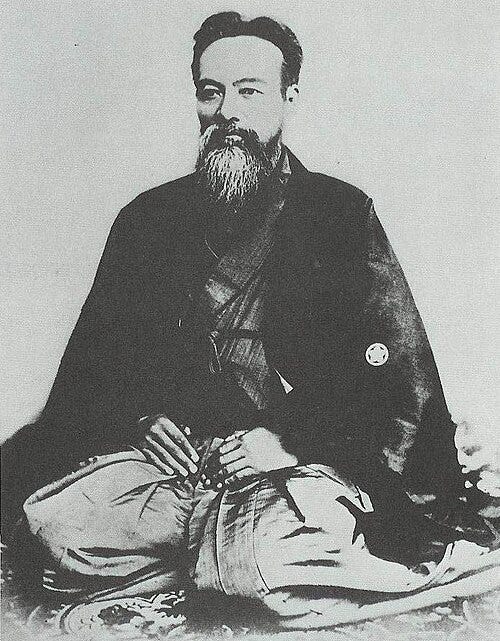
And that brings us back to the Tesshū line. What gives it force is that Tesshū was not writing as a man tossing off clever Zen phrases after dinner. Although, I’m sure he did that, too. In the notes I pulled from my shelf, he describes loving swordsmanship from the age of nine, throwing himself at the opponent, and eventually becoming convinced that he would beat anyone he faced. Then the whole thing turned on him. He became preoccupied with the opponent’s blade, began to hesitate, and, by his own account, got hit. The problem was not simply technical. He had started seeing the contest in the wrong way.
He kept training and eventually writes of arriving at muteki, no enemy. That does not mean that opponents magically disappeared, or that he drifted off into a mystical haze. It means that the distinctions that had been tying him in knots, strong and weak, superior and inferior, self and opponent, were no longer being generated in the same way. As he puts it:
Thereafter, reflecting upon how I had once judged whether an opponent was superior or inferior even before crossing swords with him, I realised that there is in truth no such thing as a superior or inferior opponent. It is oneself who creates superiority and inferiority. Where there is no self, there is no opponent. When this principle is truly realised, distinctions such as superior and inferior, strong and weak, adult and child, cease to exist—not even by a single point. This is precisely the wondrous meaning of the teaching: ‘Good snowflakes, one after another, do not fall elsewhere.’
Hmmm… Tesshū is not saying that circumstances do not matter, or that effort is unnecessary. He is saying that the enemy we keep meeting is very often the one manufactured by the way we look at things. We imagine a better place, a stronger opponent, an unfavourable situation, a version of ourselves that will begin later, and then hand our power over to those fictions.
The point of the saying, then, is not that your present circumstances are ideal. Often they are not. It is that they are the ones in front of you, and no amount of fantasising about somewhere better will do the work for you. The snow is falling here.


[1] 好雪片々不落別處ト云妙處ナリ (Kōsetsu henpen bessho ni ochizu to iu myōsho nari). Contained in Kendō Gonyū Oboegaki (“Notes on Attaining Insight in Kendo”), revised and recorded on 8 January, Meiji 15 (1882).
[2] 随所に主となれば立処皆な真なり (Zui sho ni shu to nareba, rissho mina shin nari).
List of Related Articles
Budo Beat 67: Same Mountain, Different Paths –...
Budo Beat 53: Chōtan Ichimi – The Long and th...
Budo Beat 62: Shinpan is Done with Flags, not Keybo...
Budo Beat 9: Fighting the Inner Foe ~ A Mid-January...
Budo Beat 50: Before the Kettle Boils – Budo,...
No comments yet.