













Budo Beat 61: Self-compassion and Burnout
The “Budo Beat” Blog features a collection of short reflections, musings, and anecdotes on a wide range of budo topics by Professor Alex Bennett, a seasoned budo scholar and practitioner. Dive into digestible and diverse discussions on all things budo—from the philosophy and history to the practice and culture that shape the martial Way.
I’ve been thinking about burnout a bit more seriously than usual lately. Probably because I’m somewhere in its general vicinity. Hence the lateness of this edition of Budo Beat!
A few years ago, my old friend Dr. Fujiwara, who happens to be both a professor of psychiatry and a kendo 8th dan, introduced me to the term “self-compassion”. At first glance it sounds suspiciously like one of those modern buzzwords involving scented candles and giving yourself permission to achieve absolutely bugger all for six months. But that’s not really what it means.
As he explained it to me, self-compassion is not laziness, self-indulgence, or endlessly letting yourself off the hook. It’s simply the ability to recognise when you are running yourself into the ground and responding to that fact like a reasonably intelligent human being instead of one of those old kendo shinai bags held together almost entirely by electrical tape and nostalgic optimism.
In other words, it means treating yourself with a degree of understanding and realism rather than assuming that endless self-punishment is somehow virtuous. That sounds obvious enough, but I suspect many people in budo, myself included, are actually quite bad at it. Well, I know for sure that I am, which is why I’m putting this down on paper.
Following my recent 8th dan challenge, I’ve been doing the usual quiet post-mortem that always happens afterwards. Everybody is different of course, but this is very much my own personal experience of it all, for what it’s worth. The whole thing consumes me beforehand. Every spare thought, every ounce of nervous energy, every bit of focus gets funnelled into that one looming event. Then afterwards it leaves me completely shattered for the better part of a week. Not just physically, but more so mentally. And once the dust settles, there’s the less glamorous aftermath of trying to catch up on all the things I brazenly neglected in the buildup. Emails, work, writing, obligations, messages, life in general. That part is surprisingly brutal too.
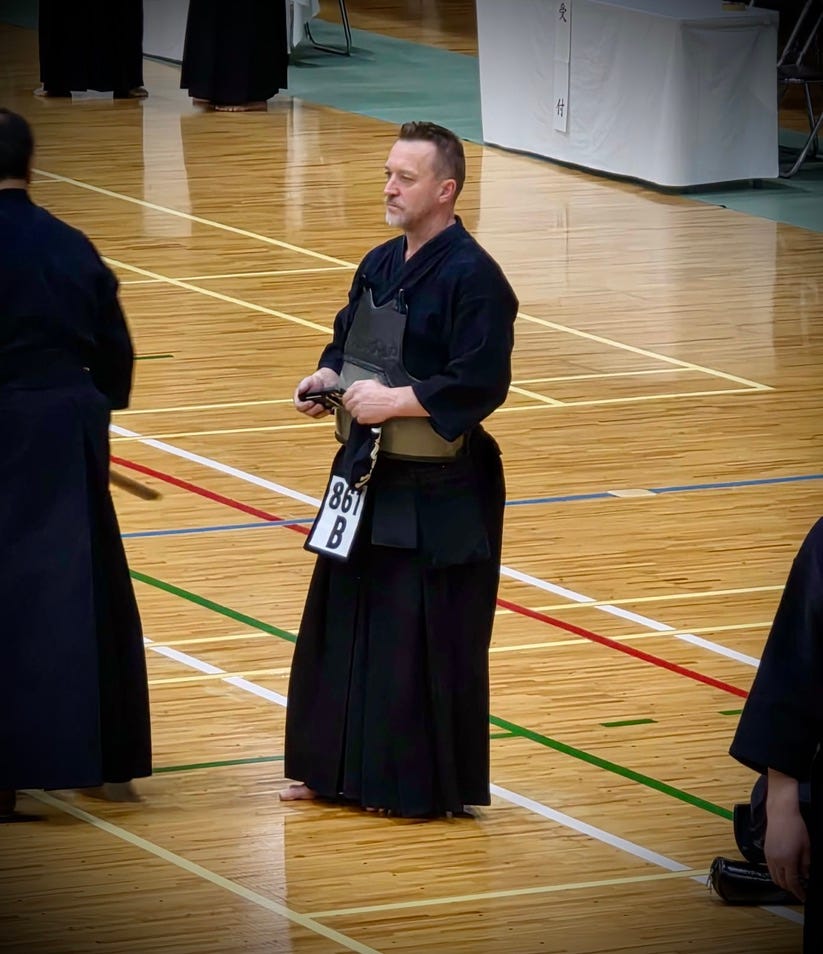
I’m not completely cooked and am still functioning. Still mostly turning up. But there’s a definite sense that the engine isn’t running as cleanly as it should. There’s a bit of noise where there used to be none and a degree of reluctance creeping in where there used to be momentum.
The awkward part is that, in budo, that sort of thing is not easy to admit.
In most areas of life, saying “I need to take a step back” sounds pretty sensible. In budo, it can feel like you’re letting the side down. As if you’ve quietly slipped from being “seriously serious” into being one of those people who used to train hard but now just talks about it.
That fear keeps a lot of people pushing forward when they probably shouldn’t.
And to be fair, budo does condition us that way. From the beginning, you’re taught to persevere. To keep going when you don’t feel like it. Nobody gets anywhere in kendo, judo, or karate by waiting for inspiration. You turn up tired, busy, irritated, distracted, and you train anyway. That’s part of the deal, and you do feel bloody good when you knock off a good keiko session when life is chucking a whole lot of other BS your way!
But the problem is that attitude doesn’t always stay neatly contained within the dojo. It tends to spill out into everything. Work, travel, teaching, writing, meetings, obligations, endless small demands that don’t look like much individually but pile up into something quite heavy. And the same mindset applies: just keep going. Push through. Don’t slack off. Don’t drop the ball.
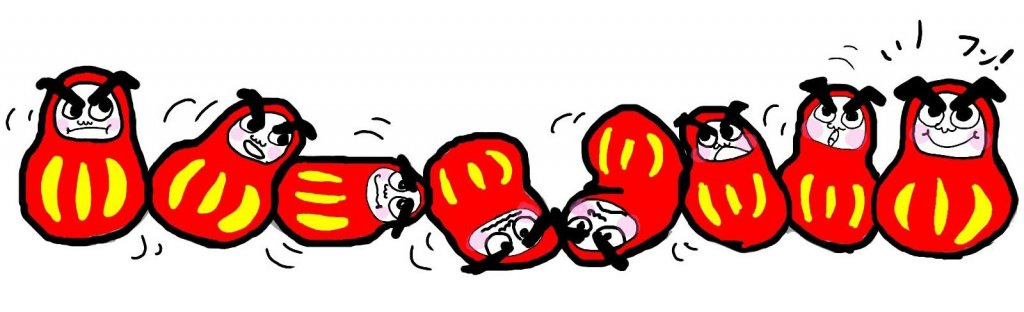
At some point, the old adage “fall down seven times, get up eight” almost imperceptibly turns into “fall down seven times, get up six.”
That’s not because you’ve become soft or weak, but because you’re human. And because, to put it bluntly, life can be relentless sometimes.
Budo doesn’t always prepare you well for that distinction. Or rather, the way we talk about budo doesn’t. We glorify endurance and admire the one who never stops. The one who absorbs everything and keeps moving forward as if nothing sticks.
But there’s absolutely a limit to that. You can’t just apply gaman to everything indefinitely and expect no consequences. “What’s gaman” you ask? That would be the Japanese ‘virtue’ for enduring misery with such impeccable composure that outsiders mistake it for serenity. Somewhere between stoicism and emotional constipation, it is the art of carrying on while your knees and shoulders are shot, your boss is a total prick, you’re stuck in another endless traffic jam, and your soul resembles a burnt-out rice cooker. Keep absorbing pressure from all directions, and eventually something gives. Usually not in an overly dramatic way, but a gradual flattening. You’re still there, still functioning, but not particularly alive in what you’re doing.

I’m committed to keeping my work freely accessible to all budo enthusiasts, wherever they are. If you’ve enjoyed what you’ve found here and would like to support my ongoing efforts and projects, “buying me a coffee” (beer actually), or my books, would make a world of difference. You can also support the construction of my dojo in Kyoto in the Shop Tab. Cheers!
That, my friends, is burnout. And I fully admit to having been there many times before, swearing I won’t let it happen again… until it happens again.
And it’s not just about keiko. If anything, keiko is often the least of it. Keiko is the part I want to do. It’s everything else that drains you, and then you bring that drained version of yourself into the dojo and expect something meaningful to happen… Even keiko becomes a chore.
That’s where things start to feel off. The irony, again, is that budo itself actually gives you a way to understand this. We just tend to apply the teachings selectively. Take the old budo cliché “heijōshin”. Balanced mind, normal condition, being perfectly centred psychologically no matter what’s going on. Not just in a fight, but as a general state of living. If you’re constantly overstretched, mentally cluttered, running on fumes, then you are most certainly not in a state of heijōshin. You’re out of whack, and continuing to push harder in that state doesn’t fix it.
Or, another wonderful budo perspective would be “maai”. Not just distance to your opponent, but appropriate distance in general. I get too close to everything. Too many commitments, too little space. No room to breathe, or to reset. Then I wonder why everything feels compressed and exhausting.
Sometimes the correct response is not to charge in again, but to step back half a pace. Same as in keiko. You don’t crowd the situation and hope for the best. At some point, you have to adjust. What worked when you had fewer responsibilities, demands, and moving parts in your life is not going to work indefinitely. Trying to maintain the same intensity across everything is a recipe for running yourself into the ground. And that ain’t discipline, it’s just poor judgement.
What about that concept I wrote about in my last blog post? “Softness overcomes hardness”. That applies just as much here. If I try to meet every demand in life with rigid determination, I become brittle. Something snaps. I should know that flexibility, in this context, is not weakness. It’s how you keep functioning over the long term. The problem is that I’m reasonably adept at applying these ideas to technique, and evidently quite bad at applying them to myself in the grand scheme of things. Evidently there are still a few lessons I haven’t properly learned yet.
We know not to force an opening in kendo. But we force our schedules. We know not to become tense and rigid. But we live that way. We know that good timing requires space. But we fill every gap. Then we wonder why we feel burnt out.
At some point, you have to admit that the “just keep going” model has limits. Not because it’s wrong, but because it’s incomplete. Sometimes, yes, you need to push through. Everyone does. But sometimes the better move is to ease off slightly. Not quit. Not drift away. Just… reduce the pressure enough that you can actually function properly again.
That might mean saying no to a few things. Training a bit less for a while. Dropping the need to perform constantly. Letting some things slide that, in the grand scheme, don’t actually matter that much, as long as you have a plan.
None of that sounds particularly heroic, and maybe that’s why it doesn’t get talked about much. But if the goal is to keep going over decades rather than just limping from one deadline or grading to the next, it probably matters more than most of us care to admit.
The older I get, the more suspicious I’ve become of my own tendency to simply try and endure everything thrown at me. From a distance that kind of constant motion can look admirable enough, but up close it often just looks like someone stupidly running themselves ragged. “How the hell do you manage to do all this stuff?!” I get asked this a lot, but the honest answer is that sometimes I don’t manage it particularly well at all. Then I disappear for a bit, mails go unanswered for weeks on end, and eventually I resurface pretending everything is perfectly under control again.
I used to get a kind of masochistic buzz in the struggle to keep on top of things, and liked to think that it’s the pressure that keeps me performing. What I’m more interested in now is balance. Not perfect balance, just workable balance. Enough to keep moving forward without grinding myself into dust along the way.
If that means that sometimes “fall down seven times, get up eight” becomes “fall down seven times, get up six and sit there for a bit,” then so be it. I know I’ll still get up eventually. Probably after a few coffees, a good lie down, vegging out in front of Netflix, and ignoring my inbox for another three days… Let’s make that four…
That, to me at least, feels a bit closer to what budo is actually about than simply staggering forward indefinitely like some sleep-deprived samurai zombie pretending everything is under control. Maybe self-compassion, in the end, is simply learning that you can’t live permanently at full throttle without eventually running the whole thing into the ground.
In theory I know this. The trick, apparently, is actually bloody well putting it into practice.





No comments yet.