













Budo Beat 52: Life is Short
A reflection on judgement, scale, and the discipline of attention in a noisy world.
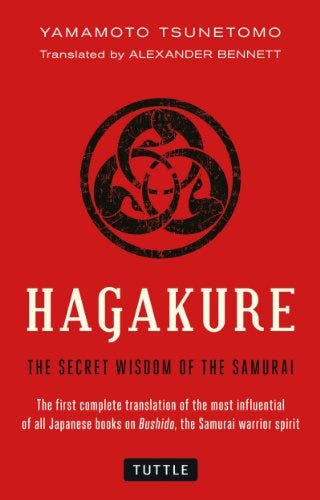
Last week, a university student popped in for a chat during my office hour. In the last week of class in December, we had been working on Hagakure, an early‑eighteenth‑century collection of reflections attributed to Yamamoto Tsunetomo. He was a retired samurai lamenting how, in the long peace of Tokugawa Japan, warriors had forgotten their raison d’être and slid into a life of comfort, self‑absorption, and what he would probably have described as full‑blown lotus‑eaterism. Not entirely unlike tenure, come to think of it.
It includes its most infamous line, “The way of the warrior is found in dying”. It is a sentence that became especially troublesome in the twentieth century, entangled with the propaganda and militarism of wartime Japan, and still carries that residue. Out of context, it sounds reckless. Even dangerous.
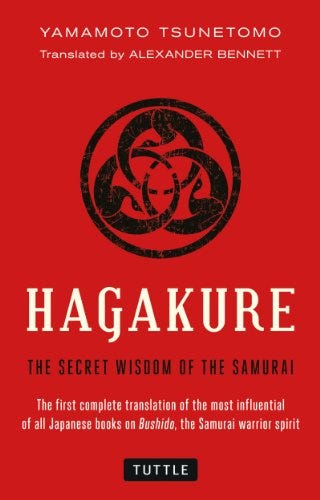
I don’t dramatise or romanticise it in class, but I do try to give it context. I’m also careful about how I frame the subject of death with students. It can be a difficult topic to navigate, particularly given wider issues around mental health and youth suicide. I hint that, with this particular phrase, things are not always what they seem at first glance. The world this book came from matters, and it offers us some interesting insights into the human condition. A warrior class with no war, trying to make sense of duty, resolve, and purpose in a long peace. What does it mean to live under those conditions? I asked the students to sit with the phrase and take it apart slowly over the New Year break.
This particular student told me she found it quite jarring at first. Too ambiguous, and too easy to twist, especially by people shopping for extremes. But after working through it, she arrived somewhere different. And, I should add, somewhere I think she got exactly right.
Her conclusion was that the line is not a fixation on death per se, but a reminder of scale. “Life is too short!” she exclaimed to me. Imagine my bemusement at being informed of this revelation by a twenty‑year‑old. But she was dead right (pardon the pun). “Life’s just way too short to get hung up on dumb grudges or drama,” she said. “Like, it makes you stop and think about what you actually want to do with your time.” That was really Yamamoto Tsunetomo’s point. You’re only here for a fleeting moment in time, so don’t waste it. If you’re not afraid of shuffling off your mortal coil, or put another way, you are resigned to the fact that the Grim Reaper could come a knockin’ at any given moment, then you make the most of life while you have it.
That conversation pleased me. It also sent me off into a pleasant bout of daydreaming about all sorts of related things, a very convenient way of avoiding the fact that I still had quite a lot of real work I should’ve been doing. It pleased me partly because the question had clearly bothered her, and she had taken her homework seriously, which these days already puts her in a very exclusive club. But more than that, it touched on something I had been sensing for some time. It was a reminder of how important it is to keep things in scale, once you accept that we are only here as a brief blip in the grand scheme of things. I suspect that is the sort of realisation that comes more easily once you find yourself in your fifties.
By scale, I mean the ability to judge how much attention something truly warrants, measured against the simple fact that time, energy, and life itself are limited. Once you start thinking this way, the question shifts from what demands a response to what deserves one. That sense of proportion has been quietly eroding. Not because people care less, but because the environments we now inhabit make it harder to tell what deserves our care. When everything demands the same level of response, judgement has nowhere to stand.
It is at this point that budo offers a useful vocabulary, and a useful distinction. In budo, this sense of proportion underpins judgement (handan),1 and one of the ways that judgement becomes visible is through the all-important spirit of respect (rei), which is often misunderstood. It is not appeasement, nor constant responsiveness, nor the reflex to engage with every demand placed in front of you. People think it means just being polite. Perhaps deferential or endlessly accommodating. It doesn’t. Respect, in my mind, is the outward expression of judgement. It is the ability to decide whether to engage, how to engage, or not to engage at all, without mistaking restraint for weakness or silence for indifference.
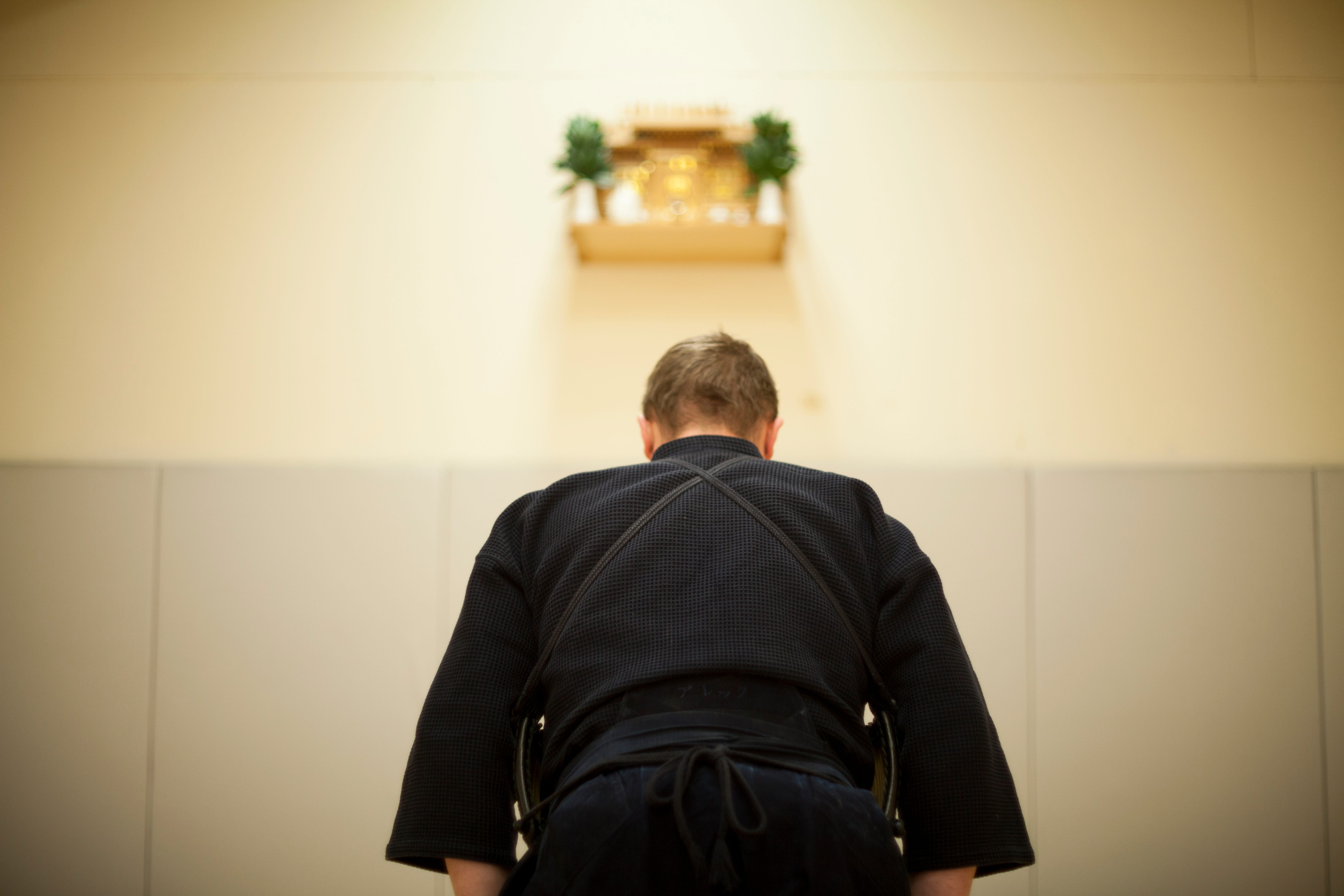
There’s an old verse that captures this sentiment:
“If you bow to one and ignore the rest, you end up rude to many.”
(Hitori ni rei wo tsukushite hoka wo mizuba, amata no hito ni burei to zo naru.)
The point is not the etiquette side of things, but attention. In practice, the issue is rarely etiquette itself. It’s attention. To show rei properly requires awareness beyond the immediate object in front of you. When rei is reduced to outward performance alone, it loses its substance. Fixating on one voice, a single provocation, or an exchange means bowing deeply while failing to see the room you are standing in, and in doing so neglecting everything else that ought to matter.
This is where form without spirit creeps in. It can look like respect or commitment, but it’s hollow. Going through the motions is easy, but maintaining proportion is not. That requires judgement, awareness, and the willingness to look beyond the immediate stimulus.
In a dojo, not everything is corrected out loud. Some things are corrected by silence. Some by distance. Some by continuing to train as if the distraction isn’t there. That is not avoidance. It is discernment.
Digital spaces erase this. A comment thread scrolls past. A thoughtful critique, a cheap jab, a stranger piling on for sport. Everything arrives with the same urgency, the same font, the same claim to attention. A serious critique looks identical to a petty complaint. Earnest concern sits shoulder to shoulder with bad faith, and the interface shrugs at the difference. After a while, so do we.
Budo works differently. Well, at least, it’s supposed to. Proximity counts, and so does shared risk. Whether someone remains after the exchange, whether their conduct is visible over time… These aren’t arbitrary habits. Over time, you learn that they separate what sharpens the work from what merely makes noise.
Many years of practice teach you to tell the difference between criticism and interference, not because anyone explains the distinction in theory, but through accumulation. This is what judgement looks like when it is actually lived.
Over time, patterns emerge. You notice who offers correction when it costs them something. When it risks embarrassment, when it exposes their own limitations, when it commits them to staying and helping you work through the problem. That kind of criticism is rarely loud. It is usually precise, sometimes uncomfortable, and almost always tied to the shared task at hand. It sharpens the work.
Interference reveals itself differently. It appears without commitment and vanishes without consequence. It repeats itself. It circles the same point long after it has ceased to be useful. It is more concerned with being seen to speak than with whether anything improves. Long practice makes this contrast unmistakable, because interference cannot survive sustained proximity, shared risk, or time. It withers under those conditions, while criticism deepens.
The temptation, when prodded or misrepresented, is to reply. To correct the record. To meet irritation with irritation. But there is another option, and it is a harder one. To absorb it. To let the noise pass through without lodging in you. Not because the provocation is justified, but because reacting on its terms hands over your attention and your tempo. In budo terms, this is not passivity. It is timing. You don’t step into every opening. Some things resolve themselves if you stop feeding them.
“But,” I hear you say. “Then what about all the unhinged dickheads, and the bad shit happening everywhere?” This is not stoicism, or moral superiority. It is recognising that attention is limited, and deciding where to spend it.
I like thinking about that Hagakure discussion. She got more out of a seventeenth-century retired samurai than most people get from a therapist. Life is short. Too short to live inside other people’s bullshit.
Budo was never about answering every challenge. It is about knowing which ones matter, and spending your energy on them.




No comments yet.