











Budo Beat 47: Tsubazeriai~The Complicated Hustle of the Tsuba Tussle
The “Budo Beat” Blog features a collection of short reflections, musings, and anecdotes on a wide range of budo topics by Professor Alex Bennett, a seasoned budo scholar and practitioner. Dive into digestible and diverse discussions on all things budo—from the philosophy and history to the practice and culture that shape the martial Way.
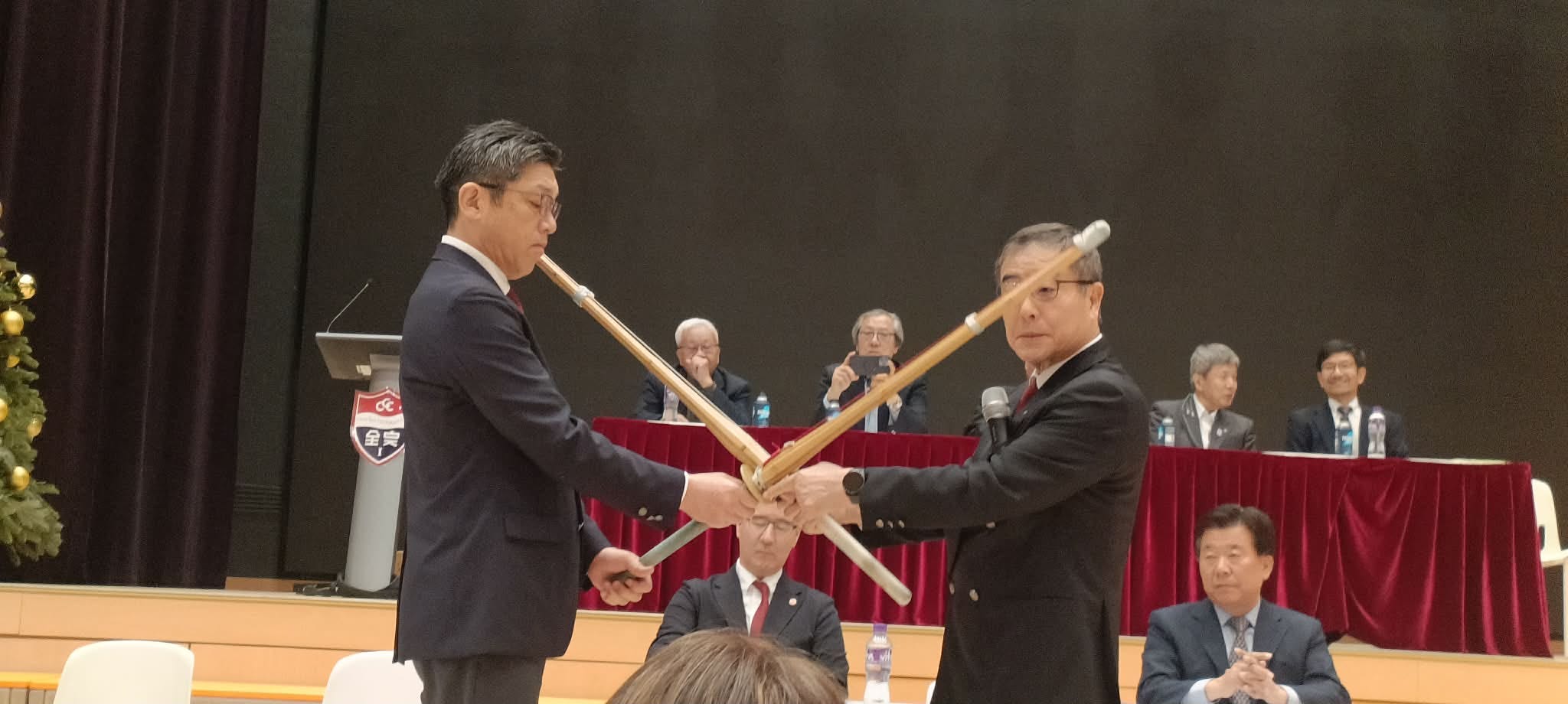
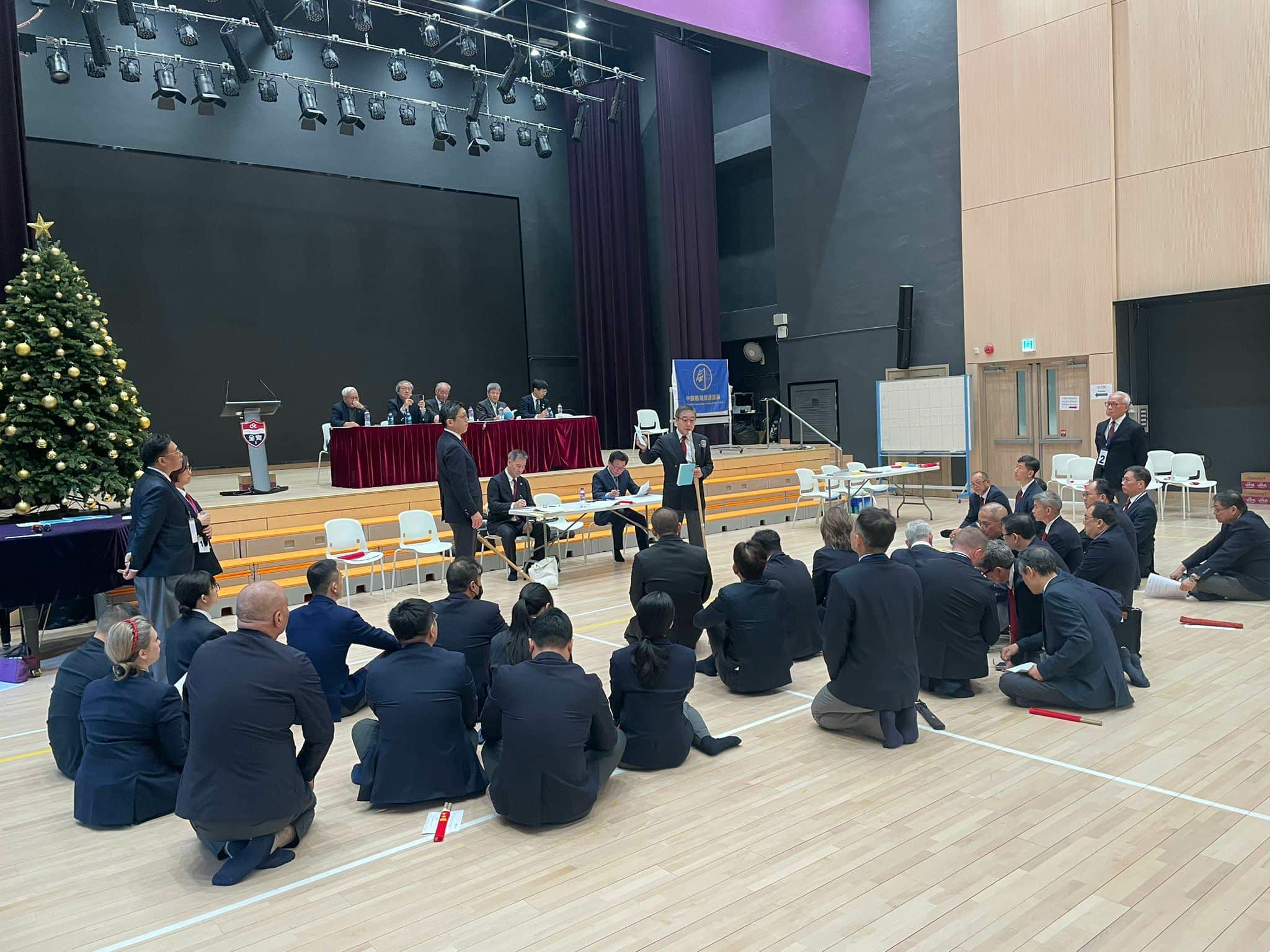
A quick note at the outset: this instalment will probably not be of much interest to readers who do not practise kendo. It is, however, important reading for kendoka, particularly those involved in shiai and refereeing, because it deals with rule interpretation for tsubazeriai that directly shapes how modern matches unfold. This topic was also one of the key takeaways from the recent Asia-Oceania Shinpan Seminar held in Hong Kong in December 2025, which I wrote about in my previous blog post. The discussions there reinforced just how central tsubazeriai interpretation has become for referees working at any level.
Although now somewhat old news, in September 2024 the “temporary rules” which had been in force since 2020 mitigate the spread of the COVID virus, were made almost entirely permanent. This was focussed particularly on the close quarters tussle known as tsubazeriai.
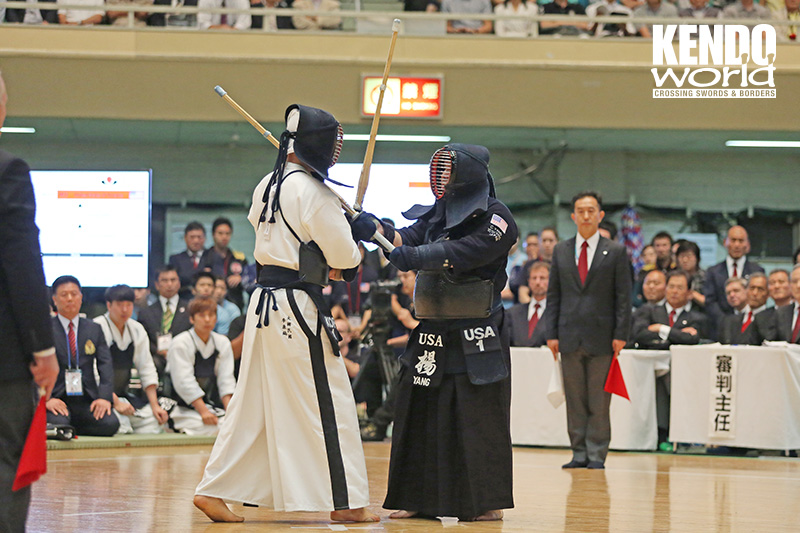
Before the pandemic, tsubazeriai often dissolved into long, awkward clinches that had more in common with rugby mauls than kendo! COVID forced the community to rethink this behaviour, and in a strange way it ended up improving the rhythm of shiai (kendo matches). These days, competitors are expected to break cleanly within a single breath using the mutual pressure of tsuba against tsuba to separate decisively. When both competitors (shiai-sha) do this properly, the match regains its shape immediately. The flow of seme returns, the distance resets naturally, and the bout resumes without that saggy pause that used to dull the energy of so many matches. The smoother rhythm is, I believe, a genuine improvement, but it comes with a catch: shinpan now have to be sharply aware of the intention and mechanics behind each separation.
Put simply, the rule became: tsubazeriai may continue for only a single breath, that is, up to three seconds. If the contest continues beyond that duration, the shinpan may either issue a penalty (hansoku) or call for separation (wakare). Judging from the All-Japan Championships held since 2020, most competitors strove to separate within three seconds, and penalties or referee-imposed separations were rarely seen. After the 2020 All-Japan Championships (actually held in March 2021), I thought that this rule ought to be made permanent, and apparently many others involved in kendo felt the same way. Well, that’s except people who relied a lot on hiki-waza (pulling back techniques) from close quarters.
What makes the following data genuinely startling is just how much match time had quietly been swallowed by close-range clinching. According to the All-Japan Kendo Federation’s “Match Analysis Report” for the All-Japan Championships (Men and Women), the average tsubazeriai time in the 2019 pre-pandemic Championships was 3 minutes 45 seconds per 5-minute bout! That is most of the match time spent locked together in a dance of pseudo engagement. “Try doing that with a real sword…” critics of this tactic would cry. Whereas in March 2021 it fell to 24 seconds—a seriously dramatic decrease. It has managed to remain around this duration.
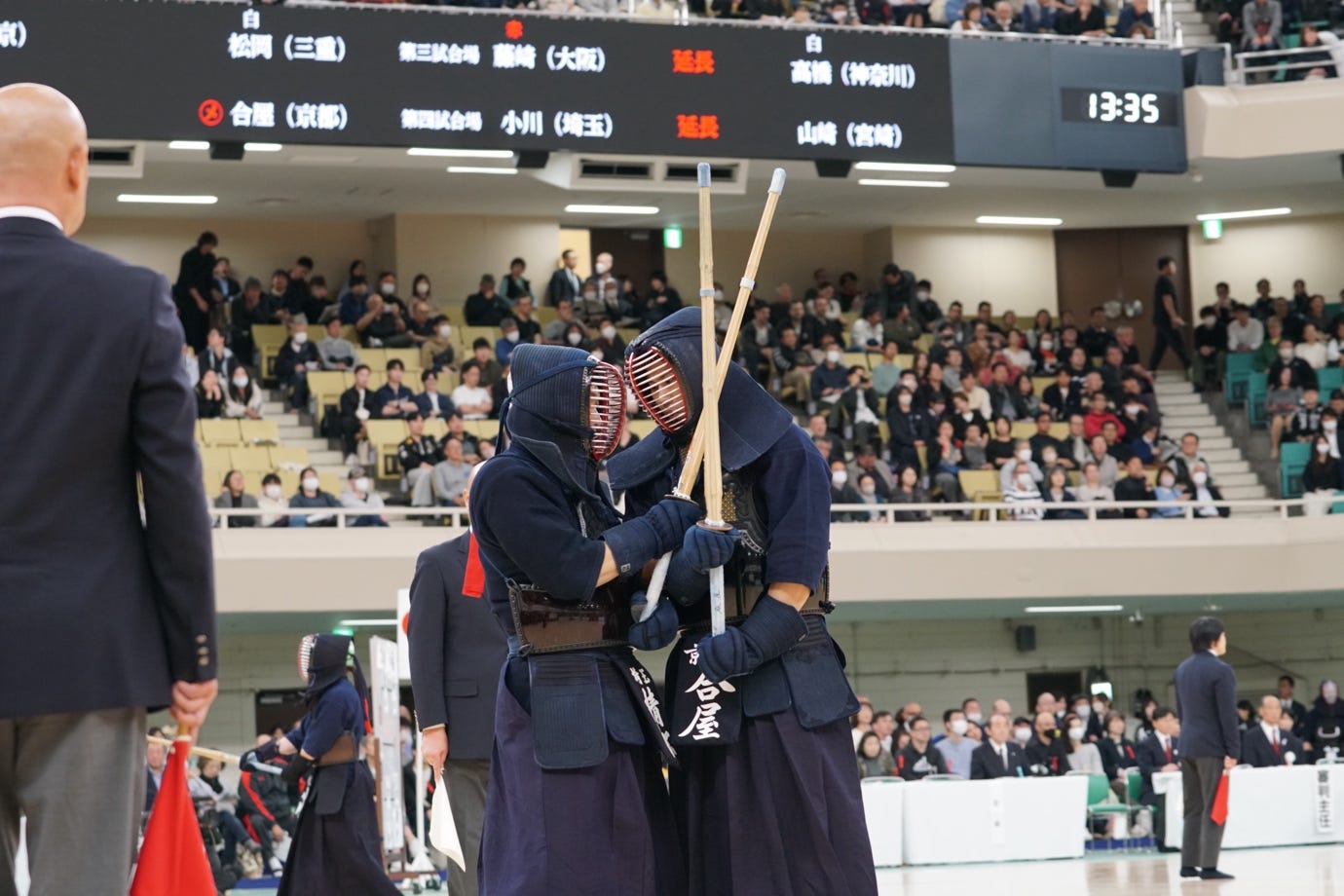
The nature of hiki-waza also changed markedly. Techniques drawn from prolonged tsubazeriai virtually disappeared, while hiki-waza executed at the instant the players entered tsubazeriai, or just before doing so, increased significantly. Some feared that referee-imposed separations (wakare) would increase, but in reality, they have been minimal: only one instance in 2020, and I haven’t seen any since at the All-Japan championships. Competitors are voluntarily disengaging, which makes many wonder why we even need the command “wakare” to separate competitors. I have yet to hear a compelling argument regarding this. What we are being taught now is that if tsubazeriai is longer than the [very approximate] 3 seconds, then somebody is guilty of an infraction…
In other words, if they are locked in tsubazeriai, for more than 3 seconds, shinpan are supposed to identify the main culprit for the “stickiness” and penalise them. It’s one or the other at fault. And that one must be penalised. We were told that “ideally it should NOT be both who are penalised.” In any case, making these strict interpretation of the rules permanent was a bold and, I believe, sound decision that most now agree has improved the quality of matches.
To understand why today’s rules may feel both strict and familiar, it helps to step back. Historically speaking, the treatment of tsubazeriai has long been a contentious issue in kendo regulations. When kendo resumed after the war, the first set of match and refereeing rules was promulgated by the AJKF in 1953. Eleven prohibited acts were listed, including ashi-garami (entangling the opponent’s leg), kumiuchi (grappling), hikiage, deliberately stepping out of bounds, and tsubazeriai performed to waste time or resting the shinai on the opponent’s shoulder during tsubazeriai. In the revisions between 1955 and 1958, it was established that three infractions would give the opponent one point. However, as far as tsubazeriai was concerned, referees simply called “wakare” to separate the players if it continued too long.
This changed dramatically with the 1979 revision. The command “wakare” was abolished, and a time limit (approximately 20 seconds) was imposed on tsubazeriai without attack. Violations resulted in a chūi (warning). Two warnings equalled one penalty, and two penalties equalled one point to the opponent. The reason why was because tsubazeriai was used unnecessarily to rest, or even to waste time. This revision was intended to correct such “un-kendolike tendencies”, and also to free referees from being constantly required to call wakare and hajime, thereby ensuring smoother matches.
In 1987, the rules were changed again. This was around the time when I started kendo as a high school student in Japan, so I didn’t understand the meaning at the time. Records state that two warnings resulted in one penalty, and a third warning gave two penalties = one point (ippon). I do not recall whether this was applied consistently. Many bouts did involve two warnings becoming a penalty, and combined with out-of-bounds or dropped-shinai penalties, this often led to the opponent gaining a point. However, I do not remember many cases where three tsubazeriai warnings were declared.
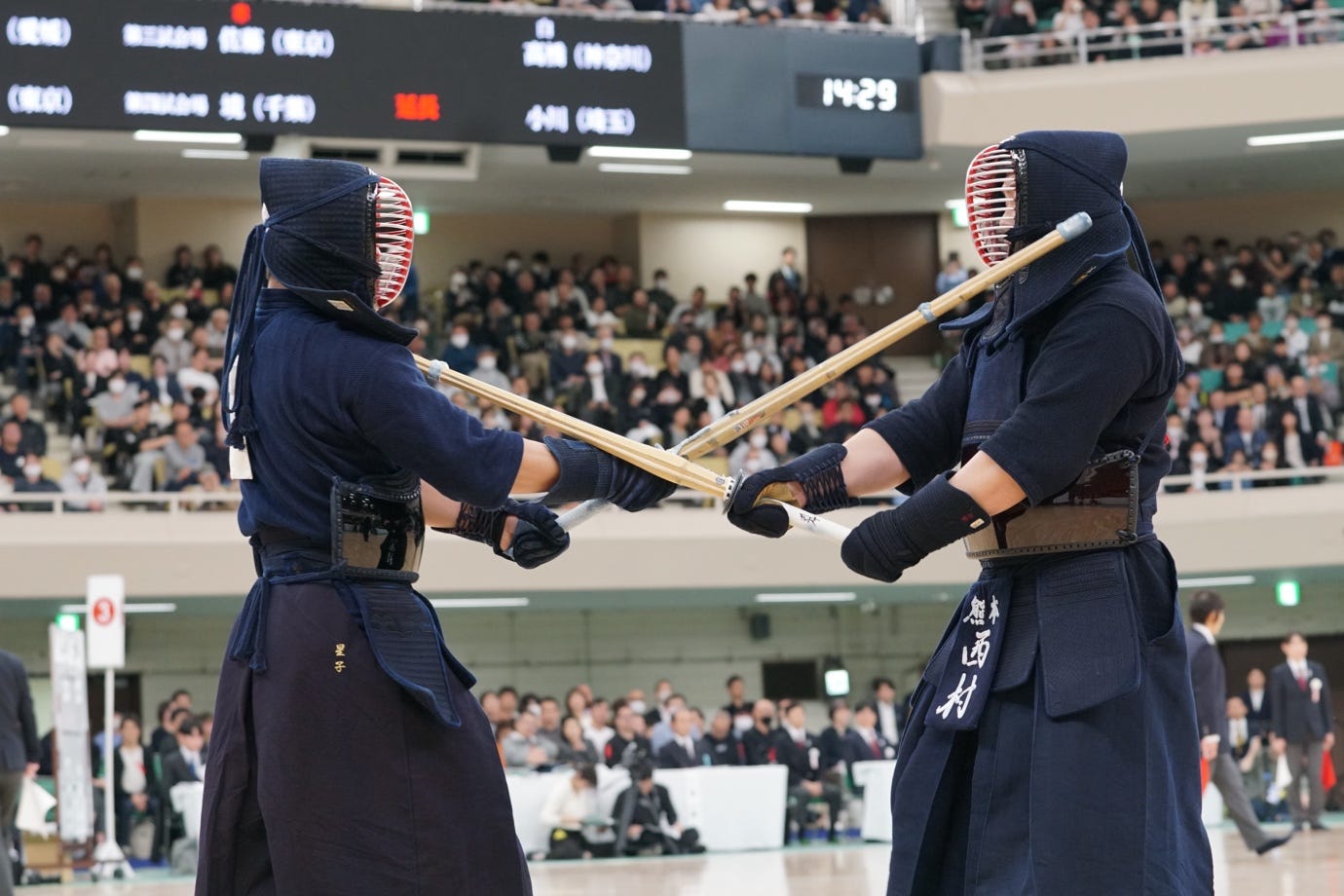
A further major revision took place in 1995. “Wakare” was reinstated; chūi warnings were abolished; and improper tsubazeriai or time-wasting became an immediate penalty (two penalties gave the opponent ippon). Apparently wakare was reinstated as a kind of last resort: shinpan should still impose penalties where appropriate, but when the exchange is entirely stalled, they may call for separation.
It is generally acknowledged in kendo that positive forward-moving attacks should be primary and hiki-waza secondary. When I was at high school and university in Japan, competitors tended to regard hiki-waza as a major tactical weapon, and they were pretty goddam good at it. Some even specialised in these techniques wholly. The BJJ version of kendo, where the shiai-sha just goes straight in to grapply rather than punch it out. That’s why more time was spent in close rather than at the issoku-ittō (one sword, one step) distance which is considered “proper” kendo.
Initially, “wakare” was sometimes called, but referees increasingly tended to identify penalties before resorting to separation. Determining when the exchange was “stalled” proved difficult, and identifying penalties was not always clear, especially as kids were so good at bending the rules, even making it look as though their opponent was at fault. It wasn’t about sportsmanship; it was all about gamesmanship.
Breaks for gōgi (referee consultation) to discuss potential illegal tactics increased, disrupting matches. Some bouts in team competitions were decided by sequences of penalties, such as a tsubazeriai penalty followed by out-of-bounds or dropped-shinai penalties—hardly satisfying outcomes. Furthermore, there was no clear impression that match time spent in tsubazeriai had decreased.
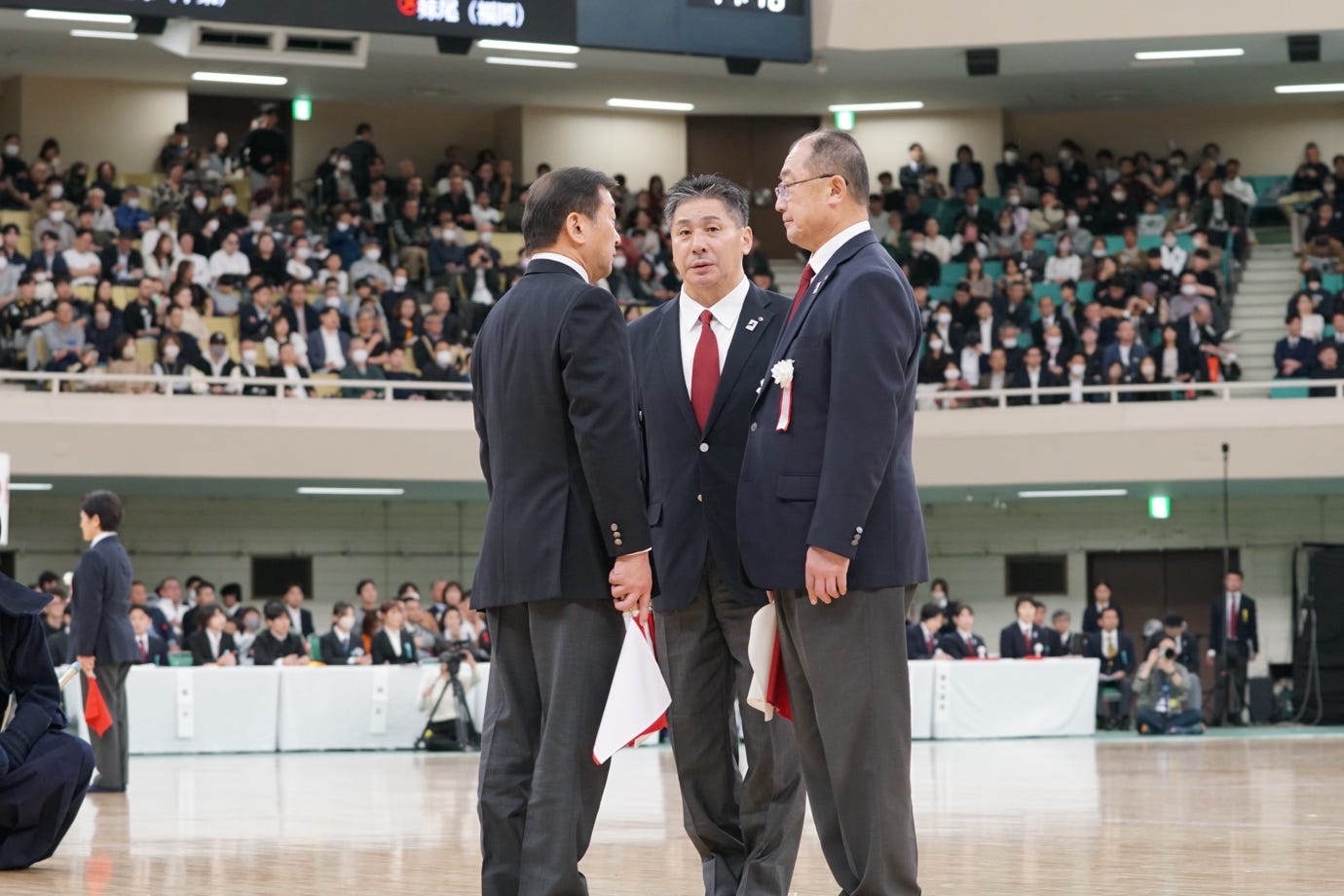
In 1999, the police championships introduced a unique rule: tsubazeriai must be resolved within 10 seconds. In 2004, this was shortened further to five seconds. Following this, the High School Federation adopted a 10-second guideline from 2008, advising referees to identify improper tsubazeriai strictly and to assess time-wasting, or order “wakare” after about ten seconds of proper engagement.
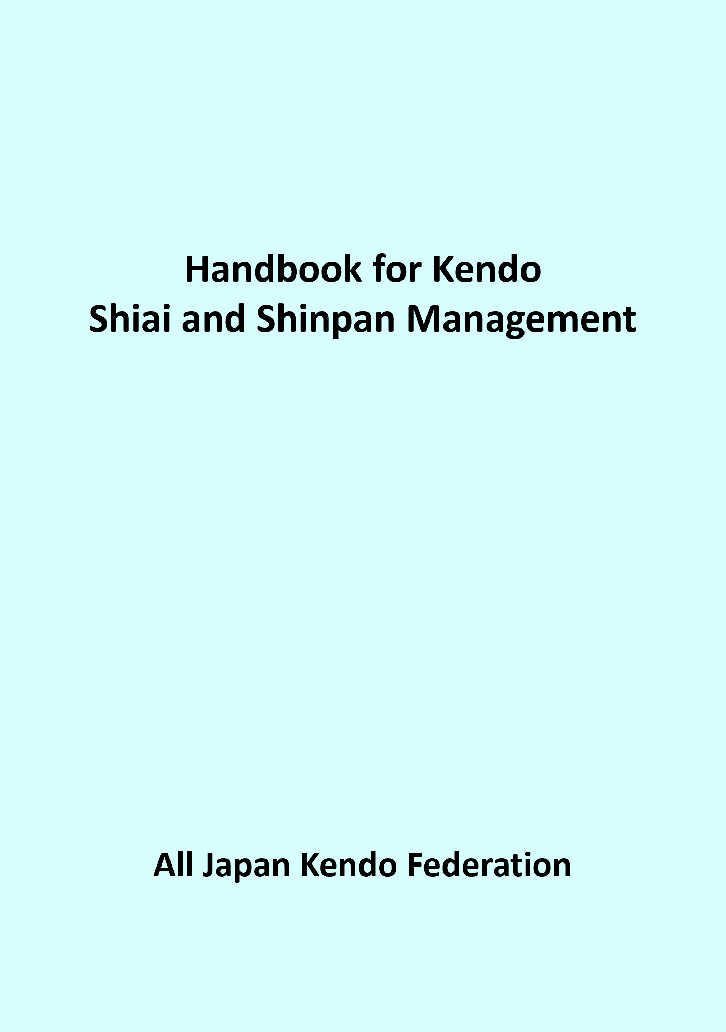
Nevertheless, the AJKF’s own regulations remained unchanged. That is, until the external pressure of COVID-19 made close-range contact somewhat undesirable! Once “temporary rules” were implemented, matches improved aesthetically. I should add that the recent permanent adoption of the temporary rules was implemented not by revising the “Regulations of Kendo Shiai and Shinpan” per se, but by revising the content and examples given in the “Handbook for Kendo Shiai and Shinpan Management” which I translated for the AJKF. (There is also another excellent translation that was done privately by Robert Stroud-sensei many years ago that you may come across on the web. The AJKF-sanctioned translation, however, is constantly being updated, especially in the post-COVID era, so please download it by clicking on the graphic below.)
In other words, as Koda Kunihiko-sensei often puts it, these actions have always been illegal because they run counter to the “spirit of kendo” set out in Article 1 of the rulebook. What has changed is not the rules themselves, but “our willingness to penalise behaviour that should have been penalised all along. In that sense, nothing has really changed.”
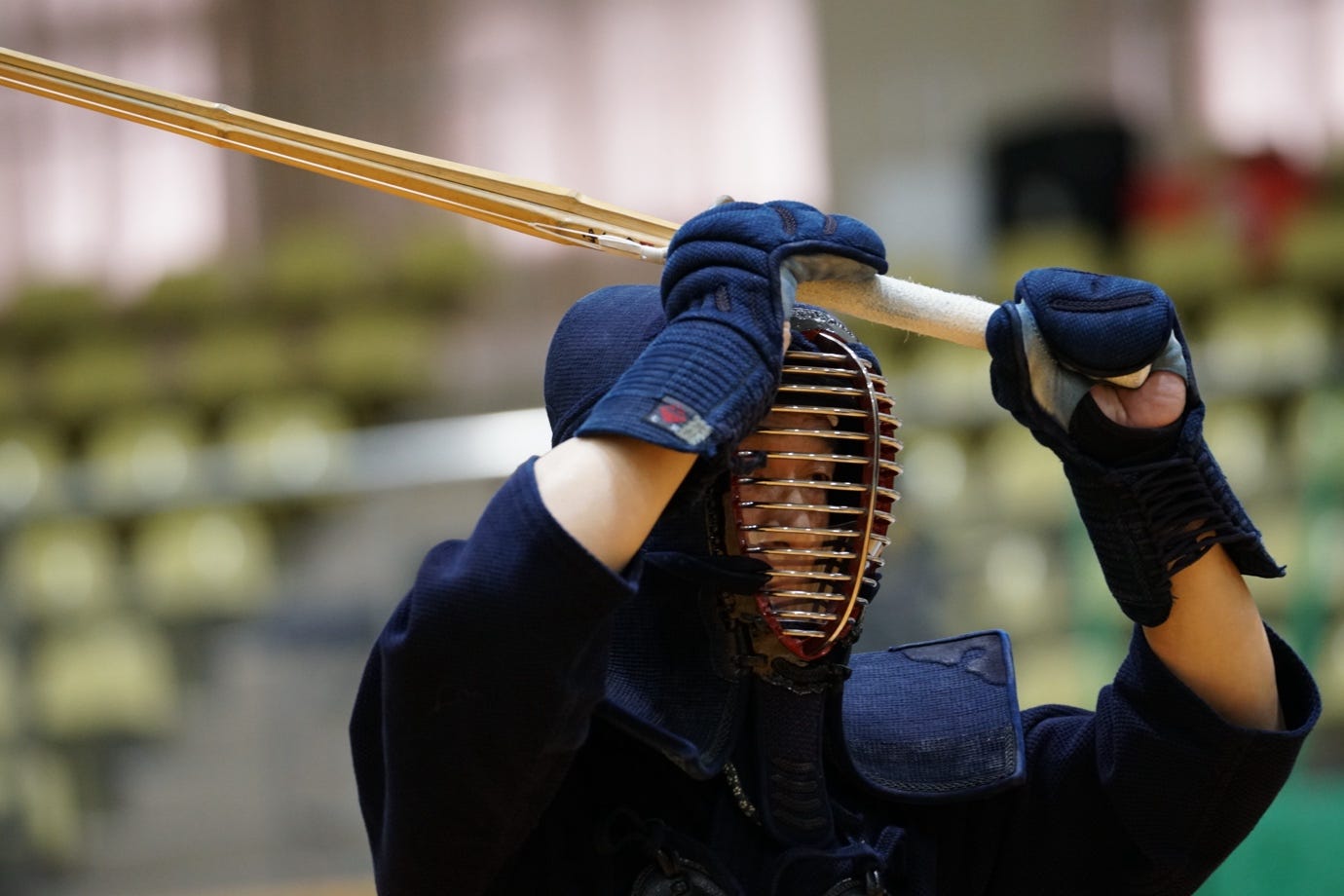
Whether the status quo is optimal remains to be seen; further issues may emerge, and when they do, it will once again fall to referees to interpret intent, apply judgement, and preserve the shape and spirit of the match. Should that happen, the Handbook will likely be revised again. Looking back, one thing is clear though: rules have repeatedly changed the content of competitive kendo over the decades. In competition, shiai-sha adapt their strategies to the rules. If competitive kendo drifts away from its true essence, then it is the responsibility of those guiding the kendo world to amend the rules so that it does not depart from its proper course. That is precisely what is happening now with focus being placed on correct tsubazeriai.

I’m committed to keeping my work freely accessible to all budo enthusiasts, wherever they are. If you’ve enjoyed what you’ve found here and would like to support my ongoing efforts and projects, “buying me a coffee” (beer actually), or my books, would make a world of difference. Cheers!
What follows shifts from analysis to application. Think of this as a practical appendix for shinpan, pulling together the key interpretations discussed during the seminar. I should add that I was concentrating more on getting my own calls right than taking perfect notes, but for what it’s worth, here is what I took away. Again, please look at the Handbook as well.
FYI Notes on Tsubazerai From the Seminar
What constitutes hansoku (penalty) in tsubazeriai? These interpretations align with the purpose of encouraging positive kendo rather than standstill clinches. Note that most such judgments require gōgi (consultation among shinpan) first. If it is a repeat offence or a black-and-white offence, it may just be called hansoku without gōgi.
1. Time-wasting or avoidance in tsubazeriai~
✘ Competitors must actively attempt a technique or actively resolve tsubazeriai by separating together rather than stall. Dragging the chain = Gōgi → hansoku
✘ If neither side attempts a technique or separation within the “one breath” guideline (about three seconds), shinpan may judge it as time-wasting and apply hansoku. = Gōgi → hansoku
✘ Waiting for the referee’s wakare (not that it’s ever going to come) or yame instead of making an effort to disengage or attack should be judged as avoidance and result in penalisation. = Gōgi → hansoku
2. Improper or “Unfair” tsubazeriai~
✘ Tsubazeriai where the fists rather than the tsuba are essentially pushing each other. = Gōgi → hansoku
✘ Both tsuba should be locked at around navel height. If there is a tendency to keep going high, this is a penalty to the main perpetrator (preferably not both, but good luck working this one out). = Gōgi → hansoku
✘ Repeated contact using the wrong part of the shinai (e.g., pressing the opponent’s blade into their shoulder or neck, pressing or winding the opponent’s shinai while separating). = Gōgi → hansoku
✘ Using the shinai to hook or impede the opponent during separation. = Gōgi → hansoku
✘ Even if technically neutral at first, tsubazeriai that lacks intent to strike or forces a deadlock long enough can be penalised. = Gōgi → hansoku
- A momentary low contact or accidental touching of hands = OK
- Positioning that is tight but still reflects intent to strike or disengage cleanly = OK
- Rapid resolution — brief contact, separation, then legitimate continuing action = OK
*Nītō (Two-sword dudes) – This area is a frequent source of confusion and misjudgement in tsubazeriai. Treatment of Nitō is actually under revision at the moment.
✘ The shorter shinai must be on the bottom with the longer one placed on top, with all 3 tsuba locked together. If not = Gōgi → hansoku
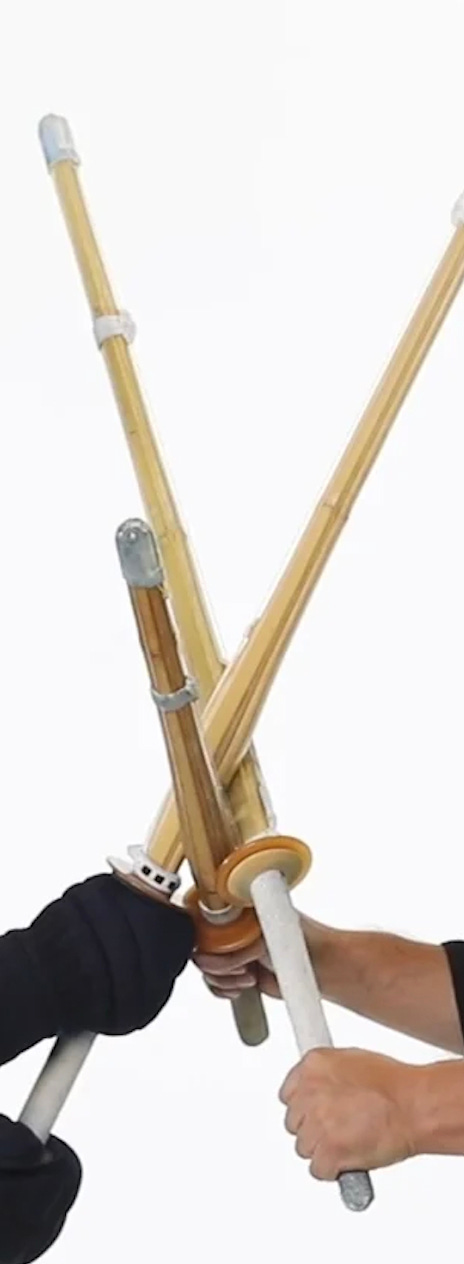
✘ If a Nītō player enters tsubazeriai but primarily uses the off-hand weapon to hold, hook, or impede separation, that will be judged as improper engagement and thus hansoku. = Gōgi → hansoku
3. Separation~
Competitors are expected to break cleanly within a single breath using the mutual pressure of tsuba against tsuba to separate decisively to a distance where the kensen are clearly separated. Like this (again) ↓
✘ Repeated stalling where neither side strikes nor attempts a clean separation for several seconds (time-wasting). = Gōgi → hansoku
✘ Detaching from contact without clear separation then immediately re-engaging without striking (passive / avoidance). = Gōgi → hansoku
✘ Holding or twisting the opponent’s shinai in a way that prevents clean separation instead of creating a striking opportunity. = Gōgi → hansoku
✘ Stepping back first then stopping as the other competitor takes a big step back to break the distance. = Gōgi → hansoku
✘ A competitor who repeatedly opens their shinai up or breaks their chūdan posture as they are retreating should be penalised. = Gōgi → hansoku
✘ In the case of jōdan, the competitor must retreat energetically in chūdan (right foot forward), and then only assume jōdan again after the 2 kensen (shinai tips) are separated. If the jōdan competitor takes the overhead stance as they are retreating, or assumes jōdan before the separation distance is met, this is a penalty. = Gōgi → hansoku
✘ A Nitō competitor must also stay in chūdan as they retreat energetically to the appropriate distance, and must have the same foot forward as the hand in which they are holding the short sword. i.e., if they are holding the short sword with the left hand (sei-nitō) then it is their left foot which must be forward when they break distance and then assume jōdan. If not = Gōgi → hansoku
- Some other referee points on tsubazeriai
- Fukushin intervention
Even if a Fukushin notices a clear or ongoing abnormality in tsubazeriai that the Shushin has not picked up, they may NOT intervene. However, if there is no zanshin after the indication of a valid strike, a Fukushin may call for the bout to be stopped. The correct procedure is to raise both flags and clearly call yame. Shushin then calls gōgi to confirm the situation. - How hansoku is communicated
In the early period after the introduction of the tentative tsubazeriai rules, referees were permitted to verbally explain the reason for a hansoku to the shiai-sha. That is no longer required, and in fact is generally discouraged. The preferred approach now is to move close to the shiai-sha and use clear, unambiguous hand gestures. This ensures that both the competitors and the spectators can immediately understand what the infringement was. - Momentary vs habitual infringements
Some infringements in tsubazeriai are obvious and should be called as hansoku immediately. Others may be momentary or borderline when seen in isolation. However, if the same behaviour appears repeatedly, typically two or three times, it should be treated as a habitual infringement. In such cases, yame is called, followed by gōgi, and hansoku is awarded.
This point is perhaps best understood (I hope) through a familiar, everyday analogy. Imagine you are driving and the traffic light turns yellow (orange in NZ!) just as you reach the intersection. Do you slam on the brakes to obey the letter of the law, or do you continue through because stopping abruptly would actually be more dangerous? Both responses are, in their own way, attempts to do the “right” thing. The difference lies in judgement, timing, and an understanding of the broader situation rather than blind adherence to a rule.
Tsubazeriai is not so different. Some actions are clearly over the line and should be penalised immediately. Others exist in a grey zone where the referee must decide whether an intervention at that precise moment improves the match or unnecessarily disrupts its flow. Excessive stopping may technically be correct, but it can also kill the rhythm of shiai and confuse both competitors and spectators.
A useful case study here is the Men’s Team Final at the 19th World Kendo Championships in Milan. The match became notorious for the sheer number of stoppages, and it has since been widely criticised within kendo circles. However, context matters. This was the first WKC after the pandemic, and both shinpan and shiai-sha were still feeling their way through the practical application of the “temporary rules.” What we saw was not incompetence so much as over-correction: a sincere attempt to enforce new standards before a shared sense of timing and tolerance had fully developed.
Seen in this light, the match becomes a reminder that rules alone do not create good kendo. Sound judgement, consistency, and a feel for the match as a living thing are just as important. Like driving through a yellow light, the question is not simply “is it allowed?” but also “what produces the safest, clearest, and most meaningful outcome in this moment in line with the spirit of kendo?”
In any case, shinpan is a hell of a job! It really is. Before you sit down to criticise others doing their best, perhaps stand up flags in hand, and do it yourself. Kendo needs you to get good at shinpan. That only comes through keiko and experience.




No comments yet.